Cloud Mystery Shadows Supercomputer Amid Politics
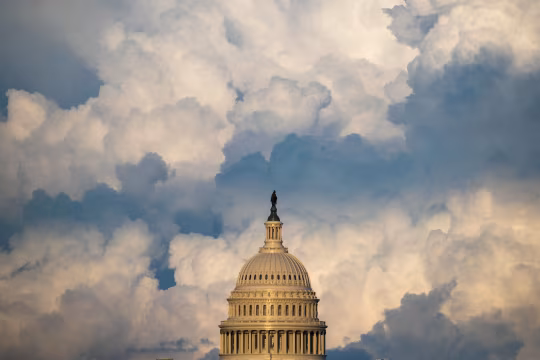
💡US politics threaten climate supercomputers, impacting HPC resources for AI climate modeling
⚡ 30-Second TL;DR
What Changed
Clouds complicate climate models due to reflection, heat trapping, and energy transfer.
Why It Matters
Political interference risks disrupting US HPC leadership in climate research, potentially limiting supercomputer access for AI-driven environmental modeling and large-scale simulations relied on by AI practitioners.
What To Do Next
Track NSF and DOE announcements on research center restructuring for potential supercomputer access changes.
Key Points
- •Clouds complicate climate models due to reflection, heat trapping, and energy transfer.
- •Supercomputers simulate climate evolution but struggle with cloud complexity.
- •Trump administration plans to dismantle key research center.
- •This threatens progress in advanced climate modeling.
🧠 Deep Insight
Background and context from public sources — not the original article. 5 sources cited.
🔑 Enhanced Key Takeaways
- •The National Science Foundation is transferring operations of NCAR's Wyoming Supercomputing Center to another operator as part of the Trump administration's effort to dismantle the National Center for Atmospheric Research[1].
- •NCAR, headquartered in Boulder since the 1950s, employs around 800 people and conducts Earth science research on hurricanes, wildfires, and climate patterns used by scientists worldwide[3].
- •The Trump administration ordered NSF in December 2025 to explore how to dismantle NCAR and invited proposals for restructuring or privatizing the Boulder-based Mesa Laboratory[2].
- •Scientists have strongly opposed the dismantling, calling NCAR the 'global pillar' and 'beating heart' of atmospheric research, warning that it enables critical forecasting for droughts, extreme precipitation, and hurricane intensity[2].
- •The broader Trump administration climate policy rollback includes revoking the 2009 endangerment finding on greenhouse gases, which could add 7.9 to 15.3 billion metric tons of emissions by 2055 and undermine U.S. competitiveness in clean-tech supply chains[4].
🛠️ Technical Deep Dive
The NCAR-Wyoming Supercomputing Center conducts Earth science research and climate modeling simulations[1]. The facility's computational infrastructure supports weather forecasting, space weather research, and atmospheric modeling that addresses cloud parameterization challenges in climate models. NCAR's Mesa Laboratory in Boulder serves as the primary research hub for developing advanced simulation models that attempt to resolve cloud-related uncertainties in climate predictions[2][3].
🔮 Future ImplicationsAI analysis grounded in cited sources
The dismantling of NCAR threatens U.S. leadership in climate science and weather forecasting capabilities at a critical time when extreme weather events are increasing. Loss of NCAR's institutional knowledge and computational infrastructure could delay progress in resolving cloud parameterization—a fundamental challenge in climate modeling accuracy. The broader regulatory rollback of climate policies may reduce domestic investment in climate research and clean technology development, potentially ceding global competitiveness to other nations investing heavily in climate science and advanced manufacturing[2][4].
⏳ Timeline
📎 Sources (5)
Factual claims are grounded in the sources below. Forward-looking analysis is AI-generated interpretation.
- eenews.net — Science Agency to Ditch Supercomputing Center
- boulderreportinglab.org — Nsf Asks How to Dismantle Boulders Ncar Opening Door to Privatization After Congress Rejects Protections
- kunc.org — The Trump Administration Wants to Dismantle Ncar Colo Rep Joe Neguse Has Some Ideas to Prevent That
- chathamhouse.org — Trumps Repeal Landmark Climate Ruling Strategic Own Goal
- france24.com — 20260218 Environmental Groups Sue Trump Administration Over Dismantled Climate Rule
Weekly AI Recap
Read this week's curated digest of top AI events →
👉Related Updates


AI-curated news aggregator. All content rights belong to original publishers.
Original source: cnBeta (Full RSS) ↗
This is a summary, not the original. Read the source, or get the weekly briefing.
Weekly AI briefing
One email a week. Unsubscribe anytime.