☁️Stalecollected in 4m

Claude Tool Use Boosts Bedrock Entity Recognition
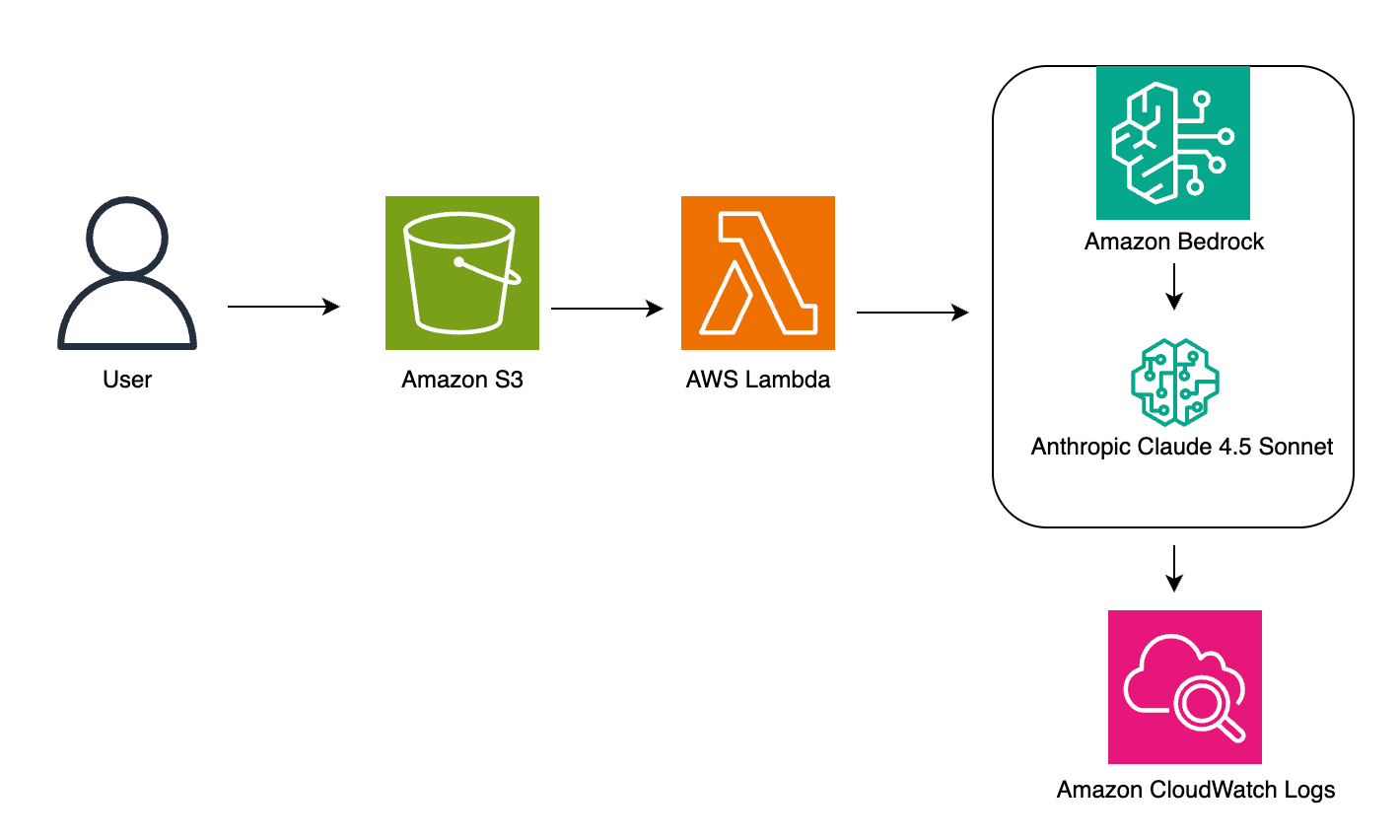
Claude Tool Use Boosts Bedrock Entity Recognition
PostLinkedIn
☁️Read original on AWS Machine Learning Blog

💡Fast custom NER via Claude tools in Bedrock—no training needed!

⚡ 30-Second TL;DR

What Changed

Introduces Claude Tool use in Amazon Bedrock

Why It Matters

This feature lowers barriers for developers implementing custom NER, speeding up prototyping and deployment of NLP pipelines. It democratizes advanced entity extraction for Bedrock users.

What To Do Next

Test Claude tool use in Amazon Bedrock console for your NER workflows.

Who should care:Developers & AI Engineers

Key Points

  • Introduces Claude Tool use in Amazon Bedrock
  • Enables dynamic custom entity recognition with LLMs
  • Eliminates need for extensive model training or setup

🧠 Deep Insight

AI-generated analysis for this event.

🔑 Enhanced Key Takeaways

  • The integration leverages Anthropic's Claude 3.5 Sonnet and Opus models via Bedrock's API, utilizing structured JSON schema enforcement to ensure consistent entity extraction formats.
  • This approach replaces traditional pipeline-heavy methods like Amazon Comprehend custom entity recognition, which previously required labeled datasets and long training cycles.
  • The implementation utilizes the 'Tool Use' capability to force the LLM to output extracted entities as structured function arguments, significantly reducing post-processing and hallucination risks compared to raw text generation.
📊 Competitor Analysis▸ Show
FeatureAmazon Bedrock (Claude Tool Use)Google Vertex AI (Gemini Function Calling)Azure OpenAI (GPT-4o Structured Outputs)
Primary MechanismTool-use forced JSON schemaFunction calling/Structured outputsStructured Outputs (JSON Mode)
Setup EffortLow (Prompt-based)Low (Prompt-based)Low (Prompt-based)
LatencyOptimized for Bedrock inferenceOptimized for Vertex infrastructureOptimized for Azure infrastructure
PricingPer-token (Input/Output)Per-token (Input/Output)Per-token (Input/Output)

🛠️ Technical Deep Dive

  • Utilizes the Bedrock 'Converse' API, which standardizes the interaction pattern across different model providers.
  • Requires the definition of a 'tool' schema in the API request, where the 'name' and 'input_schema' define the entity types (e.g., 'extract_person', 'extract_date').
  • The model is instructed via system prompts to call the defined tool rather than providing a conversational response, ensuring deterministic output structure.
  • Supports multi-turn extraction where the model can iterate through a document to identify multiple instances of entities.

🔮 Future ImplicationsAI analysis grounded in cited sources

Traditional NLP model training services will see a decline in enterprise adoption.
The shift toward zero-shot or few-shot extraction via LLM tool-use removes the high overhead of maintaining custom-trained machine learning models.
Data pipeline latency will decrease for complex entity extraction tasks.
By eliminating the need for separate training and deployment pipelines, developers can deploy extraction logic in real-time as part of the application code.

Timeline

2023-09
Amazon Bedrock becomes generally available.
2024-03
Anthropic's Claude 3 family is added to Amazon Bedrock.
2024-06
Amazon Bedrock introduces native Tool Use capabilities for Claude models.
2026-03
Amazon Bedrock formalizes the integration of Claude Tool Use for entity recognition workflows.
📰

Weekly AI Recap

Read this week's curated digest of top AI events →

👉Related Updates
AI-curated news aggregator. All content rights belong to original publishers.
Original source: AWS Machine Learning Blog