Chinese EVs Invade Berlin, German Auto Struggles Start
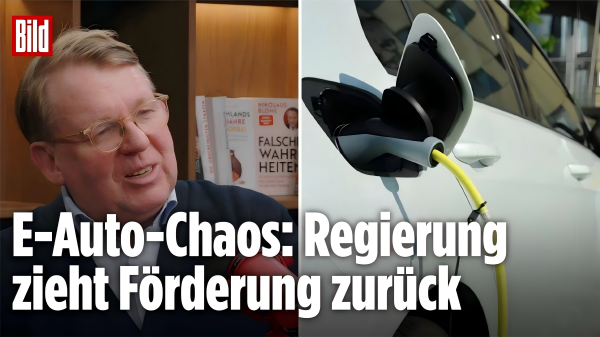
💡German EV policy chaos opens doors for AI in auto software competition
⚡ 30-Second TL;DR
What Changed
EV subsidies slashed in 2023-24 cause 30%+ monthly sales drops.
Why It Matters
Boosts Chinese EV market share in Europe, forcing German brands to ramp up software and AI features like HMI. Highlights need for stable policy to build consumer trust in EV transition.
What To Do Next
Prototype AI-driven EV charging optimization tools for Germany's infrastructure gaps.
Key Points
- •EV subsidies slashed in 2023-24 cause 30%+ monthly sales drops.
- •New subsidies target low-income buyers and local battery production.
- •Shift to software-defined vehicles challenges German firms vs Chinese rivals.
🧠 Deep Insight
AI-generated analysis for this event — not the original article.
🔑 Enhanced Key Takeaways
- •The European Commission's imposition of definitive countervailing duties on Chinese-made battery electric vehicles (BEVs) in late 2024 has significantly altered the pricing landscape, forcing Chinese manufacturers to localize production within the EU to bypass tariffs.
- •German automakers are increasingly adopting 'China-for-China' strategies, establishing dedicated R&D centers in Shanghai and Beijing to accelerate software development cycles, which are currently 2-3 times faster than traditional German development timelines.
- •The German government's 'Klimaschutz-Sofortprogramm' has pivoted funding toward charging infrastructure expansion and grid modernization, acknowledging that the lack of public fast-charging density is a greater barrier to adoption than vehicle price alone.
📊 Competitor Analysis▸ Show
| Feature | German Legacy OEMs (e.g., VW, BMW) | Chinese EV Entrants (e.g., BYD, NIO) |
|---|---|---|
| Software Architecture | Legacy modular/distributed systems | Centralized Zonal/SOA architecture |
| Pricing Strategy | Premium/Mid-range (High margin) | Aggressive/Value-driven (High volume) |
| Battery Tech | NCM (Nickel Cobalt Manganese) | LFP (Lithium Iron Phosphate) / Blade |
| OTA Capabilities | Limited/Infrequent updates | Full-vehicle OTA (Frequent) |
🛠️ Technical Deep Dive
- Software-Defined Vehicle (SDV) Architecture: Chinese entrants utilize centralized high-performance computing (HPC) units, allowing for seamless integration of ADAS and infotainment, whereas German firms are transitioning from legacy CAN-bus architectures to Ethernet-based zonal controllers.
- Battery Integration: Chinese manufacturers are leading in Cell-to-Pack (CTP) and Cell-to-Chassis (CTC) technologies, significantly increasing energy density and reducing structural weight compared to traditional module-based packs used by German OEMs.
- Operating Systems: Shift toward proprietary OS layers (e.g., NIO's SkyOS) that decouple hardware from software, enabling rapid feature deployment, contrasting with the complex, multi-vendor software stacks historically used by German manufacturers.
🔮 Future ImplicationsAI analysis grounded in cited sources
⏳ Timeline
Weekly AI Recap
Read this week's curated digest of top AI events →
👉Related Updates

AI-curated news aggregator. All content rights belong to original publishers.
Original source: 虎嗅 ↗
This is a summary, not the original. Read the source, or get the weekly briefing.
The weekly digest
One email a week. Unsubscribe anytime.