China’s Token Pricing War Intensifies
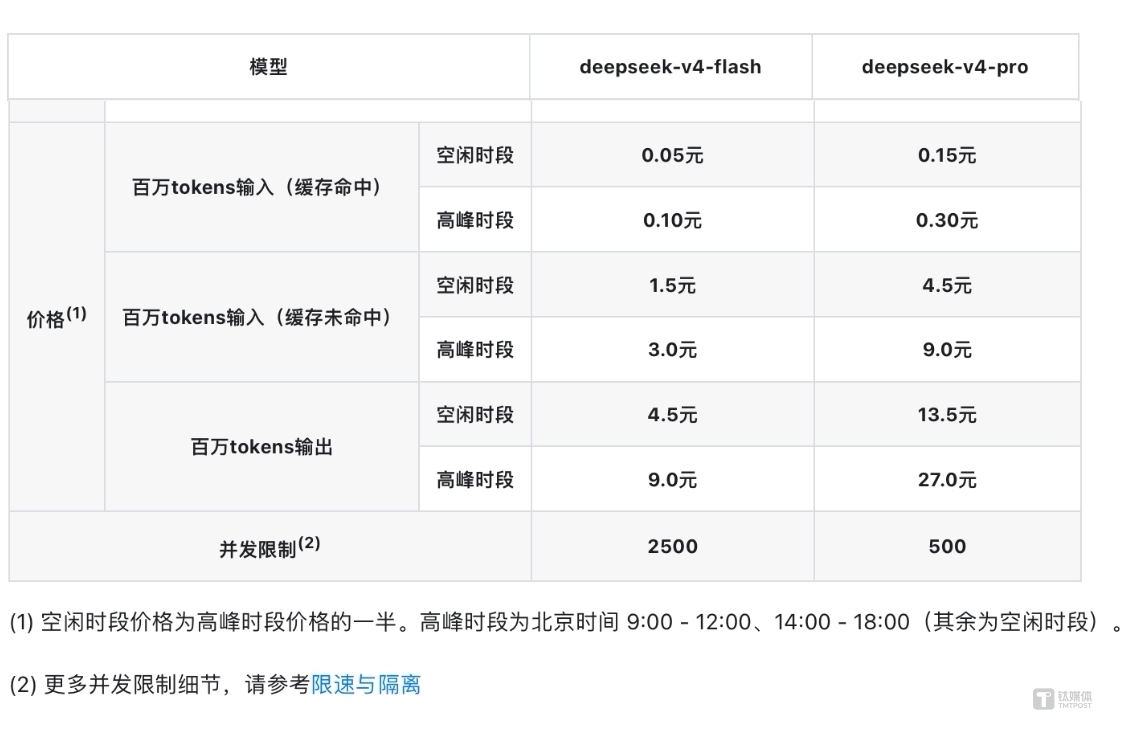
💡Token pricing shifts could materially change the economics of deploying Chinese LLMs.
⚡ 30-Second TL;DR
What Changed
Leading Chinese model providers are competing more aggressively on token pricing.
Why It Matters
Lower token prices could reduce inference costs for AI startups and application developers. However, frequent pricing changes may complicate vendor selection, budget planning, and long-term platform commitments.
What To Do Next
Run a cost-quality benchmark across the Chinese model APIs you use, tracking input-token, output-token, latency, and rate-limit changes.
Key Points
- •Leading Chinese model providers are competing more aggressively on token pricing.
- •The price war is becoming more granular rather than relying only on broad price cuts.
- •Pricing power may become a strategic differentiator among LLM vendors.
🧠 Deep Insight
AI-generated analysis for this event.
🔑 Enhanced Key Takeaways
- •Major Chinese AI firms, including Alibaba Cloud, Baidu, and DeepSeek, have shifted from 'free' promotional tiers to tiered subscription models that optimize for inference cost-per-token.
- •The 'price war' has evolved into a hardware-software co-optimization race, where companies are leveraging proprietary FPGA and ASIC architectures to lower the energy cost per million tokens.
- •Regulatory pressure from the Cyberspace Administration of China (CAC) regarding data security compliance has created a 'compliance premium,' where models with certified security frameworks command higher pricing despite the broader price war.
- •Market data indicates a transition toward 'B2B-specific' pricing, where providers offer customized token rates based on context window length and latency requirements rather than a flat rate for all users.
- •The intensification of the price war is driving a consolidation trend, with smaller model providers struggling to maintain margins, leading to increased M&A activity within the Chinese LLM ecosystem.
📊 Competitor Analysis▸ Show
| Feature | Alibaba (Qwen) | Baidu (Ernie) | DeepSeek | ByteDance (Doubao) |
|---|---|---|---|---|
| Pricing Strategy | Aggressive volume-based | Enterprise-integrated | Cost-leader (Open weights) | Low-cost API access |
| Primary Focus | Cloud ecosystem integration | Industrial/Gov applications | Research & Efficiency | Consumer/App ecosystem |
| Benchmark Standing | High (General purpose) | High (Chinese context) | High (Reasoning/Coding) | High (Speed/Latency) |
🛠️ Technical Deep Dive
- Implementation of Mixture-of-Experts (MoE) architectures has become the industry standard in China to reduce active parameter count per token, directly lowering inference costs.
- Adoption of FP8 and INT8 quantization techniques is being marketed as a key differentiator to improve throughput and reduce memory bandwidth bottlenecks.
- Utilization of speculative decoding and KV cache compression algorithms to minimize latency, allowing providers to offer 'faster' token tiers at premium prices.
- Integration of custom-built inference engines that bypass standard frameworks to achieve higher tokens-per-second (TPS) on domestic AI chips.
🔮 Future ImplicationsAI analysis grounded in cited sources
⏳ Timeline
Weekly AI Recap
Read this week's curated digest of top AI events →
👉Related Updates


AI-curated news aggregator. All content rights belong to original publishers.
Original source: 钛媒体 ↗