China’s Robot Boom Creates Go2 Repair Jobs
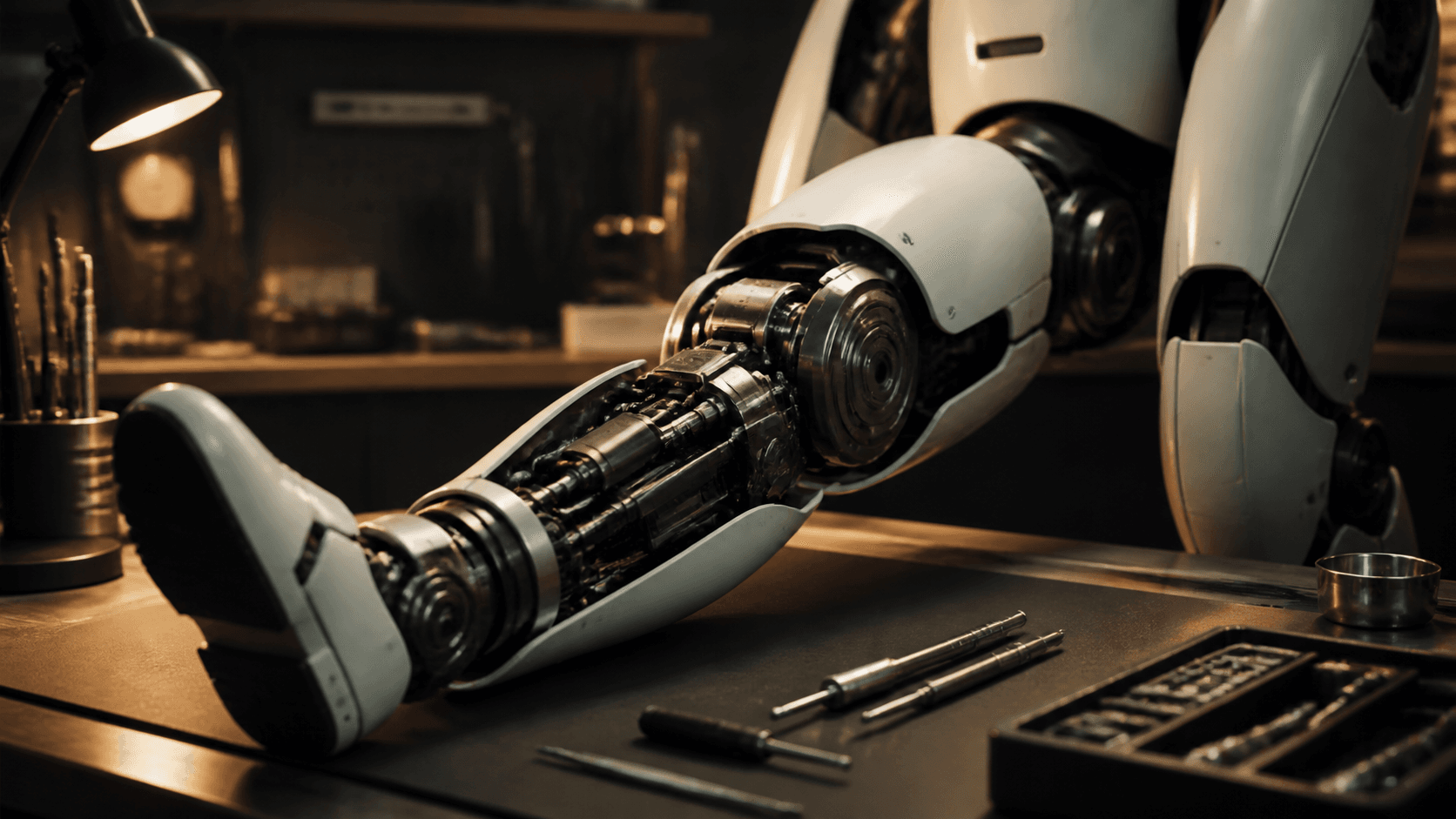
💡Robot deployment is creating a new operational layer: trained technicians who repair joints and decode failures.
⚡ 30-Second TL;DR
What Changed
A three-month surge in Chinese humanoid robot shipments has fueled a new repair and training services market.
Why It Matters
The emergence of specialized repair roles suggests that embodied AI deployments are moving beyond demonstrations toward sustained field use. For robot startups and operators, maintainability, diagnostics, and technician training may become important adoption factors.
What To Do Next
Before deploying a Unitree Go2 pilot, use its SDK and App diagnostics to build a fault-code runbook covering joint failures, recovery steps, and technician escalation.
Key Points
- •A three-month surge in Chinese humanoid robot shipments has fueled a new repair and training services market.
- •Trainees are paid about 6,000 yuan per month to service robot knee joints and diagnose app error codes.
- •Unitree Go2 robots are currently the most common machines handled by these third-party technicians.
🧠 Deep Insight
AI-generated analysis for this event.
🔑 Enhanced Key Takeaways
- •The rise of third-party repair services is driven by the 'low-cost' strategy of Unitree, which prioritizes mass-market accessibility over enterprise-grade durability, leading to higher wear-and-tear rates.
- •Repair technicians are increasingly utilizing specialized diagnostic software provided by Unitree's developer community, which allows for deeper access to the robot's motor control logs than the consumer-facing app.
- •Local vocational training centers in tech hubs like Shenzhen have begun integrating 'Quadruped Robot Maintenance' into their curriculum to address the labor shortage in the robotics service sector.
- •The repair market is shifting from simple component replacement to 'gait recalibration' services, where technicians use proprietary software to adjust joint torque and balance parameters after physical repairs.
- •Insurance companies in China are beginning to offer 'robot liability and maintenance' packages, which require certified third-party repair logs to validate claims.
📊 Competitor Analysis▸ Show
| Feature | Unitree Go2 | Boston Dynamics Spot | Xiaomi CyberDog 2 |
|---|---|---|---|
| Target Market | Consumer/Prosumer | Enterprise/Industrial | Consumer/Developer |
| Pricing | ~$1,600 - $3,000 | ~$75,000+ | ~$1,800 |
| Primary Use | Research/Entertainment | Inspection/Security | Research/Education |
| Repair Model | Third-party/DIY | Manufacturer-led | Manufacturer-led |
🛠️ Technical Deep Dive
- The Unitree Go2 utilizes a proprietary joint motor system with a peak torque of up to 45N.m, which is a common failure point due to gear wear under high-stress maneuvers.
- The robot's perception system relies on a 360-degree LiDAR and wide-angle depth cameras, which are frequently damaged in collisions, necessitating specialized calibration tools for replacement.
- Firmware architecture is based on a real-time operating system (RTOS) that logs error codes related to 'Joint Over-temperature' and 'Communication Timeout' between the main controller and the leg actuators.
- The chassis is constructed from a combination of high-strength plastic and aluminum alloy, requiring specific torque settings for screw replacement to prevent frame cracking.
🔮 Future ImplicationsAI analysis grounded in cited sources
⏳ Timeline
Weekly AI Recap
Read this week's curated digest of top AI events →
👉Related Updates


AI-curated news aggregator. All content rights belong to original publishers.
Original source: Pandaily ↗