China’s Rapid AI Integration Across Public and Private Sectors
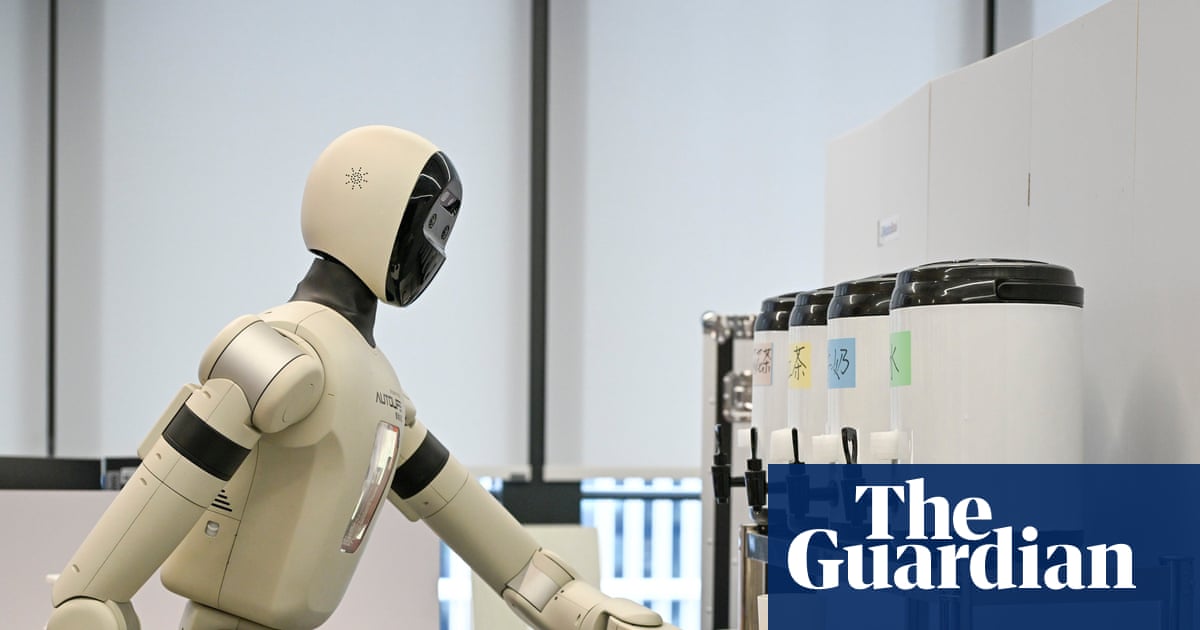
💡Understand how China is scaling AI across infrastructure, surveillance, and services at a national level.
⚡ 30-Second TL;DR
What Changed
Widespread deployment of AI in healthcare through virtual medical avatars.
Why It Matters
China's rapid, state-led AI deployment provides a unique case study on the scalability of AI in infrastructure and public services. It suggests a future where AI integration is deeply embedded in daily urban life and state governance.
What To Do Next
Analyze the operational efficiency of China's drone delivery and medical AI models to identify potential benchmarks for your own autonomous service deployments.
Key Points
- •Widespread deployment of AI in healthcare through virtual medical avatars.
- •Integration of intelligent robotics in manufacturing and logistics, including drone delivery.
- •State-level utilization of AI for enhanced surveillance and public monitoring.
- •Contrast between Western skepticism and China's aggressive, state-backed AI rollout.
🧠 Deep Insight
AI-generated analysis for this event — not the original article.
🔑 Enhanced Key Takeaways
- •China's 'AI for Science' initiative is accelerating drug discovery and materials research by integrating deep learning models with traditional scientific simulation tools.
- •The 'New Generation Artificial Intelligence Development Plan' (2017) established a clear roadmap for China to become the world's primary AI innovation center by 2030.
- •Local governments in cities like Shenzhen and Shanghai have implemented 'AI-first' urban planning policies, mandating the integration of smart traffic management systems to reduce congestion.
- •Chinese tech giants are increasingly focusing on 'Small Language Models' (SLMs) optimized for edge computing, allowing AI to run locally on devices without constant cloud connectivity.
- •The Cyberspace Administration of China (CAC) has introduced stringent generative AI regulations that require algorithms to reflect 'core socialist values' and undergo security assessments before public release.
🛠️ Technical Deep Dive
- Implementation of Federated Learning frameworks to train models across decentralized hospital networks while maintaining patient data privacy.
- Utilization of Transformer-based architectures in domestic Large Language Models (LLMs) such as Baidu's Ernie Bot and Alibaba's Qwen, often optimized for Chinese language nuances and cultural context.
- Deployment of 5G-Advanced (5.5G) networks to provide the low-latency, high-bandwidth infrastructure required for real-time industrial robotics and autonomous drone swarms.
- Integration of Computer Vision (CV) pipelines using high-density sensor fusion for public surveillance, leveraging edge-AI chips designed to bypass export restrictions.
🔮 Future ImplicationsAI analysis grounded in cited sources
⏳ Timeline
Weekly AI Recap
Read this week's curated digest of top AI events →
👉Related Updates

AI-curated news aggregator. All content rights belong to original publishers.
Original source: The Guardian Technology ↗
This is a summary, not the original. Read the source, or get the weekly briefing.
The weekly digest
One email a week. Unsubscribe anytime.