China's manufacturing dominance in global sports economy
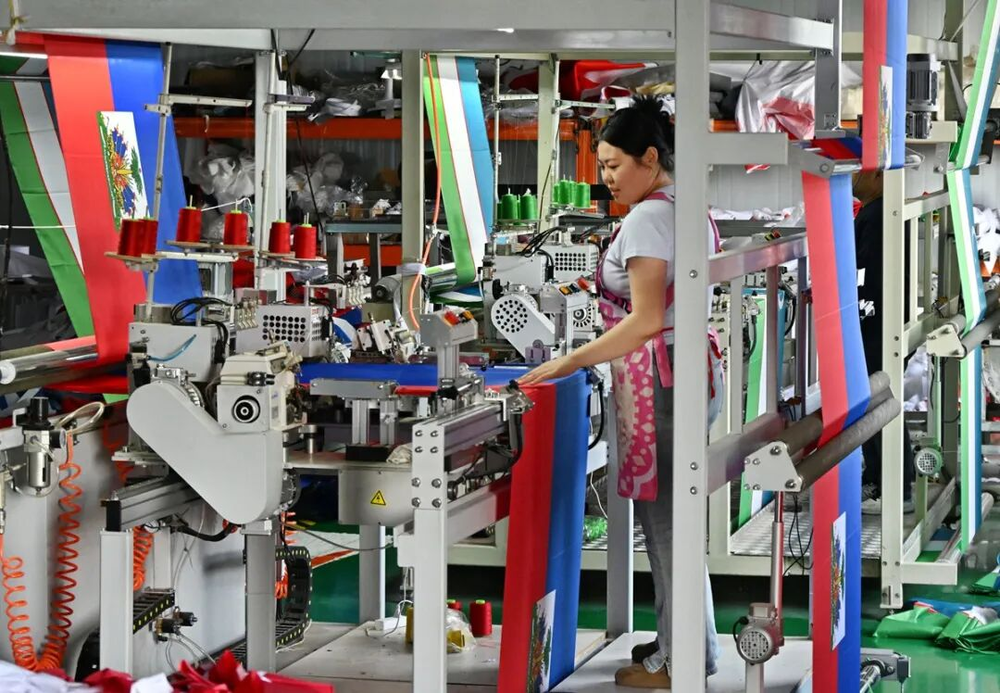
💡See how traditional manufacturing clusters are upgrading to high-tech, data-driven sports equipment production.
⚡ 30-Second TL;DR
What Changed
Regional clusters like Dongguan (toys/gifts), Shenzhen (3C/chips), and Yiwu (small commodities) form a mature sports supply chain.
Why It Matters
The integration of smart technology (e.g., 500Hz sensors in footballs) into traditional manufacturing demonstrates how legacy industries are becoming 'AI-ready' and data-driven.
What To Do Next
Explore integrating IoT or smart sensors into your hardware products to capture usage data and increase product value.
Key Points
- •Regional clusters like Dongguan (toys/gifts), Shenzhen (3C/chips), and Yiwu (small commodities) form a mature sports supply chain.
- •Manufacturers are moving up the value chain by securing official IP licensing and integrating smart sensors into products.
- •China's sports industry is targeting a 7 trillion RMB scale by 2030, focusing on 'service-oriented' growth alongside manufacturing.
🧠 Deep Insight
Background and context from public sources — not the original article. 18 sources cited.
🔑 Enhanced Key Takeaways
- •The Chinese government is actively driving the sports industry's growth through comprehensive policy support, including 20 measures issued in September 2025, aimed at stimulating domestic sports consumption, developing outdoor and ice-and-snow economies, and integrating sports facilities into urban planning.
- •Chinese sports brands, such as Anta Sports and Li-Ning, are significantly enhancing their global influence by investing in research and development for high-performance gear, acquiring international brands (e.g., Anta's acquisition of Amer Sports), and strategically leveraging intellectual property licensing for major events like the World Cup.
- •China's sports goods exports are diversifying beyond traditional low-cost manufacturing, with a growing focus on high-tech fitness equipment and smart wearables, and an expansion of export markets to include Europe, Latin America, and Southeast Asia as key growth drivers.
- •The Pearl River Delta region continues to be an indispensable hub for high-specification sports equipment manufacturing, demonstrated by its role in producing the official Adidas 'TRIONDA' match ball for the 2026 FIFA World Cup, owing to its mature supply chain and rapid production capabilities.
🛠️ Technical Deep Dive
- Integration of smart sensors into sports products includes intelligent scales, smart skipping ropes, posture-correcting sensors in apparel, and sensors in strength equipment for real-time form analysis.
- Advanced materials and design innovations are seen in products like Anta's upgraded skeleton racing shoes, which feature lightweight alloy studs for grip, carbon fiber insoles for propulsion, and athlete-data-driven customization for reduced wind resistance.
- Specialized protective gear, such as Anta's self-developed anti-cut material for short track speed skating suits, meets high international safety standards while maintaining lightweight and breathable properties.
- Chinese companies are developing smart wearable devices like heart rate monitors, collective training systems, cycling products, and smart motion trackers, often accompanied by integrated mobile applications for data analysis.
- AI-powered training tools are being introduced to enhance grassroots sports access and development.
🔮 Future ImplicationsAI analysis grounded in cited sources
⏳ Timeline
📎 Sources (18)
Factual claims are grounded in the sources below. Forward-looking analysis is AI-generated interpretation.
Weekly AI Recap
Read this week's curated digest of top AI events →
👉Related Updates



AI-curated news aggregator. All content rights belong to original publishers.
Original source: 虎嗅 ↗
This is a summary, not the original. Read the source, or get the weekly briefing.
The weekly digest
One email a week. Unsubscribe anytime.