China's Commercial Space Sector Accelerates Amid SpaceX Competition
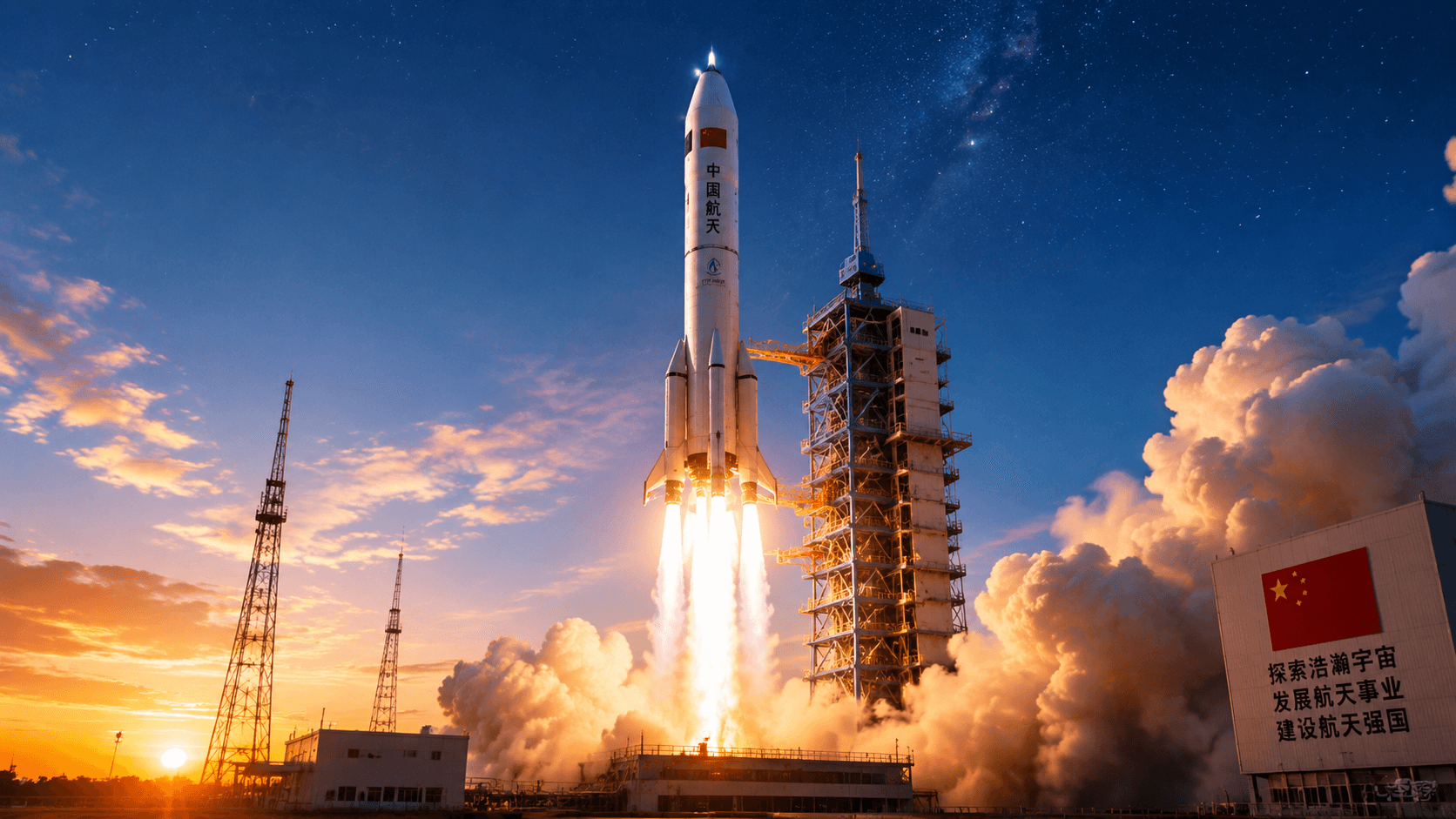
Understand the competitive landscape of the global space race and its implications for satellite AI infrastructure.
30-Second TL;DR
What Changed
Increased government and private investment in domestic launch vehicles
Why It Matters
This shift could lead to a surge in demand for satellite-related software and AI-driven orbital management systems. Practitioners should monitor Chinese aerospace procurement for potential integration opportunities.
What To Do Next
Analyze the satellite data processing requirements of emerging Chinese aerospace firms to identify gaps for AI-driven analytics tools.
Key Points
- •Increased government and private investment in domestic launch vehicles
- •Strategic focus on reusable rocket technology to reduce costs
- •Efforts to build a robust satellite constellation infrastructure
Deep Insight
AI-generated analysis for this event — not the original article.
Enhanced Key Takeaways
- •The Chinese government has established 'space-integrated economic zones' in provinces like Hainan and Shanghai to provide tax incentives and infrastructure support for private space firms.
- •Major Chinese commercial players like LandSpace and Deep Blue Aerospace have successfully conducted vertical take-off and landing (VTVL) tests, signaling a shift toward SpaceX-style reusability.
- •China's 'G60 Starlink' and 'Guowang' (National Network) projects are rapidly expanding to secure orbital slots and spectrum, directly challenging the dominance of SpaceX's Starlink constellation.
- •The China National Space Administration (CNSA) has begun opening state-owned launch facilities to private companies to alleviate launch bottlenecks and accelerate flight cadences.
- •Chinese commercial launch providers are increasingly utilizing liquid oxygen-methane (methalox) engine technology, mirroring the design philosophy of the SpaceX Raptor engine to optimize for reusability.
Competitor Analysis
- SpaceX (Falcon 9/Starship)
- Proven (Full/Partial)
- Chinese Commercial Sector (e.g., LandSpace/iSpace)
- Experimental/Early Stage
- SpaceX (Falcon 9/Starship)
- Industry Benchmark (Low)
- Chinese Commercial Sector (e.g., LandSpace/iSpace)
- Rapidly Decreasing (Targeting parity)
- SpaceX (Falcon 9/Starship)
- Starlink (Operational)
- Chinese Commercial Sector (e.g., LandSpace/iSpace)
- G60/Guowang (Deployment Phase)
- SpaceX (Falcon 9/Starship)
- Methalox (Raptor) / Kerolox (Merlin)
- Chinese Commercial Sector (e.g., LandSpace/iSpace)
- Methalox (Zhuque-2/Others)
| Feature | SpaceX (Falcon 9/Starship) | Chinese Commercial Sector (e.g., LandSpace/iSpace) |
|---|---|---|
| Reusability | Proven (Full/Partial) | Experimental/Early Stage |
| Launch Cost | Industry Benchmark (Low) | Rapidly Decreasing (Targeting parity) |
| Constellation | Starlink (Operational) | G60/Guowang (Deployment Phase) |
| Engine Tech | Methalox (Raptor) / Kerolox (Merlin) | Methalox (Zhuque-2/Others) |
Technical Deep Dive
- Propulsion Systems: Shift toward liquid oxygen-methane (methalox) engines to minimize soot accumulation, facilitating faster turnaround times for reusable stages.
- Vertical Take-off and Landing (VTVL): Implementation of grid fin control systems and throttleable engines to manage precision landing maneuvers.
- Satellite Bus Architecture: Development of modular, mass-producible satellite buses designed for rapid deployment via multi-payload launch configurations.
- Launch Infrastructure: Transitioning from traditional pad-based fueling to automated, high-pressure propellant loading systems to support high-cadence operations.
Future ImplicationsAI analysis grounded in cited sources
Timeline
- 2023-07LandSpace's Zhuque-2 becomes the world's first methalox rocket to reach orbit.
- 2024-01Shanghai launches the first batch of satellites for the G60 Starlink-equivalent constellation.
- 2025-06Deep Blue Aerospace completes a successful high-altitude VTVL test flight.
- 2026-03CNSA announces new regulations streamlining private access to national launch infrastructure.
Weekly AI Recap
Read this week's curated digest of top AI events →
Related Updates



AI-curated news aggregator. All content rights belong to original publishers.
Original source: Pandaily ↗
This is a summary, not the original. Read the source, or get the weekly briefing.
The weekly digest
One email a week. Unsubscribe anytime.