China's Auto Industry Strategy Amidst Market Saturation
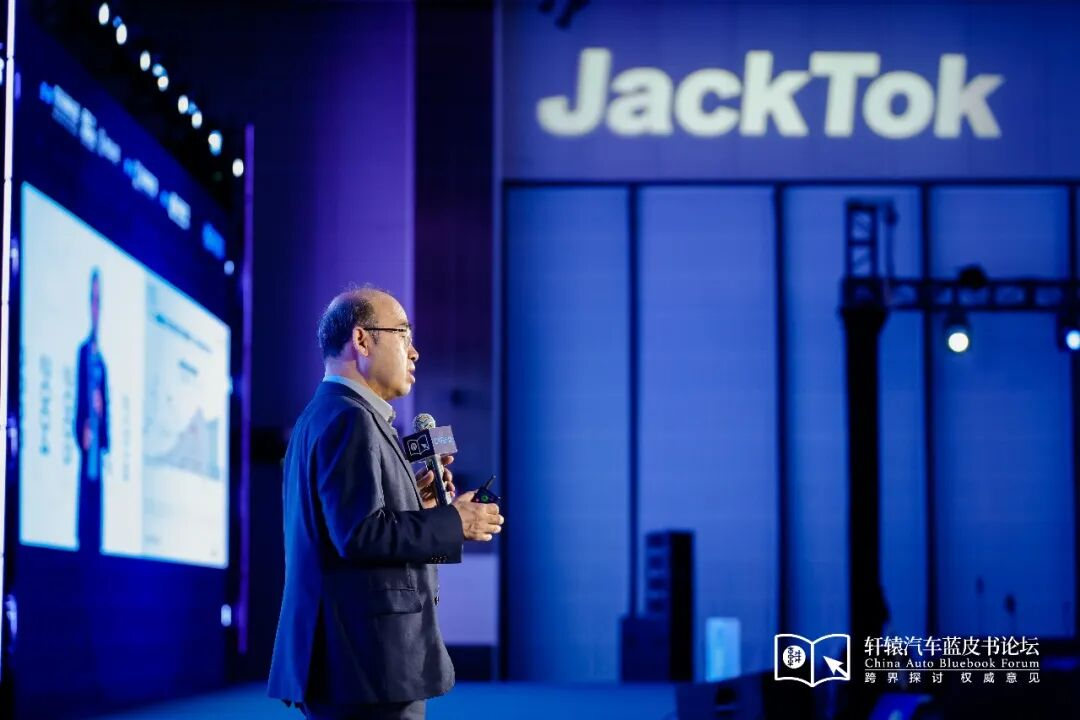
💡Understand the strategic pivot of China's top automakers as they transition from volume growth to profit-driven AI/EV te
⚡ 30-Second TL;DR
What Changed
Domestic market has entered a 'volatile slow-growth' phase with intense price competition.
Why It Matters
The shift forces Chinese automakers to prioritize R&D efficiency and global market penetration over pure volume, impacting supply chain and software integration strategies.
What To Do Next
Analyze the vertical integration strategies of top-performing Chinese OEMs to identify potential gaps for AI-driven supply chain optimization tools.
Key Points
- •Domestic market has entered a 'volatile slow-growth' phase with intense price competition.
- •Future success depends on stable profitability and clear comparative advantages (e.g., BYD's vertical integration, Huawei's smart driving).
- •International expansion is critical for survival as domestic market saturation persists.
🧠 Deep Insight
Web-grounded analysis with 23 cited sources.
🔑 Enhanced Key Takeaways
- •China's domestic auto market faces severe overcapacity, with production capacity significantly exceeding domestic sales (e.g., 54 million units capacity vs. 27.5 million units sold in 2025), compelling automakers to aggressively pursue international exports.
- •Decades of targeted government industrial policies, including initiatives like 'Made in China 2025' and substantial subsidies, have been instrumental in fostering China's automotive industry growth, leading to its current global dominance in EV production and technology, but also contributing to the current oversupply.
- •Chinese automakers are strategically shifting from a simple product export model to establishing comprehensive overseas operations, including local production lines, R&D centers, and service networks, to mitigate rising trade barriers and secure long-term global market share.
- •Despite China's automotive industry achieving a global market share of 32% in Q1 2026, the sector's profit margin has plummeted to a record low of 3.2%, primarily due to intense domestic price wars and a structural imbalance where upstream suppliers capture a larger share of profits.
- •The rapid innovation cycle of Chinese EV firms, approximately 30% faster than Western competitors, coupled with a higher risk tolerance for commercializing new technologies, has been a key factor in their ability to quickly develop and launch new models.
🛠️ Technical Deep Dive
- BYD's Vertical Integration:
- Manufactures approximately 75% of its vehicle components in-house, including batteries, power electronics, electric motors, and semiconductors, providing significant cost and speed advantages.
- Proprietary Blade Battery utilizes a cell-to-pack format, enhancing safety (passed nail penetration test), improving energy density, and reducing manufacturing costs by eliminating conventional pack structures.
- Controls critical raw material sourcing through stakes in lithium mines across China, Africa, and South America.
- BYD Semiconductor produces essential chips like Insulated Gate Bipolar Transistors (IGBTs), crucial for EV powertrains, providing resilience during global chip shortages.
- Employs high levels of automation in manufacturing, with its Xi'an plant reporting 97% automation in 2020, and utilizes AI for quality control in battery production, leading to a 40% reduction in defects and 20% improvement in lifespan.
- Implements the 'God's Eye' system, a three-tiered platform for advanced driver assistance systems, deployed as standard across all vehicle price points.
- Huawei's Smart Driving Solutions:
- Launched its Intelligent Automotive Solution business unit in May 2019, investing around US$1 billion annually in autonomous driving R&D.
- Huawei ADS 2.0 (and the upcoming Qiankun Intelligent Driving ADS 4.1) leverages GOD 2.0 (General Obstacle Detection Network) and RCR 2.0 (Road Topology Reconstruction Network) technologies to significantly reduce reliance on high-definition (HD) maps.
- Utilizes the WEWA architecture, an end-to-end generative architecture comprising the cloud World Engine (WE) and the on-vehicle World Action Model (WA).
- Focuses on advanced driver assistance systems (ADAS) and intelligent cockpits, with systems tested in complex urban traffic to learn human-like driving behaviors.
- Collaborates with major automakers such as BYD, Dongfeng, Audi, FAW, Changan, GAC, and BAIC for the adoption of its intelligent driving systems.
🔮 Future ImplicationsAI analysis grounded in cited sources
⏳ Timeline
📎 Sources (23)
Factual claims are grounded in the sources below. Forward-looking analysis is AI-generated interpretation.
- germanautopreneur.com
- business-standard.com
- americanmanufacturing.org
- foley.com
- thirdway.org
- evrimagaci.org
- automotivemanufacturingsolutions.com
- accio.com
- gasgoo.com
- carexpert.com.au
- berkeley.edu
- automotivemanufacturingsolutions.com
- supplychaincommunity.org
- evparts4x4.com
- evmagazine.com
- fool.com
- thirdbridge.com
- huawei.com
- gasgoo.com
- huawei.com
- huawei.com
- forbes.com
- thewirechina.com
Weekly AI Recap
Read this week's curated digest of top AI events →
👉Related Updates


AI-curated news aggregator. All content rights belong to original publishers.
Original source: 虎嗅 ↗