China's 9-Series EV Battle Ignites
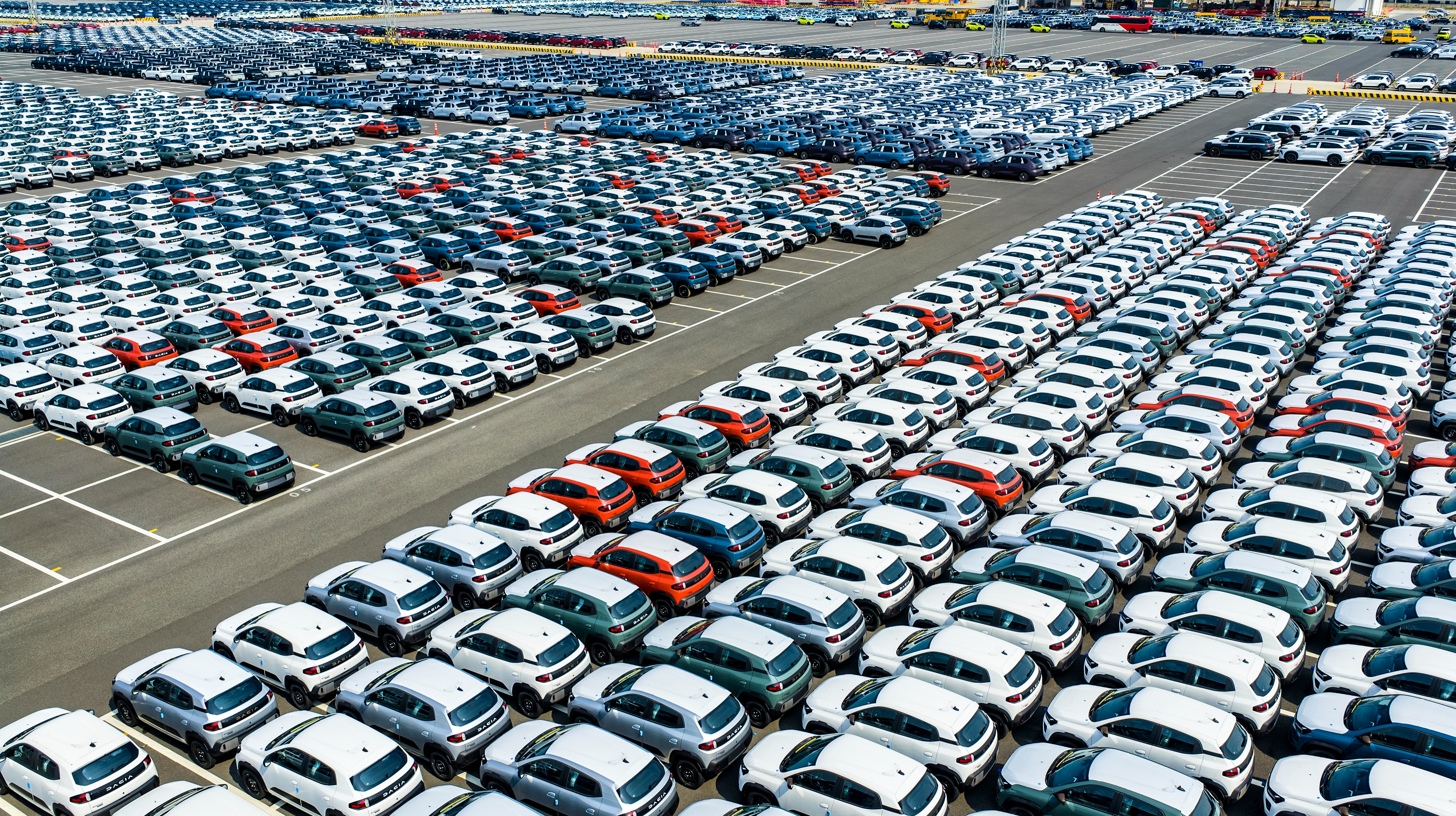
💡China's smart EV '9-series' war reveals premium AI auto trends for strategists.
⚡ 30-Second TL;DR
What Changed
15+ '9-series' models from NIO ES9, Li L9, Zhijie V9, BYD etc. launching Q1 2025.
Why It Matters
This premium EV surge pressures traditional luxury brands and accelerates demand for advanced ADAS/intelligent cabin AI, reshaping China's auto market hierarchy.
What To Do Next
Benchmark NIO ES9 and Zhijie V9's smart driving systems for your ADAS development roadmap.
Key Points
- •15+ '9-series' models from NIO ES9, Li L9, Zhijie V9, BYD etc. launching Q1 2025.
- •High-price (>300k RMB), large (>5.2m), high-intelligence features targeting high-net-worth users.
- •Intense business market rivalry for prestige, with family as secondary battlefield.
- •Strategy to escape low-end price wars, capture profits, challenge BBA with smart tech.
🧠 Deep Insight
AI-generated analysis for this event — not the original article.
🔑 Enhanced Key Takeaways
- •The '9-series' nomenclature has evolved into a strategic branding tier in China, specifically signaling the integration of advanced 800V silicon carbide architectures and centralized electronic/electrical (E/E) architectures to support Level 3 autonomous driving readiness.
- •Market data indicates that the 300k+ RMB segment is the only area in the Chinese EV market currently experiencing sustained margin expansion, as manufacturers shift focus from volume-based market share to 'value-per-unit' metrics to offset R&D costs.
- •Supply chain analysis reveals that these flagship models are increasingly utilizing localized high-performance computing (HPC) chips and LiDAR solutions, reducing reliance on Western Tier-1 suppliers to achieve cost-efficiency at the premium price point.
📊 Competitor Analysis▸ Show
| Feature | Li Auto L9 (Benchmark) | NIO ES9 (Target) | Zhijie V9 (Emerging) | BYD Yangwang U8 (Ultra-Premium) |
|---|---|---|---|---|
| Pricing (RMB) | ~400k-460k | ~420k-480k | ~350k-450k | ~1,000k+ |
| Length (mm) | 5218 | 5130 | 5250 | 5319 |
| Architecture | EREV (Range Extender) | BEV (Swappable) | BEV (Smart-focused) | BEV/EREV (e4 Platform) |
| Key Differentiator | Family-centric comfort | Battery Swap ecosystem | HarmonyOS integration | Off-road/Tank turn capability |
🛠️ Technical Deep Dive
- •Centralized E/E Architecture: Transitioning from domain-based to zonal controllers to reduce wiring harness complexity and enable OTA updates for chassis and powertrain control.
- •800V High-Voltage Platforms: Implementation of SiC (Silicon Carbide) power modules to enable 10-80% charging in under 20 minutes, a prerequisite for the '9-series' premium positioning.
- •Advanced Cockpit Integration: Utilization of Qualcomm Snapdragon 8295 or equivalent SoCs to support multi-screen interaction, AI-driven voice assistants, and 3D HMI (Human-Machine Interface) environments.
- •Smart Driving Stacks: Integration of dual-Orin-X chips providing 508 TOPS of computing power, coupled with roof-mounted LiDAR for urban Navigate-on-Autopilot (NOA) capabilities.
🔮 Future ImplicationsAI analysis grounded in cited sources
⏳ Timeline
Weekly AI Recap
Read this week's curated digest of top AI events →
👉Related Updates
AI-curated news aggregator. All content rights belong to original publishers.
Original source: Huxiu (虎嗅) ↗
This is a summary, not the original. Read the source, or get the weekly briefing.
Weekly AI briefing
One email a week. Unsubscribe anytime.