China's 40-Year Talent Plan Fuels AI US Rivalry
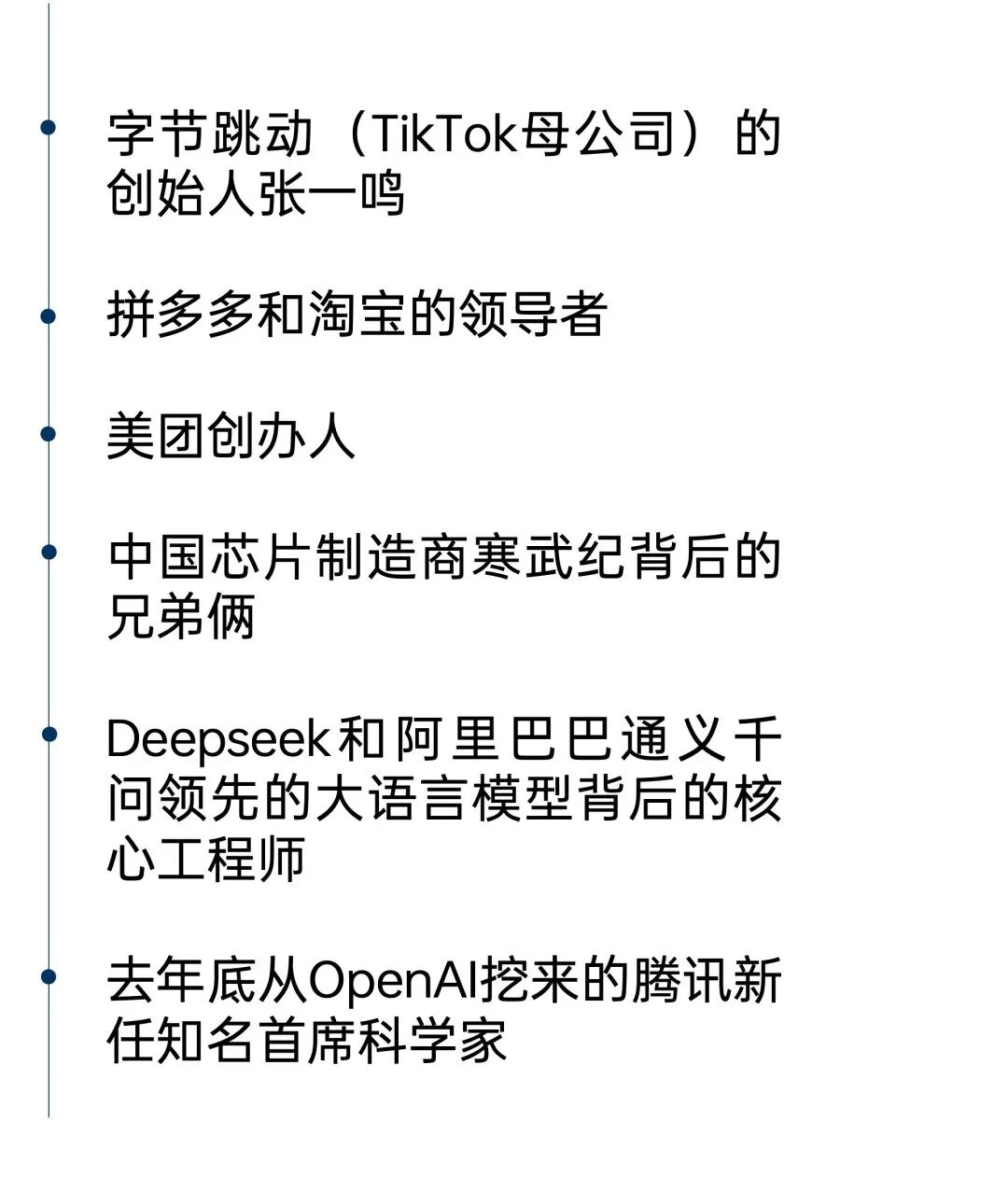
💡China's elite schools birth AI talents beating OpenAI—key to global rivalry shifts.
⚡ 30-Second TL;DR
What Changed
100,000 students enter genius classes yearly for math/physics olympiads and elite uni entry
Why It Matters
China's massive talent pipeline accelerates AI catching up to US, with open models like R1 pressuring closed systems. Western firms rely on these talents but face retention risks from geopolitics. AI practitioners must adapt to rising Chinese competition in models and infrastructure.
What To Do Next
Download DeepSeek R1 model and benchmark its inference efficiency on your hardware.
Key Points
- •100,000 students enter genius classes yearly for math/physics olympiads and elite uni entry
- •Graduates lead ByteDance (Zhang Yiming), Pinduoduo, Meituan, Cambricon chips, DeepSeek R1
- •DeepSeek R1 beats US models with fewer chips; team mostly genius class alumni from Tsinghua/PKU
- •System traces to 1950s; enables skipping gaokao via intl competitions
- •US firms hire Chinese talents, but visa issues push returns amid China's growth
🧠 Deep Insight
AI-generated analysis for this event.
🔑 Enhanced Key Takeaways
- •The 'Genius Class' (Shaonianban) model, pioneered by USTC in 1978, has evolved from a focus on general physics/math to a specialized pipeline for AI research, with recent curriculum shifts emphasizing large-scale distributed computing and reinforcement learning.
- •DeepSeek's R1 model architecture utilizes a novel 'Multi-Token Prediction' training objective and a highly optimized Mixture-of-Experts (MoE) framework that significantly reduces the computational overhead typically required for reasoning-heavy tasks.
- •China's Ministry of Education has recently integrated 'AI Literacy' into the national curriculum for these elite programs, creating a formal feedback loop between top-tier universities and private sector AI labs like DeepSeek to accelerate the deployment of domestic LLMs.
📊 Competitor Analysis▸ Show
| Feature | DeepSeek R1 | OpenAI o1 | Anthropic Claude 3.5 |
|---|---|---|---|
| Training Efficiency | High (MoE optimization) | Moderate | Moderate |
| Reasoning Focus | Chain-of-Thought (CoT) | Chain-of-Thought (CoT) | General Purpose |
| Open Weights | Yes | No | No |
| Primary Advantage | Cost-to-performance ratio | Ecosystem integration | Safety/Alignment |
🛠️ Technical Deep Dive
- •DeepSeek R1 utilizes a Mixture-of-Experts (MoE) architecture where only a fraction of parameters are activated per token, drastically lowering inference costs.
- •The model employs a Reinforcement Learning (RL) pipeline that optimizes for reasoning chains, allowing the model to 'think' before generating final outputs.
- •Implementation relies on custom kernels for communication-efficient distributed training, bypassing some of the bottlenecks associated with standard NCCL implementations on restricted hardware.
- •The training data pipeline emphasizes high-quality synthetic reasoning traces generated by smaller, specialized models to bootstrap the R1 reasoning capabilities.
🔮 Future ImplicationsAI analysis grounded in cited sources
⏳ Timeline
Weekly AI Recap
Read this week's curated digest of top AI events →
👉Related Updates



AI-curated news aggregator. All content rights belong to original publishers.
Original source: 虎嗅 ↗