🐯虎嗅•Stalecollected in 13m
China Nuclear at $3/W vs US $15/W for AI
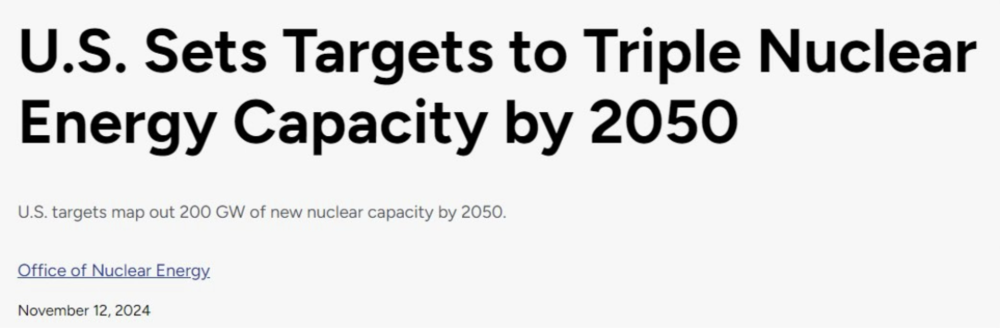
💡China's cheap nuclear unlocks AI compute advantage; US lags badly (Nature data)
⚡ 30-Second TL;DR
What Changed
China's nuclear costs < $3/W, 58 reactors in 20 years via 75%+ indigenization
Why It Matters
Gives China edge in AI infrastructure race; US must reform for nuclear revival to power data centers. Highlights supply chain scale for cost wins.
What To Do Next
Assess nuclear energy contracts for your AI cluster's long-term power needs.
Who should care:Founders & Product Leaders
Key Points
- •China's nuclear costs < $3/W, 58 reactors in 20 years via 75%+ indigenization
- •US costs $15/W from custom designs, regulations, idle workers up to 75%
- •Nature study debunks low wages; credits supply chain, constant builds
- •Nuclear learning curve plateaus; safety upgrades raise costs
🧠 Deep Insight
AI-generated analysis for this event.
🔑 Enhanced Key Takeaways
- •The cost disparity is heavily influenced by China's 'fleet approach' to nuclear construction, where the same reactor design (Hualong One) is replicated across multiple sites, allowing for significant economies of scale and iterative process improvements.
- •US nuclear cost inflation is exacerbated by the 'first-of-a-kind' (FOAK) engineering burden, where regulatory requirements and site-specific modifications prevent the standardization benefits seen in China's state-led deployment model.
- •The integration of nuclear power into AI data center infrastructure is shifting from a theoretical discussion to active procurement, with major US tech firms signing long-term Power Purchase Agreements (PPAs) to bypass grid volatility and secure 24/7 carbon-free energy.
📊 Competitor Analysis▸ Show
| Feature | China Nuclear (Hualong One) | US Nuclear (AP1000/Custom) | Small Modular Reactors (SMRs) |
|---|---|---|---|
| Cost per Watt | ~$3/W | ~$15/W | Variable (Projected $6-$10/W) |
| Build Time | 5-6 Years | 10-15+ Years | 3-5 Years (Target) |
| Standardization | High (Fleet approach) | Low (Site-specific) | High (Factory-built) |
| Primary Market | Grid-scale baseload | Grid-scale baseload | Distributed/Data Center |
| Regulatory Status | State-backed approval | Complex/Litigious | Emerging/Licensing phase |
🛠️ Technical Deep Dive
- •Hualong One (HPR1000): A Generation III+ pressurized water reactor (PWR) design featuring a 177-assembly core and double-containment structure.
- •Passive Safety Systems: Incorporates both active and passive safety features, including passive residual heat removal systems that function without external power.
- •Supply Chain Localization: Over 90% of components for Hualong One are manufactured domestically within China, reducing exposure to international logistics and currency fluctuations.
- •Construction Methodology: Utilizes advanced modular construction techniques where large sections are pre-assembled off-site and lifted into place, significantly reducing on-site labor hours.
🔮 Future ImplicationsAI analysis grounded in cited sources
US AI firms will increasingly pursue direct equity stakes in nuclear projects.
To mitigate the high cost and long lead times of traditional utility-scale nuclear, tech companies are moving from simple power buyers to active project financiers.
China will achieve a dominant position in global nuclear export markets by 2030.
The proven ability to deliver reactors at a fraction of Western costs provides a compelling value proposition for developing nations seeking energy security.
⏳ Timeline
2015-05
Construction begins on the first Hualong One demonstration unit at Fuqing Nuclear Power Plant.
2020-11
Fuqing Unit 5, the first Hualong One reactor, achieves first criticality.
2021-01
Fuqing Unit 5 enters commercial operation, marking the successful deployment of China's standardized reactor design.
2023-09
Nature Energy publishes research quantifying the cost and construction time advantages of Chinese nuclear deployment compared to Western counterparts.
2024-03
Major US tech companies begin formalizing energy procurement strategies involving the reactivation of retired nuclear assets to support AI compute loads.
📰
Weekly AI Recap
Read this week's curated digest of top AI events →
👉Related Updates
AI-curated news aggregator. All content rights belong to original publishers.
Original source: 虎嗅 ↗