China Chip Capacity Hits 42% Globally by 2028
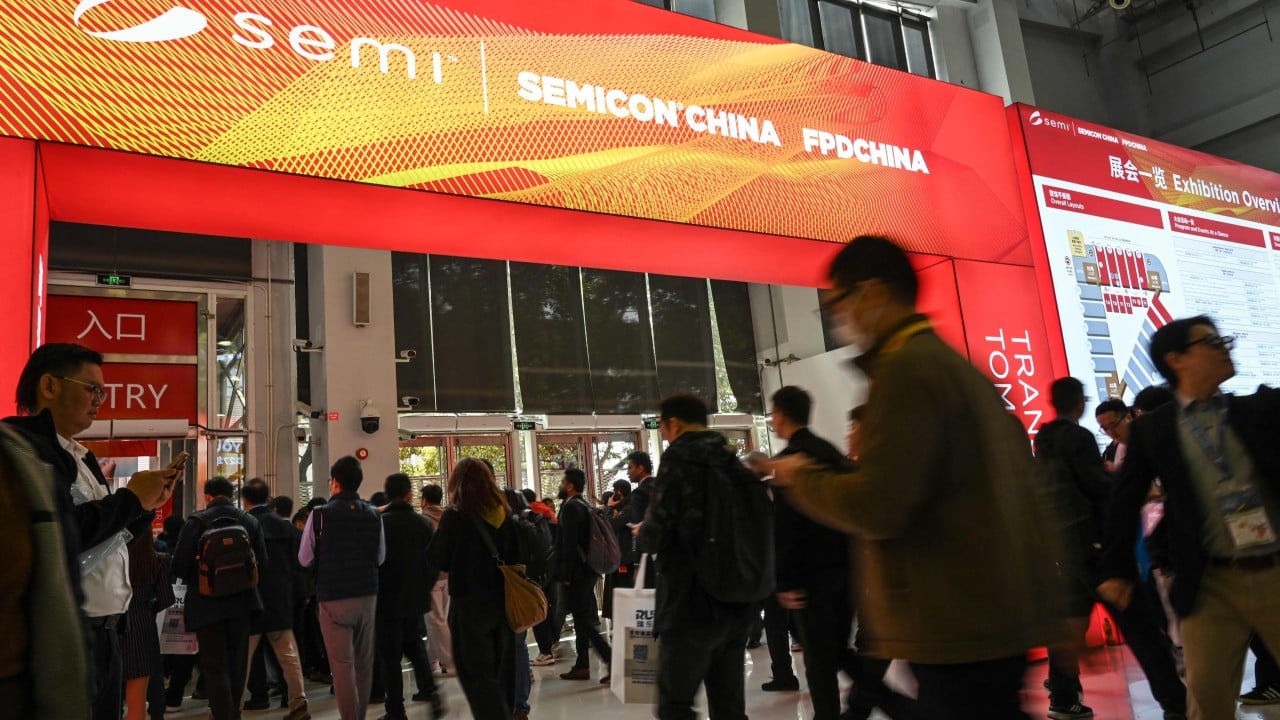
💡China nears 42% global chip capacity by 2028, reshaping AI hardware supply
⚡ 30-Second TL;DR
What Changed
Agentic AI identified as key growth driver
Why It Matters
China's chip dominance could reduce global AI hardware costs through increased supply but heighten geopolitical supply chain risks. AI practitioners may see more affordable advanced chips amid rising capacity.
What To Do Next
Assess China's wafer fab growth impact on your AI chip procurement strategy.
Key Points
- •Agentic AI identified as key growth driver
- •Advanced packaging technology boosts chip industry
- •China's wafer fab share rises to 42% by 2028
- •Rapid expansion highlighted at Semicon China
🧠 Deep Insight
AI-generated analysis for this event — not the original article.
🔑 Enhanced Key Takeaways
- •The 42% capacity projection is heavily skewed toward legacy nodes (28nm and above), as US-led export controls continue to restrict China's access to EUV lithography equipment necessary for sub-7nm production.
- •China's strategy focuses on 'mature node' dominance to leverage economies of scale, aiming to supply the massive demand for chips in electric vehicles, industrial automation, and consumer IoT devices.
- •The integration of Agentic AI in semiconductor manufacturing is being utilized to optimize yield rates and automate complex lithography process adjustments, helping domestic firms mitigate the lack of experienced process engineers.
🛠️ Technical Deep Dive
- •Advanced Packaging: Shift toward 2.5D and 3D heterogeneous integration (e.g., CoWoS-like architectures) to improve performance of chips manufactured on older nodes by stacking logic and memory.
- •Agentic AI Implementation: Deployment of autonomous agents in fab environments to perform real-time defect detection and predictive maintenance on legacy DUV (Deep Ultraviolet) lithography machines.
- •Capacity Composition: The 42% figure includes significant investment in 28nm, 40nm, and 55nm process nodes, which remain the workhorses for automotive and power management integrated circuits.
🔮 Future ImplicationsAI analysis grounded in cited sources
⏳ Timeline
Weekly AI Recap
Read this week's curated digest of top AI events →
👉Related Updates

AI-curated news aggregator. All content rights belong to original publishers.
Original source: SCMP Technology ↗
This is a summary, not the original. Read the source, or get the weekly briefing.
The weekly digest
One email a week. Unsubscribe anytime.