China Blocks US Investment in Top AI Firms
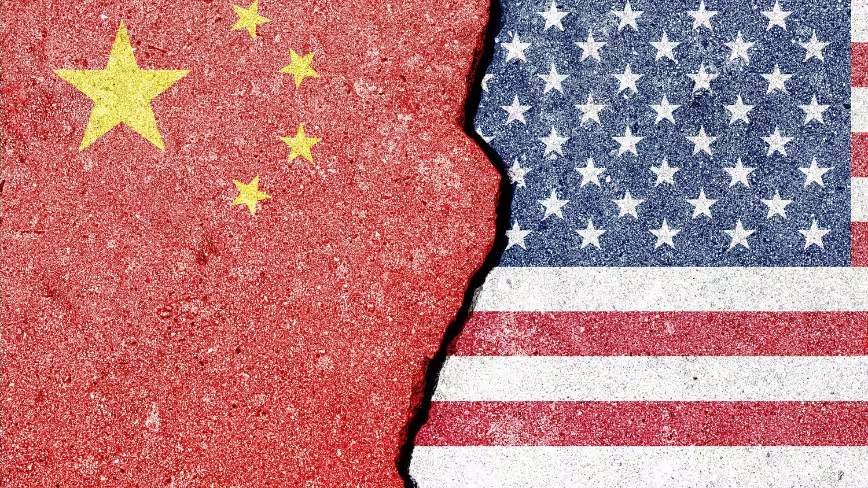
💡China blocks US cash to top AI firms—major shift in global funding wars.
⚡ 30-Second TL;DR
What Changed
China requires gov approval for top AI firms to accept US investment
Why It Matters
This policy could hinder US funding to Chinese AI leaders, slowing their growth and altering global AI investment landscapes. AI practitioners and founders may need to diversify funding sources away from US-China cross-border deals.
What To Do Next
Review international investment compliance for any stakes in Chinese AI companies.
Key Points
- •China requires gov approval for top AI firms to accept US investment
- •Targets leading tech cos and AI startups
- •Escalates US-China AI war into capital restrictions
- •Parallel moves in 24 hours signal policy shift
🧠 Deep Insight
AI-generated analysis for this event — not the original article.
🔑 Enhanced Key Takeaways
- •The policy is reportedly being enforced through the Cyberspace Administration of China (CAC) and the National Development and Reform Commission (NDRC), which are now requiring mandatory security reviews for any foreign capital infusion exceeding a specific, undisclosed threshold in 'strategic' AI sectors.
- •This regulatory shift is designed to prevent US venture capital firms from gaining board seats or intellectual property oversight in Chinese companies developing dual-use AI technologies, specifically those related to autonomous systems and large-scale model training.
- •The move follows a series of US executive orders that restricted American investment into Chinese AI, quantum computing, and semiconductor sectors, suggesting this is a direct retaliatory measure to decouple the financial ecosystems of the two nations.
🔮 Future ImplicationsAI analysis grounded in cited sources
⏳ Timeline
📰 Event Coverage
Weekly AI Recap
Read this week's curated digest of top AI events →
👉Related Updates

AI-curated news aggregator. All content rights belong to original publishers.
Original source: The Next Web (TNW) ↗
This is a summary, not the original. Read the source, or get the weekly briefing.
The weekly digest
One email a week. Unsubscribe anytime.