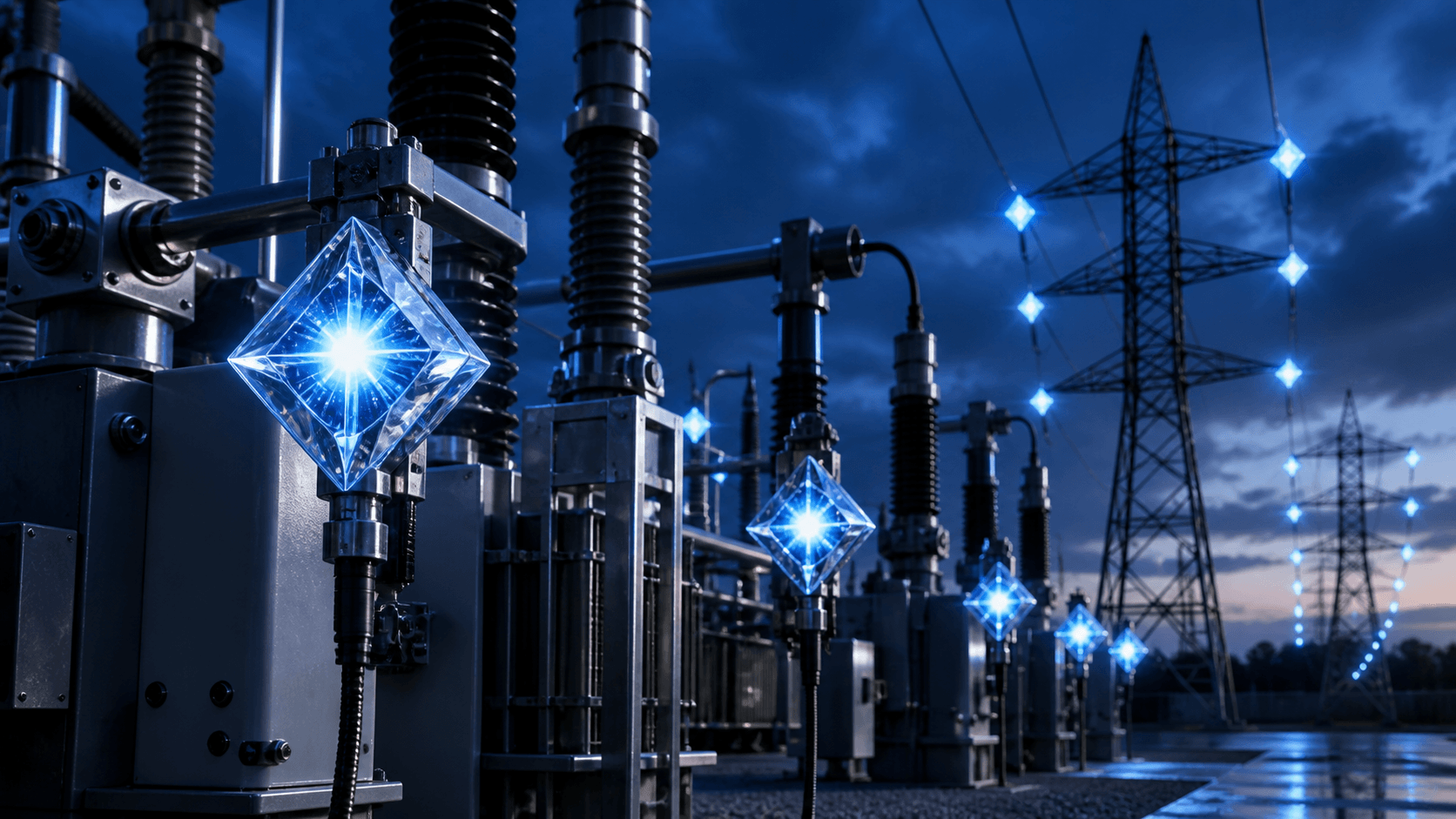
China Activates First 220kV Quantum Substation
💡See how quantum devices are moving into 24/7 critical infrastructure—and what that means for hybrid computing.
⚡ 30-Second TL;DR
What Changed
The Hefei substation has operated continuously 24/7 during the pilot.
Why It Matters
The project signals a move from laboratory quantum experiments toward continuous operation in critical infrastructure. For AI and optimization practitioners, broader quantum deployment could eventually create new hybrid quantum-classical workloads in grid forecasting, monitoring, and resource scheduling.
What To Do Next
Benchmark one grid-optimization workload with a hybrid quantum-classical solver before considering production integration.
Key Points
- •The Hefei substation has operated continuously 24/7 during the pilot.
- •State Grid deployed 85 quantum devices across measurement, communication, and computing.
- •An 800kV quantum current sensor is undergoing parallel field validation.
🧠 Deep Insight
AI-generated analysis for this event.
🔑 Enhanced Key Takeaways
- •The integration utilizes Quantum Key Distribution (QKD) to secure the substation's internal control network against potential cyber-attacks, marking a shift toward 'quantum-hardened' critical infrastructure.
- •The 220kV Hefei pilot is part of the broader 'Quantum Grid' initiative, which aims to integrate quantum sensing to improve the precision of grid load balancing by up to 30% compared to traditional sensors.
- •State Grid Corporation of China collaborated with the University of Science and Technology of China (USTC) to develop the proprietary quantum chips used in the substation's measurement devices.
- •The project addresses the 'quantum noise' challenge in high-voltage environments by utilizing specialized shielding and signal processing algorithms developed specifically for the 220kV electromagnetic field.
- •This deployment serves as a foundational testbed for the 'National Quantum Backbone' project, intended to link major regional power hubs via quantum-secured communication channels by 2028.
🛠️ Technical Deep Dive
- Quantum Current Sensors: Utilize the Faraday effect in optical fibers to measure current, eliminating the need for traditional iron-core transformers and reducing electromagnetic interference susceptibility.
- QKD Implementation: Employs decoy-state BB84 protocol to ensure secure key exchange between the substation control center and regional dispatch nodes.
- Quantum Computing Integration: Uses a hybrid classical-quantum architecture where quantum processors handle real-time optimization of grid frequency stability, while classical systems manage routine switching operations.
- Device Density: The 85 devices include 12 quantum-encrypted communication gateways, 45 quantum-enhanced current/voltage sensors, and 28 quantum-random-number-generator (QRNG) modules for cryptographic entropy.
🔮 Future ImplicationsAI analysis grounded in cited sources
⏳ Timeline
Weekly AI Recap
Read this week's curated digest of top AI events →
👉Related Updates


AI-curated news aggregator. All content rights belong to original publishers.
Original source: Pandaily ↗