China Accelerates AI Brain-Computer Interface Development
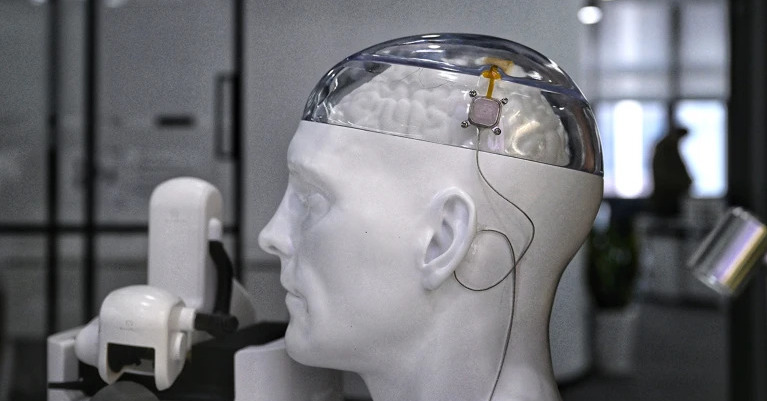
💡China's rapid BCI progress could redefine human-computer interaction. Essential for those tracking the future of AI.
⚡ 30-Second TL;DR
What Changed
Chinese startups are prioritizing the practical application of BCI technology.
Why It Matters
The rapid development of BCI in China could shift the global landscape of human-computer interaction. It poses significant implications for accessibility, neuro-ethics, and the future of human-AI integration.
What To Do Next
Monitor the latest publications in Nature and BCI-focused journals to track the specific neural decoding architectures being deployed.
Key Points
- •Chinese startups are prioritizing the practical application of BCI technology.
- •The integration of AI is enabling advanced features like thought-controlled PC operation and internal speech synthesis.
- •Nature reports suggest that the timeline for general consumer availability is accelerating.
🧠 Deep Insight
Web-grounded analysis with 26 cited sources.
🔑 Enhanced Key Takeaways
- •China has officially designated Brain-Computer Interface (BCI) technology as a national strategic sector, setting ambitious goals to achieve key technological breakthroughs by 2027 and cultivate two to three globally competitive companies by 2030.
- •The Chinese government is actively promoting the integration of BCI treatments into the national health insurance system, with pilot programs and established medical service pricing in several provinces, which is expected to accelerate market adoption and clinical application.
- •China has become the first country to approve an invasive BCI device, Neuracle Medical Technology's NEO system, for commercial sale, specifically designed to help quadriplegic patients regain limited hand function using a pneumatic robotic glove.
- •Chinese BCI research adopts a comprehensive approach, exploring invasive, semi-invasive, and non-invasive systems, and explicitly targets both medical applications (e.g., rehabilitation) and non-medical markets (e.g., cognitive enhancement, consumer devices) from the outset.
- •Significant investment is flowing into the Chinese BCI sector, with over 3.8 billion yuan ($551 million) in financing deals secured in the first quarter of 2026, substantially exceeding the total financing volume of the previous year.
📊 Competitor Analysis▸ Show
| Company/Product | Key Features | Pricing (Procedure/Device) | Benchmarks/Performance |
|---|---|---|---|
| Neuracle Medical Technology (NEO System) (China) | Invasive (epidural implantation), coin-sized wireless implant, pneumatic robotic glove for hand motor function compensation. First commercial approval for invasive BCI. | Invasive BCI implantation: 6,000-6,600 yuan ($830-$920). Non-invasive BCI adaptation: ~960 yuan ($135). | 100% improvement rate for hand grasping function in clinical trials. |
| NeuroXess (China) | Flexible implantable BCI, high-throughput systems for real-time Chinese language synthesis, computer cursor control. | Not specified. | 5.2 bits per second (bps) in trials for cursor control. |
| NeuCyber Neurotech (Beinao-1, Beinao-2) (China) | Semi-invasive (Beinao-1, outside dura mater) and fully invasive (Beinao-2, flexible electrodes fully implanted) systems. | Not specified. | Patients reported marked improvements in regaining hand motor function. |
| Neuralink (USA) | Fully implanted, wireless BCI (N1 chip), reads signals from over 1,000 electrodes, aims for high-volume production, restoring vision, speech synthesis. | Not specified. | 10 bps in trials for brain links. |
| Synchron (Stentrode™) (USA) | Endovascular BCI (implanted via jugular vein, no open-brain surgery), translates brain activity into digital commands. | Not specified. | Used by patients to text, email, and control digital devices; integrated with GPT-4 for hands-free chat. |
🛠️ Technical Deep Dive
- AI Algorithms & Neural Decoding: Chinese BCI systems integrate AI algorithms with neural decoding systems, utilizing deep learning recurrent neural network models to translate brain activity into synthesized speech and control signals. Techniques include neural data compression, hybrid decoding models, 'neural manifold alignment' for signal stability, and 'online recalibration' for real-time parameter adjustments.
- Electrode Technology: Research includes ultra-thin electrodes (less than 1% of a human hair's diameter) for invasive implants and flexible electrodes. Companies like NeuroXess have developed multi-channel EEG acquisition chips processing signals from tens of thousands of electrodes, while Wuhan Zhonghua Brain Computer Integration Technology Development Co., Ltd. claims a 65,000-channel bidirectional interface chip, significantly exceeding the mainstream 3,000-channel standard.
- System Integration: BCI development focuses on physiological signal acquisition systems that merge brain signals with multimodal inputs, such as electromyography (EMG), electrooculography (EOG), electrocardiography (ECG), and near-infrared spectroscopy (NIRS), to enhance precision in interaction control and sensory evaluation.
- Miniaturization: The CEBSIT implant, for example, is 26 mm in diameter and less than 6 mm in thickness, approximately half the size of Neuralink's BCI chip.
- Speech Synthesis: Advanced BCI systems decode neural activity from the speech sensorimotor cortex to enable real-time synthesis of Chinese language and translate neural signals directly into audible speech, with system delays under 100 milliseconds.
- Surgical Robotics: Development includes high-precision surgical robots for BCI implantation, capable of submicron control and dynamic adjustments, paired with real-time imaging and 3D reconstruction.
🔮 Future ImplicationsAI analysis grounded in cited sources
⏳ Timeline
📎 Sources (26)
Factual claims are grounded in the sources below. Forward-looking analysis is AI-generated interpretation.
- scmp.com
- techcentral.ie
- neurofounders.co
- digitimes.com
- aceinvestors.com.au
- tesery.com
- futurehumanism.co
- bjreview.com
- cgtn.com
- sixthtone.com
- chosun.com
- precedenceresearch.com
- jingdaily.com
- medicalbrief.co.za
- scmp.com
- georgetown.edu
- tomshardware.com
- mddionline.com
- rossdawson.com
- intelligentliving.co
- psychologytoday.com
- cas.cn
- neeuro.com
- techstrong.ai
- bu.edu
- icthealth.org
Weekly AI Recap
Read this week's curated digest of top AI events →
👉Related Updates
AI-curated news aggregator. All content rights belong to original publishers.
Original source: ITmedia AI+ (日本) ↗