ChatGPT for Teens Learns When to Say No
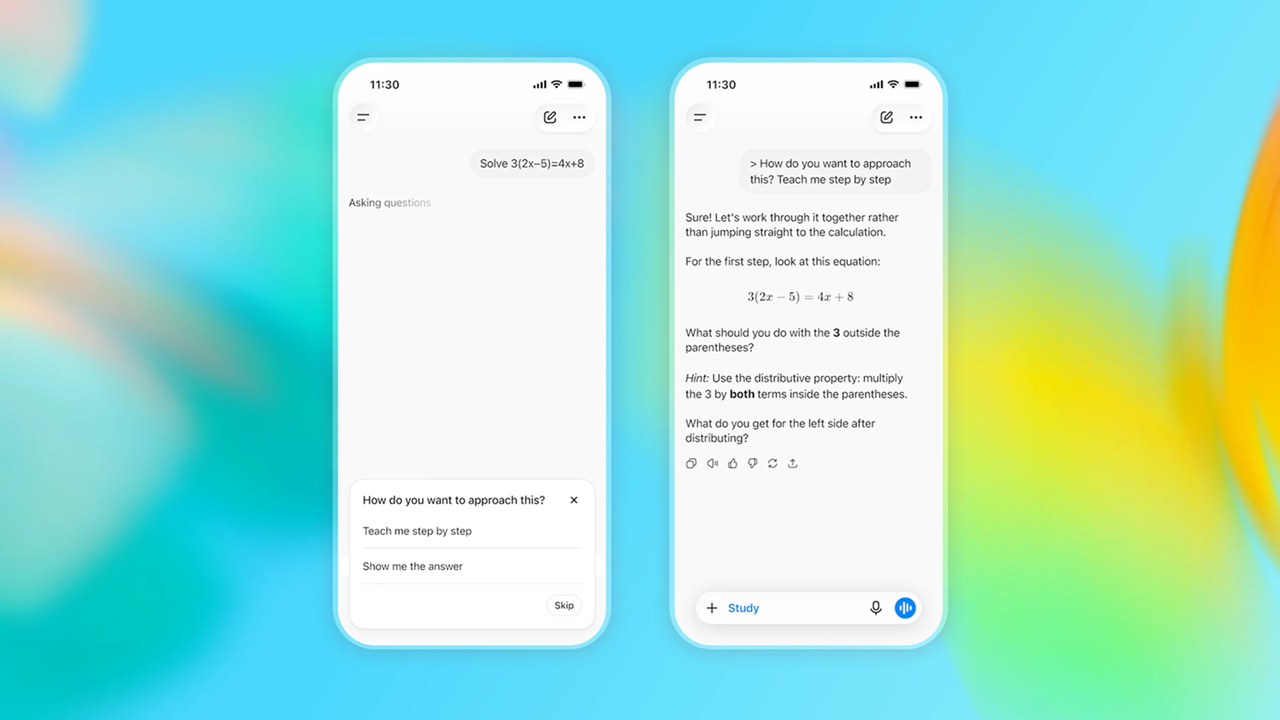
💡See how refusal behavior can turn ChatGPT from an answer engine into a tutoring product.
⚡ 30-Second TL;DR
What Changed
The product may refuse requests to simply complete homework.
Why It Matters
For AI practitioners, the update highlights how refusal behavior can be used as a product feature for education rather than merely as a safety constraint. It may also influence how developers measure helpfulness, balancing task completion with learning outcomes.
What To Do Next
Prototype a tutoring mode that withholds final homework answers and evaluates whether step-by-step hints improve student learning outcomes.
Key Points
- •The product may refuse requests to simply complete homework.
- •Its intended role is to help students work through problems rather than provide final answers.
- •The feature addresses unequal access to homework support at home.
- •The approach positions ChatGPT as a learning aid for teenagers, not just an answer generator.
🧠 Deep Insight
AI-generated analysis for this event.
🔑 Enhanced Key Takeaways
- •The system utilizes a specialized 'Socratic' instruction-tuning layer that detects homework-style prompts and triggers a refusal-and-guidance workflow.
- •OpenAI has integrated safety guardrails that specifically monitor for academic integrity violations, preventing the model from generating full essays or solving complex math problems directly.
- •The feature includes a 'Step-by-Step' pedagogical mode that breaks down problems into conceptual components rather than providing the final solution.
- •This initiative is part of a broader partnership with educational organizations to align AI behavior with established classroom learning standards.
- •Data privacy protocols for this version include stricter retention policies and the exclusion of student interactions from model training sets to comply with COPPA and FERPA regulations.
📊 Competitor Analysis▸ Show
| Feature | ChatGPT for Teens | Khan Academy (Khanmigo) | Google Gemini (Education) |
|---|---|---|---|
| Primary Focus | Socratic Tutoring | Personalized Learning | Classroom Integration |
| Homework Refusal | Hard-coded refusal | Guided scaffolding | Context-dependent |
| Pricing | Freemium/Subscription | Subscription/District | Enterprise/Free |
| Benchmarks | High reasoning capability | High pedagogical alignment | High multimodal integration |
🛠️ Technical Deep Dive
- Implementation of a secondary classifier model that intercepts user prompts to determine if the intent is homework completion.
- Utilization of Reinforcement Learning from Human Feedback (RLHF) specifically trained on educational datasets to prioritize Socratic questioning techniques.
- Integration of a 'Contextual Memory' buffer that tracks the student's progress through a multi-step problem to ensure consistency in guidance.
- Deployment of low-latency inference paths to ensure the tutoring experience feels conversational and immediate.
🔮 Future ImplicationsAI analysis grounded in cited sources
⏳ Timeline
Weekly AI Recap
Read this week's curated digest of top AI events →
👉Related Updates
AI-curated news aggregator. All content rights belong to original publishers.
Original source: TechRadar AI ↗