ChatGPT Ad-Free Comes With Access Tradeoffs
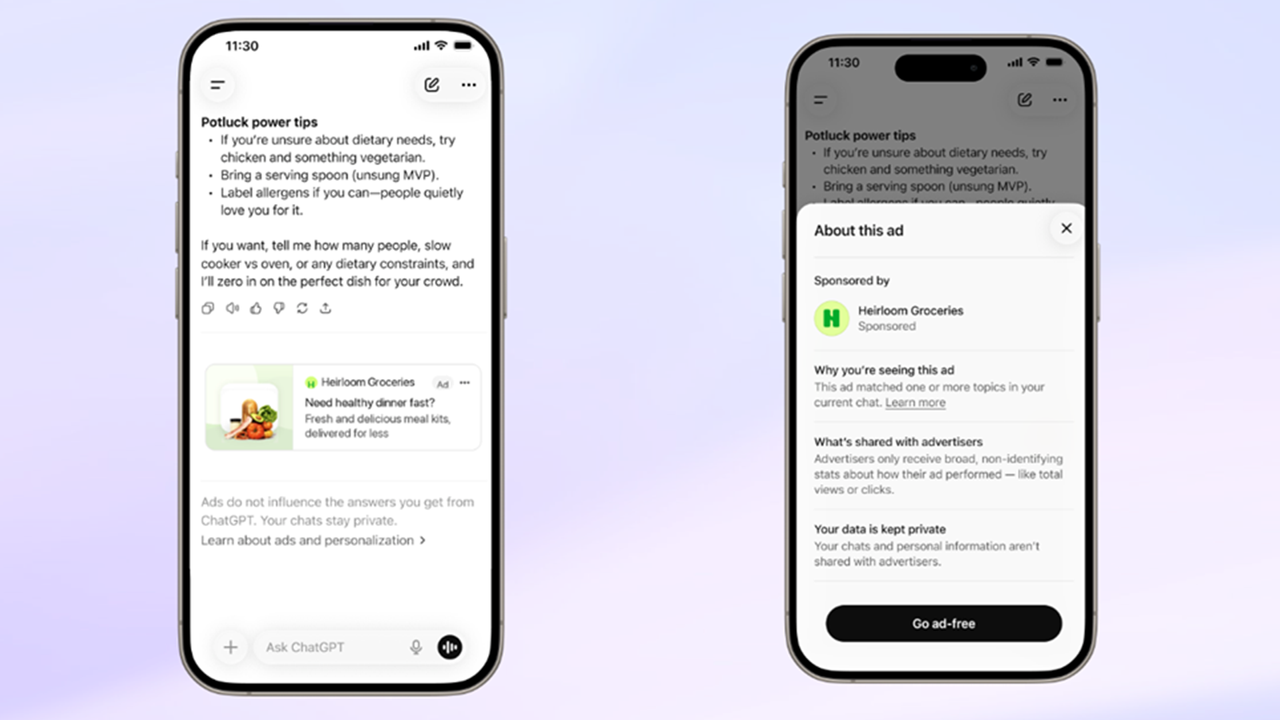
💡See whether avoiding ChatGPT ads is worth giving up access needed for AI development.
⚡ 30-Second TL;DR
What Changed
ChatGPT offers an ad-free option without an additional payment.
Why It Matters
Access restrictions could matter more to AI practitioners than advertising itself, especially when they rely on ChatGPT for frequent experimentation or production workflows. Teams should compare usage limits and model availability before standardizing on the ad-free option.
What To Do Next
Check your ChatGPT account’s ad-free setting and compare model availability and usage limits before using it for development workflows.
Key Points
- •ChatGPT offers an ad-free option without an additional payment.
- •Users pay for the ad-free experience through reduced access rather than money.
- •The article focuses on the practical trade-offs of choosing ad-free ChatGPT.
🧠 Deep Insight
AI-generated analysis for this event.
🔑 Enhanced Key Takeaways
- •The ad-free tier utilizes a dynamic rate-limiting system that prioritizes paid subscribers and ad-supported users during peak server load periods.
- •Data collected from ad-supported users is used to train future iterations of the model, whereas ad-free users may have more restrictive data-sharing opt-out capabilities.
- •Latency for ad-free users is often higher during high-traffic windows because the infrastructure prioritizes compute resources for revenue-generating traffic.
- •OpenAI has implemented 'model-switching' for the ad-free tier, where users are automatically downgraded to smaller, less compute-intensive models when demand exceeds capacity.
- •The ad-free experience is part of a broader 'freemium' strategy designed to maximize user retention while offsetting infrastructure costs through behavioral data acquisition.
📊 Competitor Analysis▸ Show
| Feature | ChatGPT (Ad-Free) | Claude (Free) | Gemini (Free) |
|---|---|---|---|
| Monetization | Rate-limited access | Usage caps | Ad-supported/Data |
| Model Access | Dynamic (Downgrades) | Fixed (Limited) | Standard |
| Latency | High (Variable) | Medium | Low |
| Data Usage | Training-heavy | Opt-out available | Training-heavy |
🛠️ Technical Deep Dive
- Implementation of a tiered token-bucket algorithm to manage request prioritization based on user subscription status.
- Integration of a load-balancing layer that routes ad-free traffic to lower-priority GPU clusters during peak demand.
- Use of model distillation techniques to serve smaller, faster model variants to free-tier users when primary model capacity is exhausted.
- Telemetry hooks that differentiate between ad-viewing sessions and standard sessions to adjust the inference priority queue in real-time.
🔮 Future ImplicationsAI analysis grounded in cited sources
⏳ Timeline
Weekly AI Recap
Read this week's curated digest of top AI events →
👉Related Updates

AI-curated news aggregator. All content rights belong to original publishers.
Original source: TechRadar AI ↗