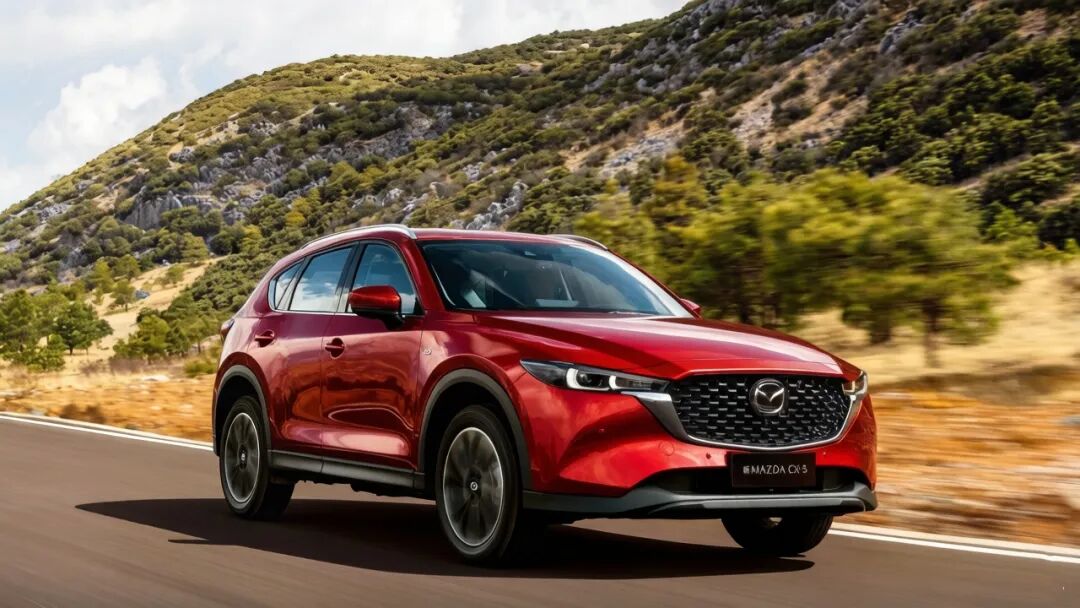
Changan Mazda: Strategic turnaround under Wang Xiaoling
💡Insights into how legacy automakers are attempting to pivot their strategy in a highly competitive EV market.
⚡ 30-Second TL;DR
What Changed
Leadership change with Wang Xiaoling taking charge of turnaround
Why It Matters
Reflects the broader challenges faced by traditional joint-venture automakers in China as they struggle to adapt to the rapid shift toward EVs and intelligent vehicles.
What To Do Next
Evaluate how traditional automotive brands are integrating smart cockpit features to stay relevant against EV competitors.
Key Points
- •Leadership change with Wang Xiaoling taking charge of turnaround
- •Aggressive strategy to reverse declining sales performance
- •Focus on market repositioning and competitive response
🧠 Deep Insight
Web-grounded analysis with 9 cited sources.
🔑 Enhanced Key Takeaways
- •Changan Mazda's 2024 annual wholesale sales volume was 75,637 units, marking a 14.69% year-on-year decrease, although retail data indicated an 8% increase compared to 2023 due to differing statistical methods.
- •The company is strategically pivoting towards New Energy Vehicles (NEVs), leveraging its partnership with Changan to develop and launch models like the MAZDA EZ-60 SUV and EZ-6 sedan, which are based on Changan's EPA architecture.
- •Mazda's broader global EV strategy involves delaying its in-house dedicated EV development until 2029 and instead relying on China-built EVs from Changan Mazda for export to markets such as Europe and Australia, as part of a 'lean-asset' approach.
- •In Q1 2026, NEVs constituted 47% of Changan Mazda's quarterly sales in China, with total deliveries reaching 21,619 units, indicating a significant shift in product mix and market acceptance for their electrified offerings.
- •The current Changan Mazda joint venture structure, where Mazda and Changan each hold 47.5% and FAW holds 5%, was established in 2021 following the merger of FAW-Mazda's stakes into Changan Mazda, aiming to consolidate and strengthen Mazda's presence in the competitive Chinese market.
🛠️ Technical Deep Dive
- MAZDA EZ-60 (SUV): Features a world's first 4nm automotive-grade chip, offering 1.6 times the computing power of the mainstream SA8155 chip, enabling 39ms voice response and improving complex dialogue accuracy by 55%.
- Display Technology: Equipped with a 100-inch glasses-free 3D HUD that projects navigation arrows onto the road and can transform into a 3D cinema experience. The interior also includes a 26.45-inch panoramic display (32:9 ratio) for immersive video and gaming.
- Battery Electric Vehicle (BEV) Version: Utilizes a 78-kWh battery, providing a 600 km CLTC (China Light-duty Vehicle Test Cycle) range. Supports 3C fast charging, allowing 30%-80% State of Charge (SOC) in 15 minutes or a 100-km top-up in 5 minutes. Features low-temperature pulse heating to boost cold-weather charging efficiency by 15%.
- Range-Extended Electric Vehicle (REEV) Version: Features a 31.7-kWh battery for a 200 km all-electric range and a combined range exceeding 1,100 km, powered by a 1.5L high-compression engine (16:1).
- Driver Assistance Systems: Incorporates an L2 integrated system with an 8-megapixel camera, surround cameras, five millimeter-wave radars, and 12 ultrasonic sensors. Functions include highway/city navigation assist, adaptive cruise, lane centering, and over 19 active safety features, with Automatic Emergency Braking (AEB) effective up to 80 km/h.
- Platform: Both the EZ-60 and EZ-6 models are based on Changan's EPA architecture.
🔮 Future ImplicationsAI analysis grounded in cited sources
⏳ Timeline
📎 Sources (9)
Factual claims are grounded in the sources below. Forward-looking analysis is AI-generated interpretation.
Weekly AI Recap
Read this week's curated digest of top AI events →
👉Related Updates
AI-curated news aggregator. All content rights belong to original publishers.
Original source: 钛媒体 ↗