Cerebras Cloud Revenue Surges as Hardware Sales Slip
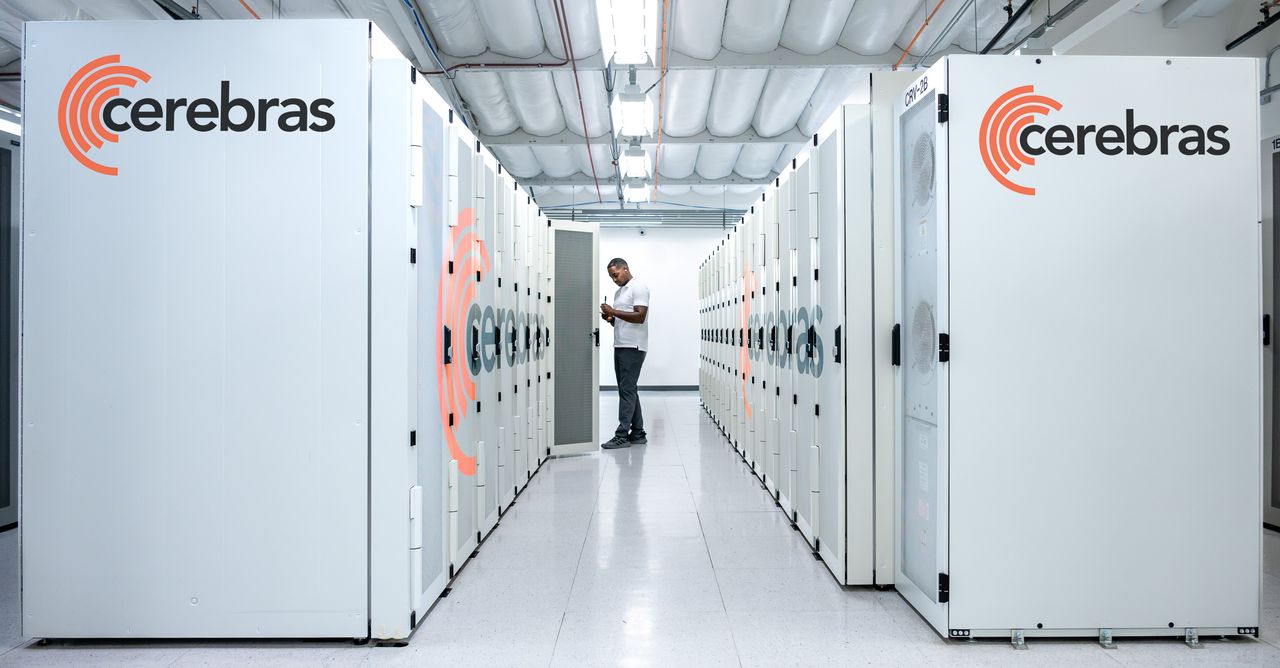
💡Cerebras' 281% cloud growth shows where AI accelerator businesses may be heading.
⚡ 30-Second TL;DR
What Changed
Cerebras missed analysts' earnings expectations.
Why It Matters
The results suggest that Cerebras is becoming more dependent on recurring AI cloud revenue rather than one-time hardware sales. For AI infrastructure buyers, this may increase the importance of comparing accelerator access through cloud services alongside direct hardware procurement.
What To Do Next
Benchmark your next inference workload on Cerebras Cloud against your current GPU provider for latency, throughput, and cost per generated token.
Key Points
- •Cerebras missed analysts' earnings expectations.
- •The company's hardware sales declined during the period.
- •AI cloud revenue increased 281%, partially offsetting weaker hardware performance.
🧠 Deep Insight
AI-generated analysis for this event.
🔑 Enhanced Key Takeaways
- •Cerebras is increasingly pivoting toward its 'Cerebras Inference' service, which leverages its Wafer-Scale Engine (WSE) technology to offer lower latency for large language models compared to traditional GPU clusters.
- •The decline in hardware sales is attributed to a transition in the company's go-to-market strategy, moving away from selling standalone WSE systems toward a consumption-based cloud model.
- •Analysts note that Cerebras's capital expenditure remains high due to the massive costs associated with manufacturing and deploying their proprietary wafer-scale chips.
- •The company has recently expanded its cloud footprint by establishing new data center partnerships to support the increased demand for its inference-as-a-service offerings.
- •Despite the revenue miss, Cerebras maintains a strong cash position, allowing it to continue R&D on its next-generation wafer-scale architecture despite current market volatility.
📊 Competitor Analysis▸ Show
| Feature | Cerebras (WSE-3) | NVIDIA (H100/B200) | Groq (LPU) |
|---|---|---|---|
| Architecture | Wafer-Scale Engine | GPU / Tensor Core | LPU (Language Processing Unit) |
| Primary Strength | Memory Bandwidth / Inference | Ecosystem / Training | Latency / Token Throughput |
| Pricing Model | Cloud Consumption / System Sale | Hardware Sale / Cloud Instance | Cloud Consumption |
| Target Market | Large-scale Inference | General AI / Training | Real-time Inference |
🛠️ Technical Deep Dive
- Cerebras WSE-3 utilizes 4 trillion transistors and 44GB of on-chip SRAM, eliminating the need for traditional HBM memory bottlenecks.
- The architecture employs a dataflow execution model, which differs from the von Neumann architecture used by standard GPUs, allowing for massive parallelization of model weights.
- The cloud inference service utilizes a proprietary software stack that optimizes model sparsity, allowing for faster token generation on large-scale models like Llama 3 or Mistral.
- The system interconnects allow for near-linear scaling across multiple wafer-scale nodes, reducing the communication overhead typically seen in multi-GPU clusters.
🔮 Future ImplicationsAI analysis grounded in cited sources
⏳ Timeline
Weekly AI Recap
Read this week's curated digest of top AI events →
👉Related Updates
AI-curated news aggregator. All content rights belong to original publishers.
Original source: Tom's Hardware ↗