ByteDance Open-Sources Deer-Flow 2.0
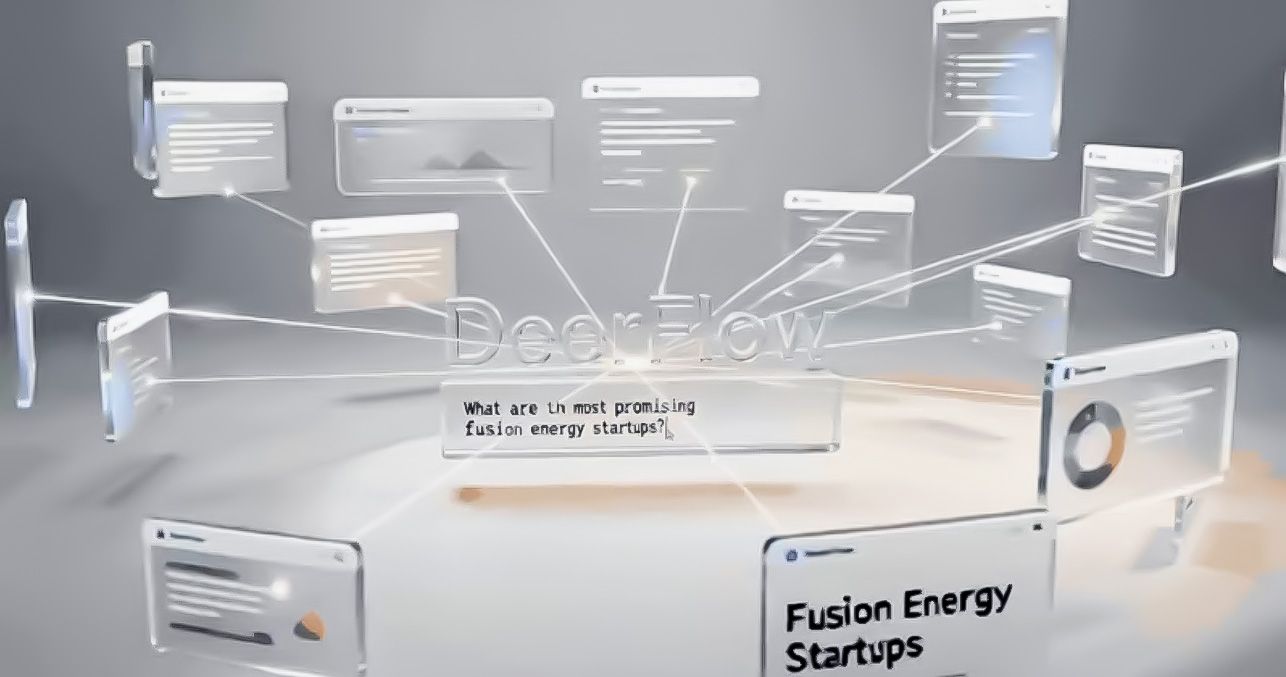
💡Agent framework hits 35k stars in 24h – top GitHub trend for AI builders
⚡ 30-Second TL;DR
What Changed
ByteDance open-sources Deer-Flow 2.0 agent orchestration framework
Why It Matters
Highlights surging developer interest in AI agent orchestration tools, potentially accelerating multi-agent system adoption in AI workflows.
What To Do Next
Clone Deer-Flow 2.0 GitHub repo and build a sample agent workflow.
Key Points
- •ByteDance open-sources Deer-Flow 2.0 agent orchestration framework
- •Gained 35.3k GitHub stars in first 24 hours
- •Topped GitHub Trending charts immediately after release
🧠 Deep Insight
Background and context from public sources — not the original article. 3 sources cited.
🔑 Enhanced Key Takeaways
- •Deer-Flow 2.0 is built on LangGraph 1.0 and features a modular multi-agent architecture that allows a main agent to structure tasks and coordinate up to three sub-agents in parallel.
- •The framework includes a dedicated, isolated sandbox environment (AIO Sandbox) that provides full file system and Bash execution capabilities, supporting local, Docker, and Kubernetes deployment modes.
- •It incorporates a pluggable skill system with pre-built capabilities like deep research, data analysis, and chart generation, while supporting MCP (Model Context Protocol) and Python interfaces for custom tool integration.
📊 Competitor Analysis▸ Show
| Feature | Deer-Flow 2.0 | LangGraph (Core) | AutoGen | CrewAI |
|---|---|---|---|---|
| Architecture | Modular Multi-Agent | Graph-based workflow | Conversational Agents | Role-based Agents |
| Sandbox | Native AIO Sandbox | User-defined | User-defined | User-defined |
| Tooling | Built-in Skills/MCP | Flexible/Custom | Flexible/Custom | Flexible/Custom |
| Pricing | Open Source (MIT) | Open Source | Open Source | Open Source |
🛠️ Technical Deep Dive
- •Architecture: Modular multi-agent system leveraging LangGraph 1.0 for orchestration.
- •Execution Environment: Isolated AIO Sandbox providing persistent file system access and Bash command execution.
- •Context Management: Implements multi-layer middleware chains, automatic context summarization/compression, and external file storage to manage long-horizon task windows.
- •Integration: Native support for MCP (Model Context Protocol), Claude Code, and various search/crawling tools (Tavily, Brave, Jina).
- •Deployment: Supports Docker (recommended), local development, and Kubernetes, with unified entry points via Nginx and SSE/streaming for real-time responses.
🔮 Future ImplicationsAI analysis grounded in cited sources
⏳ Timeline
📎 Sources (3)
Factual claims are grounded in the sources below. Forward-looking analysis is AI-generated interpretation.
Weekly AI Recap
Read this week's curated digest of top AI events →
👉Related Updates
AI-curated news aggregator. All content rights belong to original publishers.
Original source: Pandaily ↗
This is a summary, not the original. Read the source, or get the weekly briefing.
Weekly AI briefing
One email a week. Unsubscribe anytime.