BYD Launches End-to-End智驾Update
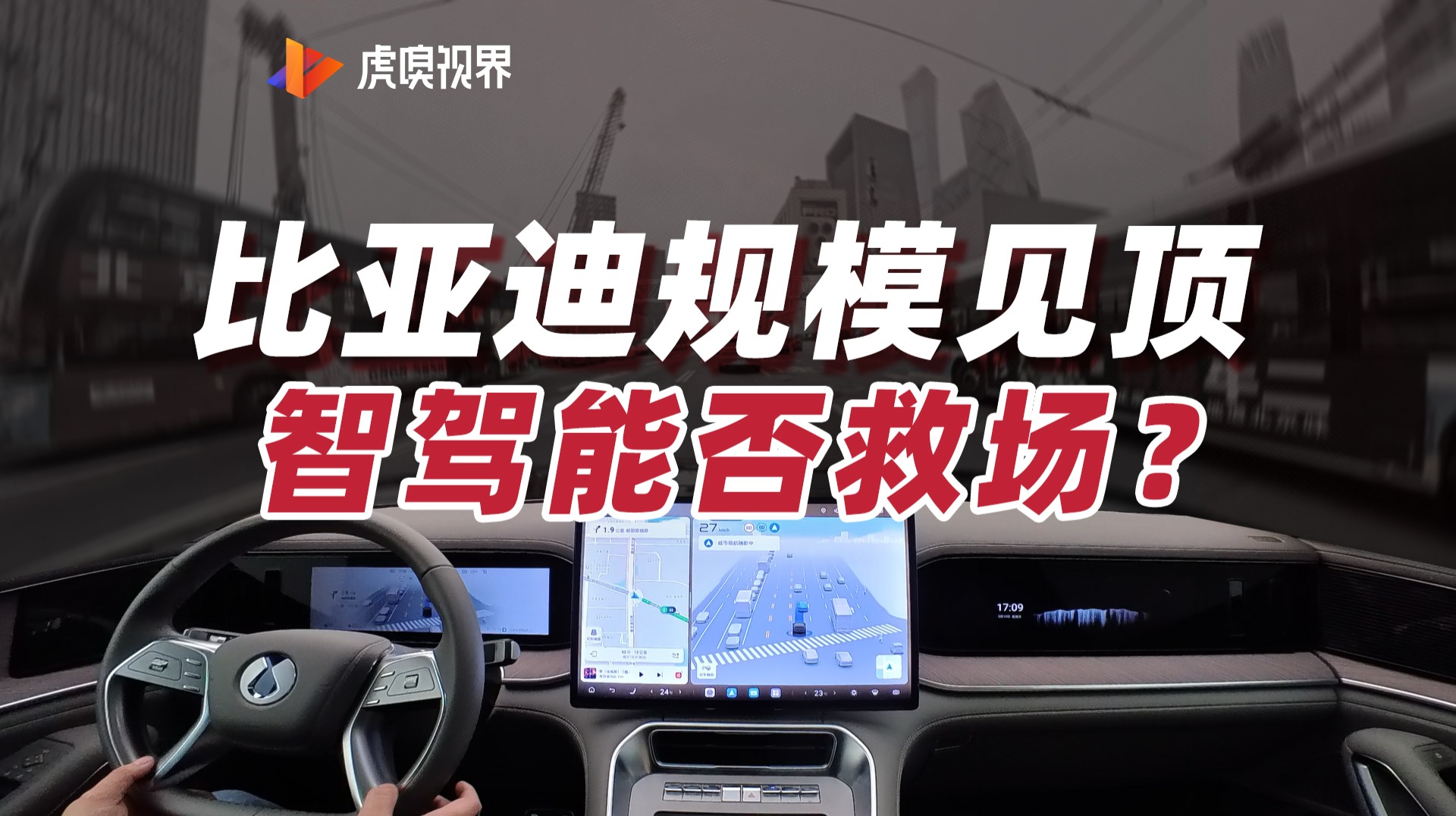
💡BYD's end-to-end AD update: can智驾 reverse sales slump? Compute fix needed
⚡ 30-Second TL;DR
What Changed
First end-to-end architecture update matches industry leaders
Why It Matters
Could boost BYD's EV market share if智驾 succeeds, pressuring rivals like Tesla in China. Highlights compute as key ADAS bottleneck.
What To Do Next
Benchmark BYD's end-to-end ADAS against Tesla FSD in simulation for your AV stack.
Key Points
- •First end-to-end architecture update matches industry leaders
- •Tian Shen Zhi Yan to counter 'not smart' perception
- •Urges self-developed chips to fix compute shortages
🧠 Deep Insight
AI-generated analysis for this event — not the original article.
🔑 Enhanced Key Takeaways
- •BYD's end-to-end model integrates perception and planning into a single neural network, moving away from the traditional modular pipeline to reduce latency and improve decision-making in complex urban scenarios.
- •The transition to end-to-end architecture is part of BYD's broader 'Xuanji' (璇玑) intelligent architecture strategy, which aims to unify vehicle control, smart cockpit, and autonomous driving systems.
- •BYD is aggressively recruiting top-tier AI talent and expanding its R&D centers in Shenzhen and Shanghai to accelerate the development of proprietary high-performance computing platforms to reduce reliance on third-party suppliers like NVIDIA.
📊 Competitor Analysis▸ Show
| Feature | BYD (Tian Shen Zhi Yan) | Huawei (ADS 3.0) | XPeng (XNGP) |
|---|---|---|---|
| Architecture | End-to-End | End-to-End | End-to-End |
| Compute Strategy | Transitioning to In-house | Huawei Ascend | NVIDIA Orin-X |
| Urban NOA Coverage | Nationwide (Rolling) | Nationwide | Nationwide |
| Market Positioning | Mass-Market/Premium | Premium/Tech-Focused | Tech-Focused/Value |
🛠️ Technical Deep Dive
- •Architecture: Utilizes a Transformer-based backbone for feature extraction, combined with a Bird's-Eye-View (BEV) representation to fuse multi-sensor data (cameras, LiDAR, ultrasonic).
- •Planning Module: Replaces rule-based decision trees with a deep reinforcement learning-based planner that predicts trajectory candidates based on environmental context.
- •Compute Requirements: Current implementation relies on high-performance SoCs (e.g., NVIDIA Orin-X or equivalent), but the roadmap targets a proprietary SoC capable of handling 500+ TOPS for local inference.
- •Data Loop: Implements a closed-loop data pipeline where 'shadow mode' data from the existing fleet is used to train the end-to-end model via imitation learning and reinforcement learning from human feedback (RLHF).
🔮 Future ImplicationsAI analysis grounded in cited sources
⏳ Timeline
Weekly AI Recap
Read this week's curated digest of top AI events →
👉Related Updates

AI-curated news aggregator. All content rights belong to original publishers.
Original source: 虎嗅 ↗
This is a summary, not the original. Read the source, or get the weekly briefing.
The weekly digest
One email a week. Unsubscribe anytime.