🇭🇰SCMP Technology•Stalecollected in 2m
BYD Hikes DiPilot 300 Price 21% on Memory Costs
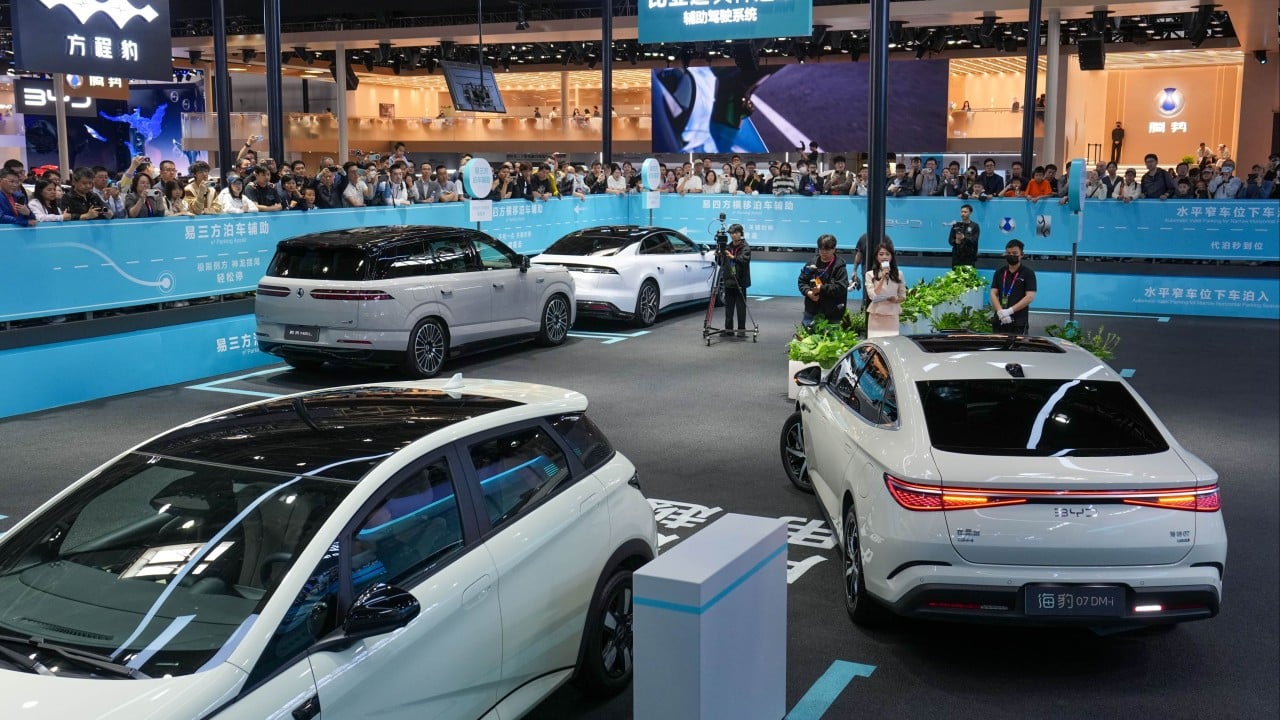
💡Memory crisis hits EV ADAS pricing—key for AI hardware budgeting in autos
⚡ 30-Second TL;DR
What Changed
BYD attributes 21% price increase to sharp rise in global storage hardware costs
Why It Matters
Rising memory costs signal higher expenses for AI-intensive automotive hardware, potentially squeezing margins for EV makers deploying ADAS. AI practitioners should anticipate broader supply chain pressures on edge computing in vehicles.
What To Do Next
Assess NAND flash alternatives for vehicle ADAS to hedge against storage cost volatility.
Who should care:Enterprise & Security Teams
Key Points
- •BYD attributes 21% price increase to sharp rise in global storage hardware costs
- •DiPilot 300 price rises from 9,900 yuan to 12,000 yuan ($1,757)
- •Memory cost surge spreading from smartphones to EVs
- •High-end system enables self-navigation in cars
- •Change effective starting Friday
🧠 Deep Insight
AI-generated analysis for this event.
🔑 Enhanced Key Takeaways
- •The price hike follows a broader industry trend where automotive-grade DRAM and NAND flash supply constraints have tightened due to increased demand for high-compute AI cockpits and autonomous driving stacks.
- •BYD's DiPilot 300 utilizes a centralized computing architecture that relies heavily on high-bandwidth memory (HBM) and specialized storage modules, making it more sensitive to memory market volatility than entry-level ADAS systems.
- •Industry analysts suggest this move signals a shift in BYD's strategy to pass on hardware component inflation directly to consumers, moving away from the aggressive 'price war' tactics that characterized the 2024-2025 Chinese EV market.
📊 Competitor Analysis▸ Show
| Feature | BYD DiPilot 300 | XPeng XNGP | Huawei ADS 3.0 |
|---|---|---|---|
| Core Hardware | Centralized Compute | Orin-X based | MDC Platform |
| Pricing Strategy | Tiered/Add-on | Subscription/Package | Integrated/Premium |
| Market Position | Mass-Market High-End | Tech-Forward | Premium/Luxury |
🛠️ Technical Deep Dive
- •DiPilot 300 architecture utilizes a multi-sensor fusion approach, integrating LiDAR, millimeter-wave radar, and high-definition cameras.
- •The system leverages a high-performance SoC (System-on-Chip) that requires dedicated LPDDR5X memory to handle real-time perception and path-planning algorithms.
- •The storage subsystem is optimized for high-write endurance to support continuous data logging for 'shadow mode' training and OTA (Over-the-Air) updates.
- •The system supports L2+ autonomous driving capabilities, including automated lane changes, navigation on autopilot (NOA), and advanced parking assistance.
🔮 Future ImplicationsAI analysis grounded in cited sources
BYD will likely transition to multi-sourcing memory suppliers to mitigate future price volatility.
The current supply chain bottleneck highlights the risk of over-reliance on specific memory tiers, forcing BYD to diversify its vendor base to stabilize hardware costs.
Other Chinese EV manufacturers will follow BYD in raising prices for high-end autonomous driving software packages.
As memory and compute costs rise across the industry, competitors with similar hardware requirements will face margin pressure, necessitating similar price adjustments to maintain profitability.
⏳ Timeline
2023-04
BYD officially launches the DiPilot intelligent driving platform.
2024-01
BYD announces the upgrade to DiPilot 300, focusing on high-speed and urban NOA capabilities.
2025-06
BYD integrates advanced AI-driven perception models into the DiPilot 300 software stack.
📰
Weekly AI Recap
Read this week's curated digest of top AI events →
👉Related Updates
AI-curated news aggregator. All content rights belong to original publishers.
Original source: SCMP Technology ↗