Building Privacy-Aware Infrastructure for the AI-Native Era
๐กLearn how Meta automates data privacy and governance to handle complex asset classification in AI-native systems.
โก 30-Second TL;DR
What Changed
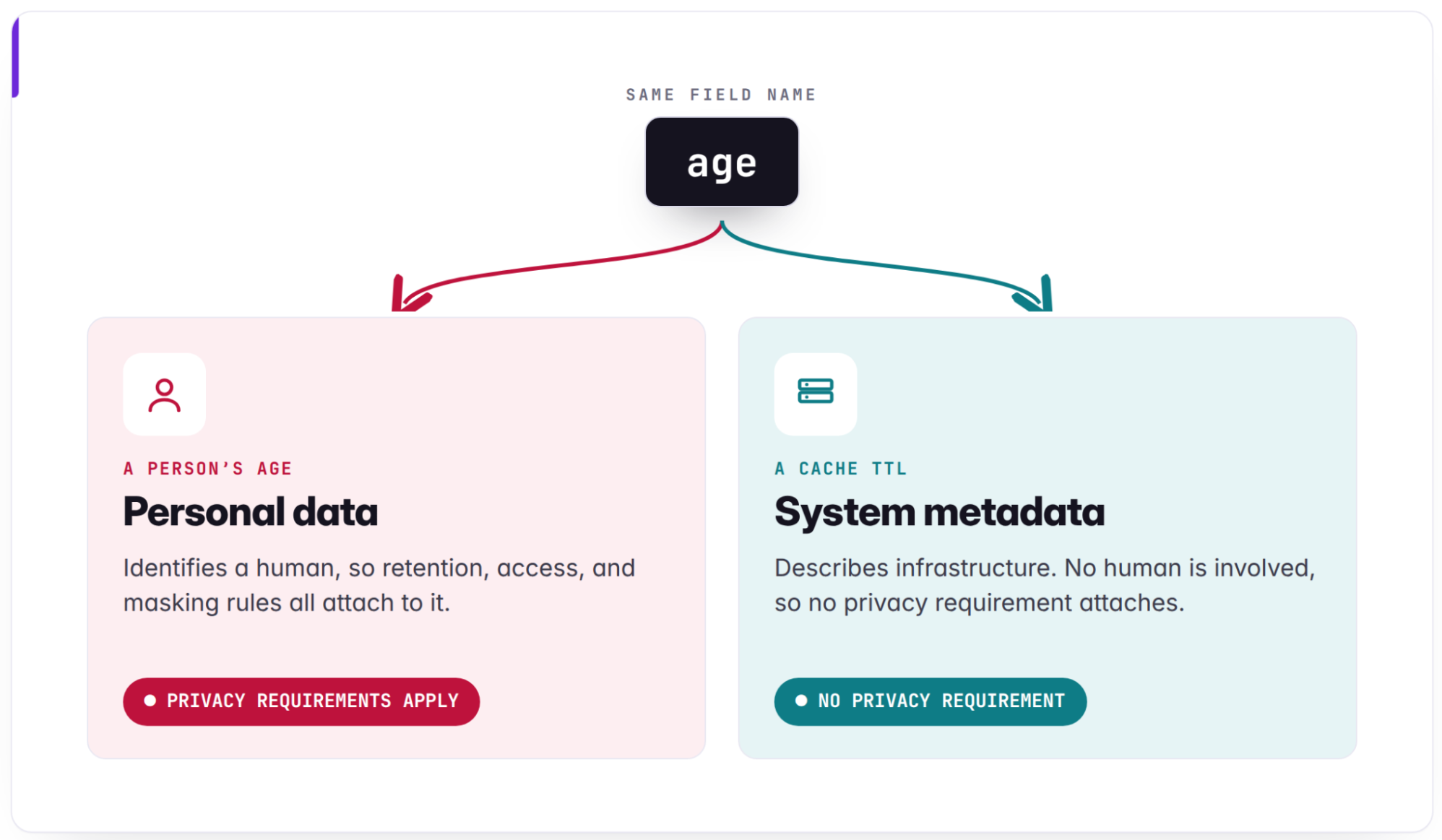
Privacy controls require deep, reliable understanding of data assets to function effectively.
Why It Matters
This research provides a framework for enterprises to manage data governance at scale, reducing the risk of privacy leaks in AI training pipelines. It highlights the necessity of metadata-driven infrastructure for AI-native compliance.
What To Do Next
Audit your data pipeline to identify ambiguous fields and implement a metadata tagging system before scaling your AI training datasets.
๐ง Deep Insight
AI-generated analysis for this event.
๐ Enhanced Key Takeaways
- โขMeta utilizes a proprietary metadata-driven framework called 'Data Map' to maintain a real-time inventory of data lineage and sensitivity across its distributed AI training clusters.
- โขThe infrastructure integrates with Meta's 'Privacy-Preserving AI' (PPAI) initiative, which employs differential privacy techniques to ensure that individual user data points cannot be reconstructed from model weights.
- โขMeta has implemented automated 'Data Lifecycle Management' (DLM) agents that trigger immediate deletion or anonymization protocols when a data asset's classification changes due to regulatory updates or policy shifts.
- โขThe system leverages Large Language Models (LLMs) internally to perform semantic analysis on unstructured data, improving the accuracy of classification for fields that lack standardized schemas.
- โขMeta's approach incorporates 'Privacy-by-Design' auditing tools that simulate data access patterns to identify potential policy violations before AI models are deployed to production environments.
๐ Competitor Analysisโธ Show
| Feature | Meta (Privacy-Aware Infra) | Google (Cloud DLP/Vertex AI) | Microsoft (Purview/Azure AI) |
|---|---|---|---|
| Classification Engine | Proprietary Semantic/LLM-based | Cloud DLP / Sensitive Data Protection | Purview Information Protection |
| Privacy Technique | Differential Privacy / PPAI | Differential Privacy / K-Anonymity | Confidential Computing / Enclaves |
| Primary Focus | Social Graph / User Data | Enterprise Data / Cloud Services | Enterprise Compliance / Governance |
๐ ๏ธ Technical Deep Dive
- Data Map Architecture: Utilizes a graph-based database to map relationships between raw data ingestion points and downstream AI model training pipelines.
- Semantic Classification: Employs transformer-based models to classify unstructured data by analyzing context, reducing reliance on manual tagging.
- Automated Policy Enforcement: Uses a policy-as-code engine that intercepts data access requests and validates them against the asset's metadata classification.
- Anonymization Pipeline: Integrates k-anonymity and differential privacy noise injection at the data ingestion layer to sanitize datasets before they reach training clusters.
๐ฎ Future ImplicationsAI analysis grounded in cited sources
โณ Timeline
Weekly AI Recap
Read this week's curated digest of top AI events โ
๐Related Updates
AI-curated news aggregator. All content rights belong to original publishers.
Original source: Meta Engineering Blog โ