💰钛媒体•Stalecollected in 85m
Bosch Advances in Boundless Auto Fusion
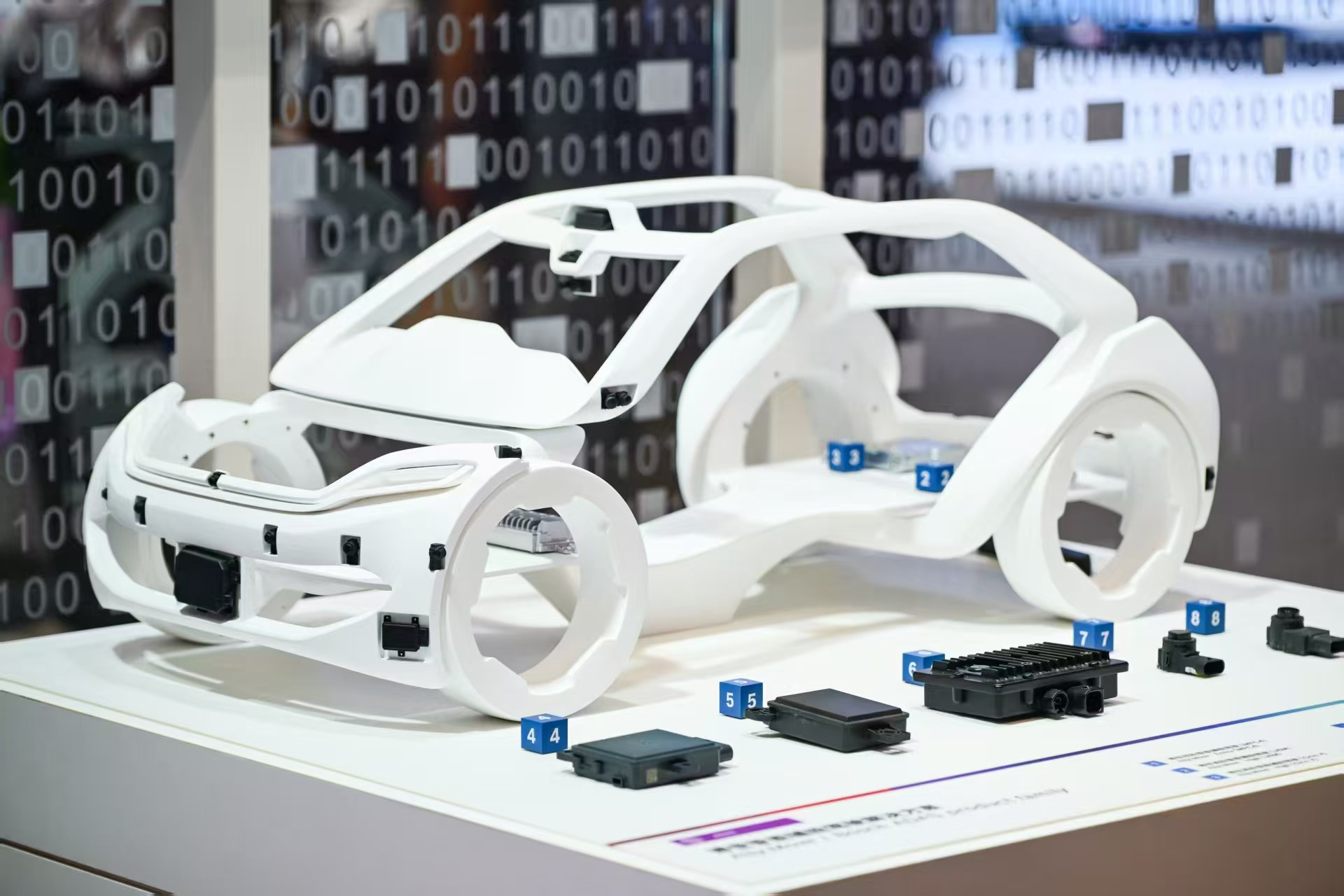
💡Bosch's shift to auto AI fusion redefines embedded AI strategies for practitioners.
⚡ 30-Second TL;DR
What Changed
Bosch pursues boundaryless strategy in smart cars
Why It Matters
Bosch's focus on fusion accelerates integrated AI in autos, opening opportunities for AI practitioners in embedded systems and multi-sensor applications.
What To Do Next
Evaluate Bosch's cross-domain fusion kits for your next vehicle AI integration project.
Who should care:Enterprise & Security Teams
Key Points
- •Bosch pursues boundaryless strategy in smart cars
- •Auto industry transitions from single-point to cross-domain fusion
- •End of feature-piling competitions in intelligent vehicles
🧠 Deep Insight
AI-generated analysis for this event.
🔑 Enhanced Key Takeaways
- •Bosch is transitioning its organizational structure from traditional hardware-centric business units to a software-defined vehicle (SDV) architecture, integrating cockpit and ADAS domains into a unified 'Vehicle Motion' platform.
- •The 'boundless' strategy leverages Bosch's proprietary middleware, 'Bosch Automotive Software Platform' (BASP), which enables cross-domain communication between previously siloed ECUs to reduce latency in sensor fusion.
- •Bosch is increasingly adopting a 'centralized compute' approach, moving away from distributed architecture to high-performance computing (HPC) units that consolidate processing for infotainment, body control, and autonomous driving functions.
📊 Competitor Analysis▸ Show
| Feature | Bosch (Cross-Domain Fusion) | Continental (HPC/Software) | Denso (Integrated Cockpit) |
|---|---|---|---|
| Architecture | Centralized/Zonal | Zonal/HPC | Domain-based |
| Software Strategy | Proprietary Middleware (BASP) | CAEdge (Cloud-to-Car) | Open Platform (e.g., AGL) |
| Primary Focus | Full-stack Motion Control | Software-defined Vehicle | Integrated Cockpit/ADAS |
🛠️ Technical Deep Dive
- •Implementation of Zonal Architecture: Replaces traditional distributed ECUs with zonal controllers that aggregate data from sensors and actuators within a physical vehicle zone, reducing wiring harness complexity.
- •Middleware Integration: Utilization of Adaptive AUTOSAR to support high-performance computing requirements and dynamic software updates (OTA).
- •Sensor Fusion Engine: Employs a unified perception stack that processes raw data from LiDAR, Radar, and Cameras at the SoC level rather than at the individual sensor level, improving object detection accuracy in complex scenarios.
- •Virtualization: Use of hypervisors (e.g., QNX or similar) to run multiple operating systems (RTOS for safety-critical ADAS and Linux/Android for infotainment) on a single high-performance SoC.
🔮 Future ImplicationsAI analysis grounded in cited sources
Bosch will shift its primary revenue model from hardware component sales to software-as-a-service (SaaS) licensing.
The transition to centralized compute and cross-domain fusion necessitates a software-centric business model to monetize ongoing feature updates and performance optimizations.
Tier-1 suppliers will face significant margin compression due to the commoditization of hardware in centralized architectures.
As OEMs move toward in-house software development and centralized hardware, traditional suppliers must pivot to high-value software integration services to maintain profitability.
⏳ Timeline
2021-06
Bosch establishes the Cross-Domain Computing Solutions division to merge ADAS and Infotainment development.
2023-01
Bosch announces the expansion of its software-defined vehicle portfolio, focusing on the integration of vehicle motion and cockpit functions.
2024-04
Bosch showcases its latest centralized vehicle computer at Auto China, emphasizing the 'boundless' integration of cross-domain software.
2025-11
Bosch reports successful mass-production deployment of its integrated zonal controller architecture with major global OEMs.
📰
Weekly AI Recap
Read this week's curated digest of top AI events →
👉Related Updates
AI-curated news aggregator. All content rights belong to original publishers.
Original source: 钛媒体 ↗