Biren, Iluvatar Triple Revenue Amid Losses
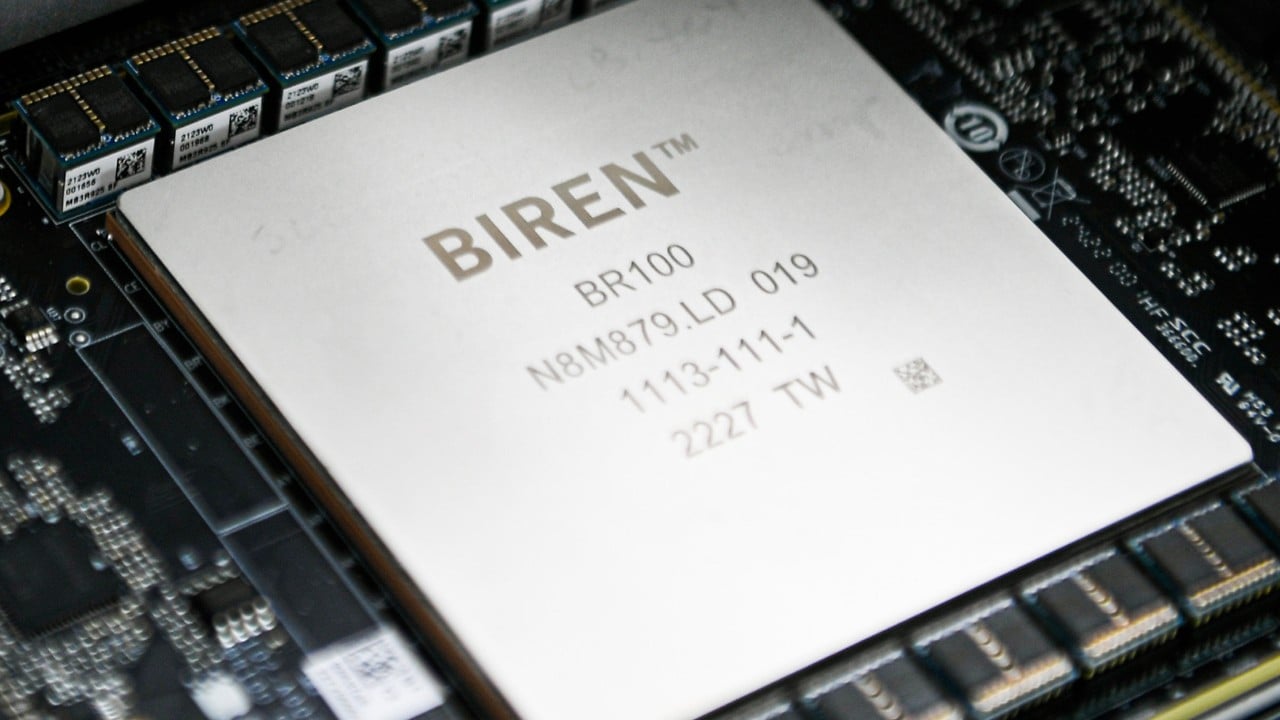
💡Chinese GPU rivals to Nvidia triple revenues in self-sufficiency boom
⚡ 30-Second TL;DR
What Changed
Biren revenue surged 207.2% YoY to 1.03B yuan (US$149M)
Why It Matters
Strong revenue growth indicates rising demand for domestic AI GPUs in China, potentially eroding Nvidia's dominance there. Persistent losses underscore scaling challenges in high-R&D AI chip sector.
What To Do Next
Assess Biren and Iluvatar GPUs for cost-effective AI training in China-compliant environments.
Key Points
- •Biren revenue surged 207.2% YoY to 1.03B yuan (US$149M)
- •Beat consensus estimate of 954.5M yuan
- •Iluvatar CoreX posted triple-digit revenue growth
- •First earnings since January listing
- •Positioned as Nvidia alternatives amid China chip push
🧠 Deep Insight
AI-generated analysis for this event — not the original article.
🔑 Enhanced Key Takeaways
- •Biren Technology's growth is heavily supported by the 'Xinchuang' (IT innovation) policy, which mandates the replacement of foreign hardware with domestic alternatives in Chinese government and state-owned enterprise infrastructure.
- •Both companies face significant supply chain constraints due to US export controls on advanced lithography equipment, forcing them to optimize designs for older, less efficient manufacturing nodes (e.g., 7nm or 12nm) compared to Nvidia's cutting-edge processes.
- •Despite revenue growth, both firms are struggling with high R&D-to-revenue ratios, as they must invest heavily in software ecosystem development (CUDA-compatible frameworks) to lower the barrier for developers migrating away from Nvidia platforms.
📊 Competitor Analysis▸ Show
| Feature | Biren (BR100) | Iluvatar CoreX (BI series) | Nvidia (H100/H200) |
|---|---|---|---|
| Architecture | Proprietary (Biren) | Proprietary (Tianshu) | Hopper (CUDA) |
| Process Node | 7nm (TSMC-derived) | 7nm/12nm | 4nm (TSMC) |
| Ecosystem | BIRENSUPA (CUDA-like) | Tiangong (CUDA-like) | CUDA (Industry Standard) |
| Market Focus | High-end AI Training | Inference/Training | Global AI/HPC |
🛠️ Technical Deep Dive
- •Biren BR100 Architecture: Utilizes a 'Chiplet' design approach to overcome yield issues and maximize die area, featuring over 77 billion transistors.
- •Memory Bandwidth: BR100 supports HBM2e, providing high memory bandwidth necessary for large language model (LLM) training, though constrained by export-limited memory speeds.
- •Software Stack: Both companies have developed proprietary software layers (Biren's BIRENSUPA and Iluvatar's Tiangong) designed to translate CUDA code to their native instruction sets to facilitate developer adoption.
- •Interconnect: Both utilize proprietary high-speed interconnect technologies to scale across multi-GPU clusters, attempting to mimic the performance of Nvidia's NVLink.
🔮 Future ImplicationsAI analysis grounded in cited sources
⏳ Timeline
📰 Event Coverage
Weekly AI Recap
Read this week's curated digest of top AI events →
👉Related Updates

AI-curated news aggregator. All content rights belong to original publishers.
Original source: SCMP Technology ↗
This is a summary, not the original. Read the source, or get the weekly briefing.
The weekly digest
One email a week. Unsubscribe anytime.