Big Tech challenges Belgium's creator-pay copyright law
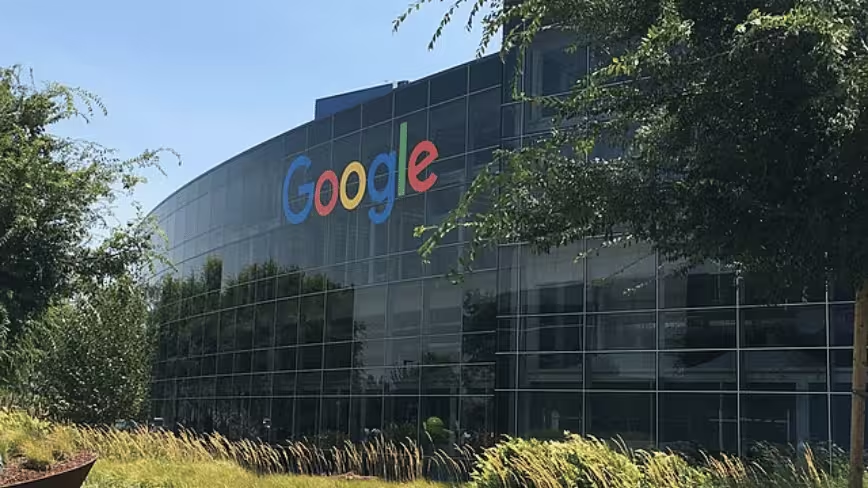
💡Crucial legal battle over copyright that will shape the future of AI training data and content licensing in the EU.
⚡ 30-Second TL;DR
What Changed
Tech giants challenge Belgian copyright law at EU Court of Justice
Why It Matters
This case could set a precedent for how tech platforms compensate creators, directly influencing the legal framework for AI training data and content distribution.
What To Do Next
Review your data licensing agreements if your AI model relies on content from European creators, as legal standards are currently in flux.
Key Points
- •Tech giants challenge Belgian copyright law at EU Court of Justice
- •Dispute over the scope of creator compensation requirements
- •Potential implications for how platforms handle AI-generated or licensed content
🧠 Deep Insight
AI-generated analysis for this event — not the original article.
🔑 Enhanced Key Takeaways
- •The legal challenge centers on the transposition of Article 17 of the EU Copyright Directive into Belgian law, specifically regarding the 'extended collective licensing' mechanisms.
- •Tech companies argue that Belgium's implementation creates a 'double payment' scenario, where platforms are forced to pay both individual rights holders and collective management organizations for the same content.
- •The Belgian law includes specific provisions that mandate remuneration for creators even when content is uploaded by users, which platforms claim exceeds the 'best efforts' obligation outlined in the EU directive.
- •This case is being closely watched as a bellwether for how other EU member states might interpret the 'fair compensation' requirements for AI training data and user-generated content.
- •The coalition of plaintiffs includes not only major tech platforms but also industry associations representing digital service providers who fear the Belgian model could become a template for restrictive EU-wide copyright enforcement.
🔮 Future ImplicationsAI analysis grounded in cited sources
⏳ Timeline
Weekly AI Recap
Read this week's curated digest of top AI events →
👉Related Updates
AI-curated news aggregator. All content rights belong to original publishers.
Original source: The Next Web (TNW) ↗
This is a summary, not the original. Read the source, or get the weekly briefing.
Weekly AI briefing
One email a week. Unsubscribe anytime.