🐯虎嗅•Stalecollected in 27m
Big Tech Ties KPIs to AI Token Use
💡AI token use now dictates tech jobs—adapt or risk optimization
⚡ 30-Second TL;DR
What Changed
Alibaba grants exclusive token quotas to all employees
Why It Matters
This shift pressures employees to maximize AI usage, potentially accelerating enterprise AI adoption but raising job anxiety and 'AI washing' risks. Companies gain efficiency in coding and agents, shortening project cycles by 50%.
What To Do Next
Audit your team's monthly token spend and propose unlimited quotas citing 50% cycle reductions.
Who should care:Enterprise & Security Teams
Key Points
- •Alibaba grants exclusive token quotas to all employees
- •Tencent offers ~$22K annual AI token packages per employee
- •ByteDance provides unlimited work AI tools, 50% personal reimbursement
- •Token usage now factors into promotions, layoffs, and hiring approvals
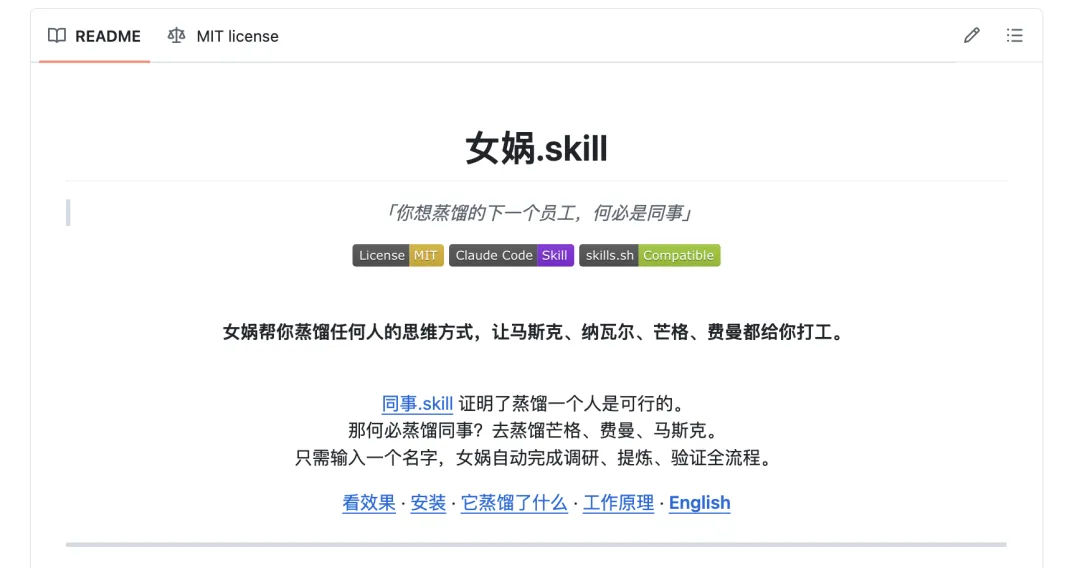
- •Open-source '女娲.skill' distills figures like Jobs into AI modules
🧠 Deep Insight
AI-generated analysis for this event.
🔑 Enhanced Key Takeaways
- •The shift toward 'token-based performance metrics' has triggered a surge in 'prompt engineering' internal training programs, with companies like Alibaba mandating certification for mid-level management to ensure efficient token utilization.
- •Internal audits at major Chinese tech firms have identified a 'token inflation' phenomenon, where employees automate trivial tasks to meet quotas, leading to the implementation of 'quality-weighted' token metrics that prioritize task complexity over raw volume.
- •The '女娲.skill' (Nuwa.skill) framework has evolved into a proprietary internal standard for knowledge management, allowing companies to convert legacy codebases and internal documentation into fine-tuned LoRA (Low-Rank Adaptation) adapters for enterprise LLMs.
🛠️ Technical Deep Dive
- •Implementation of 'Token-Weighted Performance Tracking' (TWPT) involves integrating LLM API usage logs directly into HRIS (Human Resource Information Systems) via middleware that maps API calls to specific project IDs.
- •The '女娲.skill' architecture utilizes a modular RAG (Retrieval-Augmented Generation) pipeline where expert knowledge is distilled into vector databases, allowing for the instantiation of 'digital clones' that mimic the decision-making patterns of specific employees.
- •Companies are deploying 'Token Optimization Layers'—a proxy server architecture that caches frequent queries and optimizes prompt structure before sending requests to the primary LLM to reduce costs while maintaining high usage metrics.
🔮 Future ImplicationsAI analysis grounded in cited sources
AI token usage will become a standardized component of corporate ESG reporting by 2027.
As token consumption correlates with energy usage and compute infrastructure, regulators are beginning to view AI efficiency as a key sustainability metric.
The rise of 'AI-native' performance reviews will lead to the obsolescence of traditional time-based productivity tracking.
Companies are shifting focus from hours worked to 'AI-augmented output,' where the ability to leverage LLMs effectively becomes the primary determinant of individual productivity.
⏳ Timeline
2024-09
Initial pilot programs for AI-integrated performance reviews launched at major Chinese tech firms.
2025-03
Introduction of '女娲.skill' framework for internal knowledge distillation.
2025-11
Standardization of token-based quotas across all departments at Alibaba and Tencent.
2026-02
Implementation of quality-weighted token metrics to combat automated usage inflation.
📰
Weekly AI Recap
Read this week's curated digest of top AI events →
👉Related Updates



AI-curated news aggregator. All content rights belong to original publishers.
Original source: 虎嗅 ↗