Bezos Plans Space Data Centers Constellation
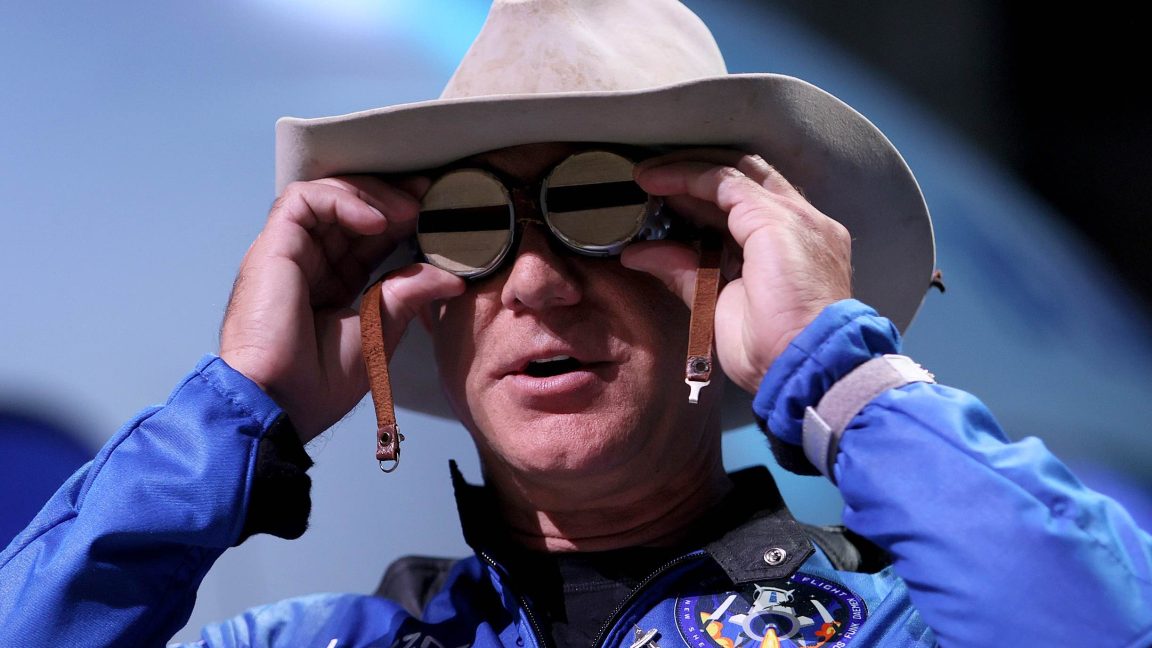
💡Space data centers could slash AI inference latency worldwide via orbital compute (<=78 chars)
⚡ 30-Second TL;DR
What Changed
Third megaconstellation for data centers
Why It Matters
Could reduce latency for global AI workloads and enable massive scalable compute in orbit. Impacts cloud providers racing for AI infra dominance.
What To Do Next
Assess orbital data center APIs for low-latency AI model serving in your cloud strategy.
Key Points
- •Third megaconstellation for data centers
- •Space-based to complement ground infra
- •Announced by Jeff Bezos
🧠 Deep Insight
AI-generated analysis for this event — not the original article.
🔑 Enhanced Key Takeaways
- •The constellation, internally codenamed 'Project Aether,' utilizes a proprietary liquid-cooling radiator system designed to dissipate heat in a vacuum, addressing the primary thermal bottleneck of orbital computing.
- •Integration with AWS Nitro System allows these space-based nodes to function as standard AWS Availability Zones (AZs), enabling developers to deploy Lambda functions and containerized workloads directly to orbit.
- •The satellites feature high-bandwidth Optical Inter-Satellite Links (OISL) capable of 200 Gbps, creating a low-latency mesh network that bypasses congested terrestrial fiber backbones for transcontinental data transfer.
- •A partnership with Blue Origin ensures the constellation's deployment via New Glenn heavy-lift rockets, significantly reducing the cost-per-kilogram for heavy server-grade hardware compared to existing small-sat solutions.
📊 Competitor Analysis▸ Show
| Feature | Bezos 'Project Aether' | SpaceX Starshield | Lonestar Data Holdings |
|---|---|---|---|
| Primary Orbit | Low Earth Orbit (LEO) | LEO / Polar | Lunar Surface |
| Compute Focus | General Purpose AWS Cloud | Government/Secure Comms | Disaster Recovery Storage |
| Cooling Tech | Active Liquid Radiators | Passive Thermal | Regolith Insulation |
| Connectivity | 200Gbps Laser Mesh | Starlink Laser Link | S-Band / X-Band |
| Integration | Native AWS Ecosystem | Department of Defense | Independent / Multi-cloud |
🛠️ Technical Deep Dive
- •Processor Architecture: Custom radiation-hardened ARM-based Graviton processors optimized for high-efficiency compute-per-watt.
- •Power Supply: High-efficiency multi-junction Gallium Arsenide (GaAs) solar arrays providing up to 15kW per node.
- •Storage: Solid-state drives (SSD) with redundant parity bits and error-correcting code (ECC) memory to mitigate cosmic ray bit-flips.
- •Edge AI: Integrated Tensor Processing Units (TPUs) for real-time processing of Earth observation data before downlinking.
- •Station Keeping: Krypton-fueled Hall-effect thrusters for precise orbital positioning and end-of-life deorbiting.
🔮 Future ImplicationsAI analysis grounded in cited sources
⏳ Timeline
Weekly AI Recap
Read this week's curated digest of top AI events →
👉Related Updates

AI-curated news aggregator. All content rights belong to original publishers.
Original source: Ars Technica ↗
This is a summary, not the original. Read the source, or get the weekly briefing.
Weekly AI briefing
One email a week. Unsubscribe anytime.