BEVs Dominate China Sales Amid Rising Oil Costs
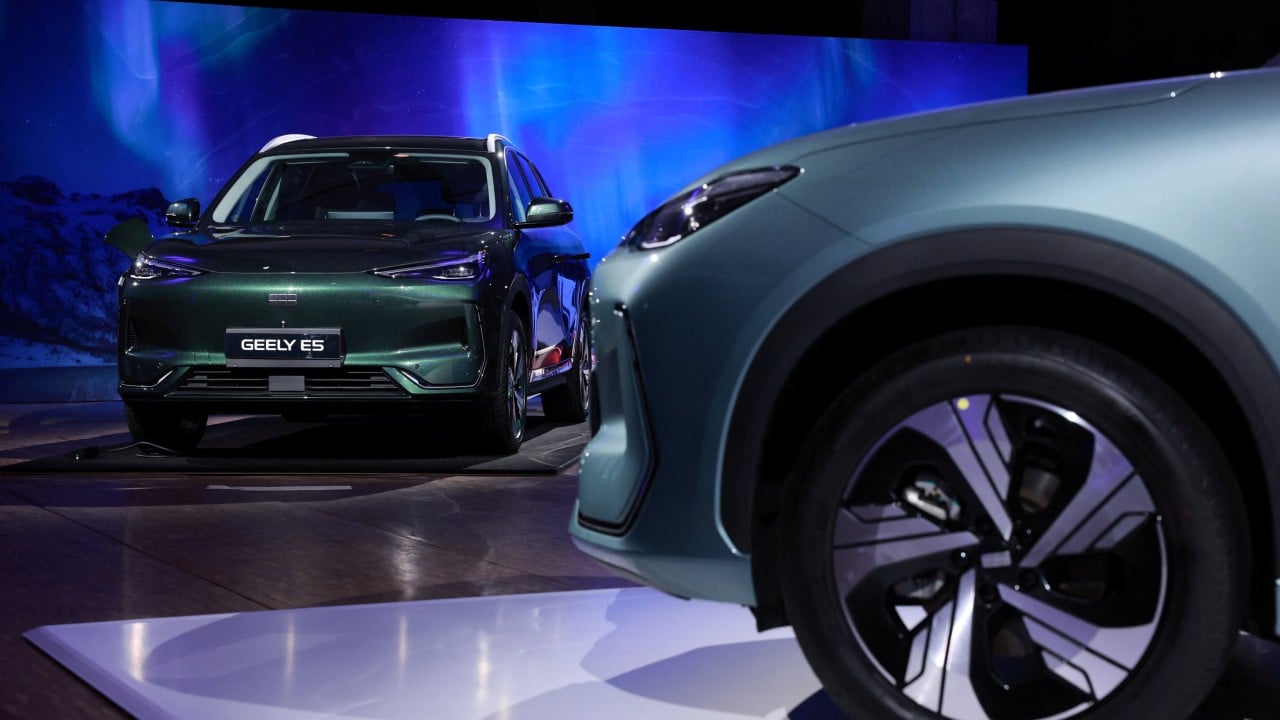
💡Understand the market shift in China's automotive sector to identify opportunities for AI-driven smart cockpit tech.
⚡ 30-Second TL;DR
What Changed
BEVs captured 9 out of the top 10 spots in China's April vehicle sales.
Why It Matters
The rapid adoption of BEVs in China signals a massive shift in infrastructure and software demand for smart vehicle systems. This trend highlights the growing market for AI-integrated automotive operating systems.
What To Do Next
Analyze the software integration capabilities of top-selling BEV platforms to identify opportunities for deploying in-cabin AI assistants.
Key Points
- •BEVs captured 9 out of the top 10 spots in China's April vehicle sales.
- •Rising oil costs are accelerating the consumer shift away from traditional petrol vehicles.
- •Geely's Binyue was the only petrol-powered model to remain in the top 10 rankings.
🧠 Deep Insight
Web-grounded analysis with 35 cited sources.
🔑 Enhanced Key Takeaways
- •China's New Energy Vehicle (NEV) penetration rate, encompassing BEVs and PHEVs, reached a historic 61.4% in April 2026, indicating a significant and accelerating shift away from traditional internal combustion engine (ICE) vehicles.
- •While BEVs dominated the top sales spots, overall domestic NEV sales in China experienced a year-on-year decline of 10.8% in April 2026, with the market's renewed growth primarily driven by a surge in exports, which accounted for nearly one-third of China's NEV wholesale sales.
- •The transition to NEVs is most pronounced among domestic Chinese manufacturers, whose NEV penetration reached 80.1% in April, significantly outpacing luxury brands (26.1%) and mainstream joint ventures (14.1%).
- •Government policies, including a robust dual credit system and past subsidies, have been instrumental in accelerating NEV adoption by creating strong financial incentives for manufacturers and fostering technological leadership, particularly in battery production.
- •The rapid decline in ICE sales, which plunged 37% year-on-year in April, is attributed to a combination of high oil prices and a fundamental shift in consumer confidence towards electric mobility.
📊 Competitor Analysis▸ Show
China's Top-Selling Vehicles: BEVs vs. ICE (April 2026)
| Model (Powertrain) | Segment | Estimated Starting Price (RMB) | Estimated Horsepower / System Output | April 2026 Sales (Units) |
|---|---|---|---|---|
| Geely Xingyuan (BEV) | B-segment Hatchback | ~69,800 | ~116–136 hp (Single-motor FWD) | 34,727 |
| Xiaomi SU7 (BEV) | E-segment Sedan | ~215,900 | RWD 320 hp / AWD 690 hp | 26,826 |
| Tesla Model Y (BEV) | D-segment SUV | ~249,900 | RWD ~299 hp / AWD ~450 hp | 22,990 |
| BYD Sealion 06 EV (BEV) | D-segment SUV | ~139,800 | ~231–422 hp (Single/Dual-motor EV) | 15,659 |
| BYD Yuan Up (BEV) | B-segment SUV | ~96,800 | ~95–177 hp (Single-motor EV) | 15,658 |
| Geely Binyue / Coolray (ICE) | B-segment SUV | ~75,800 | ~181 hp (1.5T Turbo Petrol) | 14,923 |
| BYD Dolphin (BEV) | B-segment Hatchback | ~99,800 | ~95–204 hp (Single-motor EV) | 14,218 |
🛠️ Technical Deep Dive
- Battery Technology Dominance: China holds the largest share of global EV battery production, led by companies like CATL and BYD. There's a widespread adoption of Lithium Iron Phosphate (LFP) batteries due to their cost-effectiveness, safety, and durability.
- BYD Seal: Features a Blade Battery, a 15.6-inch rotating infotainment system, and a 360-degree camera. It offers both single-motor FWD and dual-motor AWD configurations, with the AWD variant achieving up to 390 kW maximum power and 670 Nm maximum torque.
- Nio ET5: Equipped with a high-efficiency smart electric drive system combining a 150 kW induction motor in the front and a 210 kW permanent magnet motor in the rear, delivering a combined 358 kW (480 hp) and 700 N⋅m of torque, enabling 0-100 km/h acceleration in 4.0 seconds. It supports Nio's battery swap stations and features a panoramic digital cockpit with AR/VR technology, a 23-speaker sound system, and an advanced driver-assistance system (ADAS) utilizing Nio's Shenji NX3091 SoC and Aquila sensor-suite, including a 300-line equivalent LiDAR unit.
- Tesla Model 3 (China): Available in single-motor RWD (194 kW) and dual-motor AWD (331 kW) variants. The RWD version uses CATL-provided LFP batteries, while the AWD uses LG Energy Solution NMC batteries. The Model 3+ Long Range variant offers up to 830 km CLTC range.
- Charging Infrastructure: By the end of December 2025, China had established over 20 million EV charging facilities, forming the world's largest network. A three-year action plan (2025-2027) aims to expand this to 28 million facilities by 2027, with a focus on deploying ultra-fast chargers at highway service areas and in urban and rural communities.
🔮 Future ImplicationsAI analysis grounded in cited sources
⏳ Timeline
📎 Sources (35)
Factual claims are grounded in the sources below. Forward-looking analysis is AI-generated interpretation.
- Google Search Source
- Google Search Source
- Google Search Source
- Google Search Source
- Google Search Source
- Google Search Source
- Google Search Source
- Google Search Source
- Google Search Source
- Google Search Source
- Google Search Source
- Google Search Source
- Google Search Source
- Google Search Source
- Google Search Source
- Google Search Source
- Google Search Source
- Google Search Source
- Google Search Source
- Google Search Source
- Google Search Source
- Google Search Source
- Google Search Source
- Google Search Source
- Google Search Source
- Google Search Source
- Google Search Source
- Google Search Source
- Google Search Source
- Google Search Source
- Google Search Source
- Google Search Source
- Google Search Source
- Google Search Source
- Google Search Source
Weekly AI Recap
Read this week's curated digest of top AI events →
👉Related Updates
AI-curated news aggregator. All content rights belong to original publishers.
Original source: SCMP Technology ↗