Beijing AI Bar Bleeds Cash on Free DeepSeek Tokens
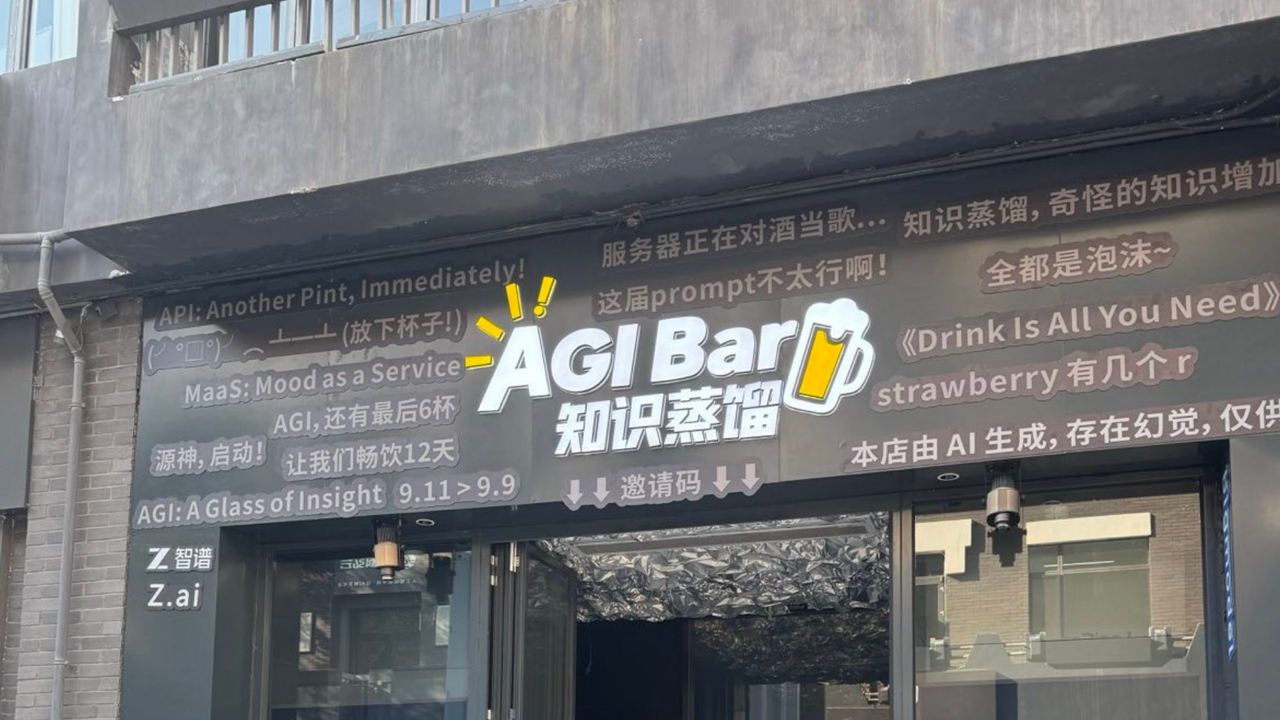
💡A real-world test of local DeepSeek economics shows why free inference can quickly become unsustainable.
⚡ 30-Second TL;DR
What Changed
Customers receive unlimited DeepSeek coding tokens with a roughly $1.50 drink purchase.
Why It Matters
The example highlights the difficulty of turning inexpensive or free AI inference into a sustainable physical business. It also demonstrates how compact local AI hardware can support public-facing coding services, while exposing the importance of usage controls and unit economics.
What To Do Next
Before offering free coding inference, benchmark DeepSeek on your target hardware and set per-user token limits using a measured cost-per-session budget.
Key Points
- •Customers receive unlimited DeepSeek coding tokens with a roughly $1.50 drink purchase.
- •The bar runs inference locally rather than relying entirely on a remote cloud API.
- •Two Nvidia DGX Spark mini-PCs power the venue’s local AI service, but operating costs exceed revenue.
🧠 Deep Insight
AI-generated analysis for this event.
🔑 Enhanced Key Takeaways
- •The establishment, known as 'AI Bar' or similar local variants in Beijing's tech districts, utilizes a 'loss leader' marketing strategy to attract the city's dense population of software engineers and AI researchers.
- •The Nvidia DGX Spark is a compact, enterprise-grade AI workstation specifically designed for local inference and fine-tuning, often marketed for small-scale deployments rather than high-traffic public services.
- •DeepSeek models, particularly the V3 and R1 variants, have gained significant traction in China due to their open-weights availability and competitive performance against proprietary Western models like GPT-4o.
- •Local inference is chosen by the bar owner to bypass potential latency issues and data privacy concerns associated with routing customer code snippets through public cloud APIs.
- •The business model faces sustainability challenges because the electricity consumption and hardware depreciation of the DGX Spark units significantly outweigh the marginal profit from low-cost beverage sales.
🛠️ Technical Deep Dive
- The Nvidia DGX Spark is powered by an Nvidia RTX 4090 GPU, providing 24GB of VRAM which is sufficient for running quantized versions of DeepSeek models locally.
- Local inference is likely managed via Ollama or vLLM frameworks, which are standard for deploying open-weights models on consumer/workstation-grade hardware.
- The system architecture relies on a local network setup to distribute inference tasks across the two DGX Spark units to handle concurrent requests from bar patrons.
- Quantization techniques (such as 4-bit or 8-bit) are likely employed to fit the DeepSeek model parameters into the limited VRAM of the DGX Spark units while maintaining acceptable token generation speeds.
🔮 Future ImplicationsAI analysis grounded in cited sources
⏳ Timeline
Weekly AI Recap
Read this week's curated digest of top AI events →
👉Related Updates
AI-curated news aggregator. All content rights belong to original publishers.
Original source: Tom's Hardware ↗