Bayesian Estimation of Mean and Standard Deviation in Python
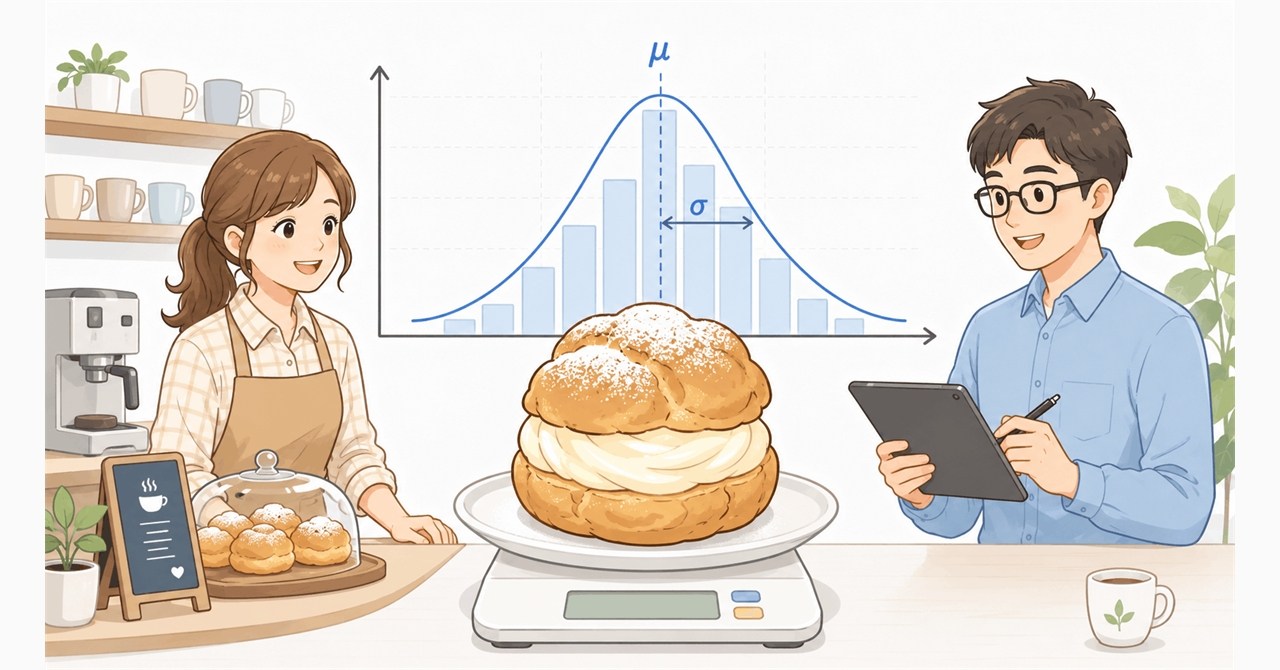
💡Learn to move beyond simple averages by using Bayesian inference to quantify uncertainty in your data.
⚡ 30-Second TL;DR
What Changed
Introduces Bayesian inference for estimating population parameters.
Why It Matters
Practitioners can apply these Bayesian methods to improve decision-making in scenarios where data is limited or noisy.
What To Do Next
Implement a Bayesian model using PyMC or ArviZ to quantify uncertainty in your next A/B test or performance metric analysis.
Key Points
- •Introduces Bayesian inference for estimating population parameters.
- •Demonstrates how to compare observed data against a reference value.
- •Provides practical Python code for statistical modeling.
- •Explains the concept of 'uncertainty' in data analysis.
🧠 Deep Insight
Background and context from public sources — not the original article. 30 sources cited.
🔑 Enhanced Key Takeaways
- •Bayesian inference is particularly effective for statistical modeling when dealing with uncertainty and limited datasets, as it allows for the incorporation of prior knowledge to refine parameter estimates.
- •Modern Bayesian estimation heavily relies on computational techniques like Markov Chain Monte Carlo (MCMC) algorithms, including Metropolis-Hastings, Gibbs Sampling, and Hamiltonian Monte Carlo, to approximate complex posterior distributions that lack analytical solutions.
- •The selection of 'prior distributions' is a critical step in Bayesian analysis, representing initial beliefs about model parameters, which can range from informative (based on existing knowledge) to non-informative (designed to minimize influence) such as the Jeffreys prior.
- •Bayesian methods have diverse real-world applications across various sectors, including medical diagnostics, spam detection, A/B testing optimization, financial risk assessment, recommendation systems, and machine learning, where they enable adaptive and evidence-based predictions.
- •Python offers several robust libraries for implementing Bayesian statistics, such as PyMC (formerly PyMC3) for probabilistic programming, Stan (accessed via PyStan or CmdStanPy) for high-performance computation, and
scipy.stats.bayes_mvsfor more basic Bayesian confidence interval calculations.
📊 Competitor Analysis▸ Show
| Feature/Tool | PyMC (Python) | Stan (via PyStan/CmdStanPy) | SciPy.stats.bayes_mvs (Python) |
|---|---|---|---|
| Primary Use Case | General-purpose probabilistic programming, complex model building | High-performance statistical modeling, complex model building | Basic Bayesian confidence intervals for mean, variance, std |
| Language/API | Python-centric syntax, uses PyTensor backend, intuitive model specification | Domain-specific language (Stan language), Python wrapper for execution | Standard Python function within SciPy library |
| Performance | Efficient gradient-based samplers (NUTS), supports variational inference | Often cited as faster (up to 2x in some comparisons), also uses NUTS and variational inference | Direct calculation, not sampling-based for general models |
| Ease of Use | User-friendly for Python developers, good for rapid prototyping | Excellent documentation, strong for users with statistical background, steeper learning curve for Stan language | Simple function call for specific estimations |
| Key Features | MCMC sampling, Variational Inference (with mini-batches), ArviZ integration | MCMC sampling (HMC, NUTS), Variational Inference, extensive examples | Uses Jeffreys' prior for variance/std, returns center and interval |
| Scalability | Variational inference with mini-batches helps with large datasets | Generally robust for complex models, performance can be a factor for very large datasets | Limited to simple mean/variance/std estimation |
🛠️ Technical Deep Dive
- Bayes' Theorem: The foundational principle is
P(θ|D) = [P(D|θ) * P(θ)] / P(D), whereP(θ|D)is the posterior probability of parameters given data,P(D|θ)is the likelihood of data given parameters,P(θ)is the prior probability of parameters, andP(D)is the marginal likelihood (evidence). - Prior Distributions: Represent initial beliefs about unknown parameters (
θ) before observing data. They are specified as probability distributions and can be informative (e.g., Normal, Beta, based on expert knowledge or previous studies) or non-informative (e.g., Uniform, Jeffreys prior) to allow the data to dominate the inference. - Likelihood Function: Defines the probability of observing the given data (
D) for different possible values of the parameters (θ). For estimating mean and standard deviation, a common choice for the likelihood is the Normal (Gaussian) distribution. - Posterior Distribution: The result of Bayesian inference, representing the updated beliefs about the parameters after incorporating the observed data. It combines the information from the prior and the likelihood.
- Computational Methods for Posterior Approximation: When the posterior distribution cannot be calculated analytically, numerical methods are used:
- Markov Chain Monte Carlo (MCMC): A class of algorithms that generate samples from a probability distribution by constructing a Markov chain whose stationary distribution is the target posterior. Popular MCMC algorithms include:
- Metropolis-Hastings Algorithm: Proposes new parameter values and accepts or rejects them based on an acceptance ratio.
- Gibbs Sampling: A special case of Metropolis-Hastings where samples are drawn from conditional distributions.
- Hamiltonian Monte Carlo (HMC): Utilizes gradients of the log-posterior to propose moves, leading to higher acceptance rates and more efficient exploration of the parameter space. The No-U-Turn Sampler (NUTS) is an advanced form of HMC.
- Variational Inference (VI): An optimization-based approach that approximates the posterior distribution by finding the closest distribution within a simpler family of distributions, often faster than MCMC for large datasets.
- Markov Chain Monte Carlo (MCMC): A class of algorithms that generate samples from a probability distribution by constructing a Markov chain whose stationary distribution is the target posterior. Popular MCMC algorithms include:
🔮 Future ImplicationsAI analysis grounded in cited sources
⏳ Timeline
📎 Sources (30)
Factual claims are grounded in the sources below. Forward-looking analysis is AI-generated interpretation.
- geeksforgeeks.org
- ebsco.com
- statology.org
- quantstart.com
- nih.gov
- medium.com
- github.io
- editage.com
- cam.ac.uk
- bayesloop.com
- wikipedia.org
- cuny.edu
- medium.com
- statsig.com
- stonybrook.edu
- medium.com
- scipy.org
- medium.com
- dougjohnson.in
- pymc.io
- statology.org
- github.com
- youtube.com
- medium.com
- blogspot.com
- youtube.com
- wikipedia.org
- metsci.com
- quantdare.com
- quantumzeitgeist.com
Weekly AI Recap
Read this week's curated digest of top AI events →
👉Related Updates
AI-curated news aggregator. All content rights belong to original publishers.
Original source: ITmedia AI+ (日本) ↗
This is a summary, not the original. Read the source, or get the weekly briefing.
Weekly AI briefing
One email a week. Unsubscribe anytime.