Baidu Revenue Falls as AI Cloud Growth Lags
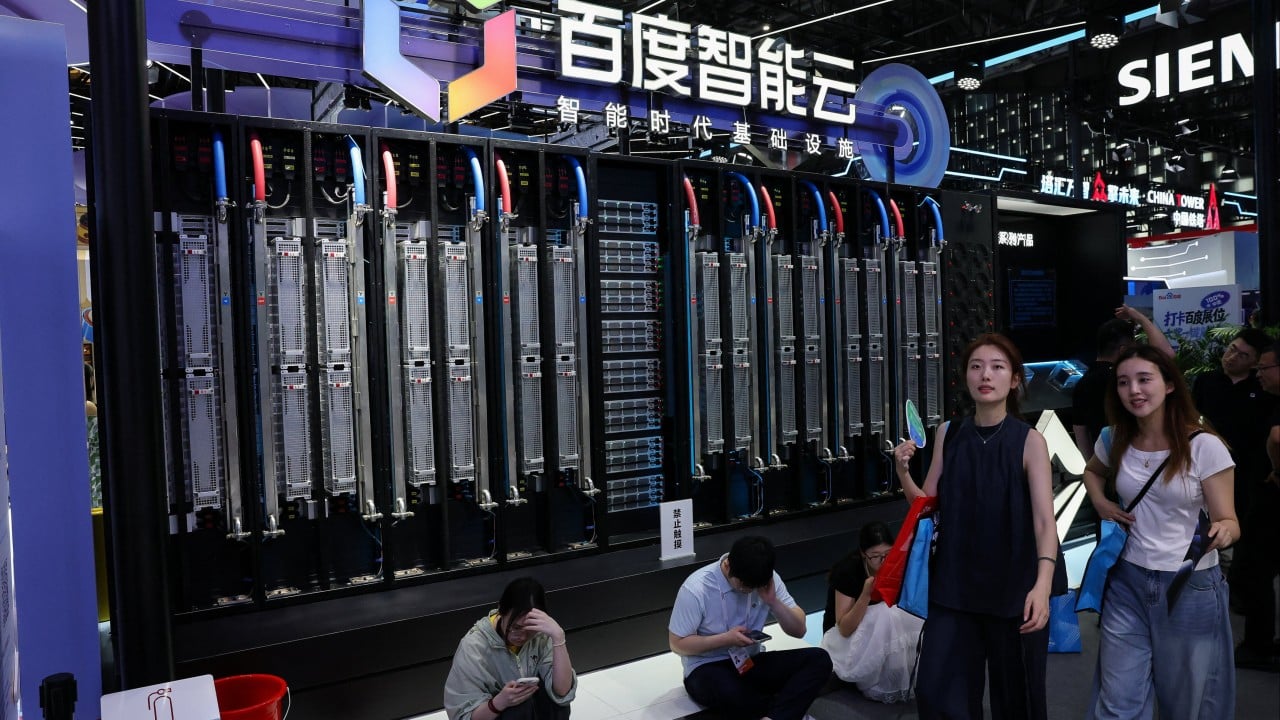
💡Baidu’s results reveal whether AI cloud growth can offset weakening ad revenue in China’s competitive market.
⚡ 30-Second TL;DR
What Changed
Second-quarter revenue reached 31.3 billion yuan, down 4% year over year.
Why It Matters
The results suggest that monetising AI cloud services remains challenging despite demand growth. AI practitioners and founders serving the Chinese market should watch whether Baidu increases cloud investment, adjusts pricing, or prioritises enterprise AI adoption.
What To Do Next
Benchmark Baidu AI Cloud’s available AI services against your current China-region inference stack for latency, pricing, and enterprise compliance before committing new workloads.
Key Points
- •Second-quarter revenue reached 31.3 billion yuan, down 4% year over year.
- •Revenue slightly missed the 31.6 billion yuan consensus estimate.
- •AI cloud growth failed to offset continued weakness in advertising.
- •Quarterly net profit was 2.3 billion yuan.
🧠 Deep Insight
AI-generated analysis for this event.
🔑 Enhanced Key Takeaways
- •Baidu's advertising revenue decline is largely attributed to a broader downturn in China's consumer spending and a shift in advertiser budgets toward short-video platforms like Douyin.
- •The company's Ernie Bot (Wenxin Yiyan) ecosystem has faced intensifying price wars in China's generative AI market, with major cloud providers aggressively slashing API costs to capture market share.
- •Baidu's Apollo autonomous driving unit continues to face high operational costs despite expanding its Robotaxi service, 'Apollo Go,' to more cities across China.
- •The 2.3 billion yuan net profit figure reflects significant ongoing capital expenditure in AI infrastructure, including the procurement of high-end GPUs amidst persistent US export restrictions.
- •Institutional investors have expressed concerns over Baidu's ability to monetize its AI investments, leading to increased volatility in its Hong Kong and US-listed shares following the earnings release.
📊 Competitor Analysis▸ Show
| Feature | Baidu (Ernie/Cloud) | Alibaba (Cloud/Qwen) | Tencent (Cloud/Hunyuan) |
|---|---|---|---|
| Core Focus | Search/AI Integration | E-commerce/Enterprise Cloud | Social/Gaming/Enterprise |
| AI Model | Ernie 4.0 | Qwen 2.5 | Hunyuan |
| Pricing Strategy | Aggressive API cuts | Competitive/Volume-based | Ecosystem-integrated |
| Market Position | Leader in Search-AI | Leader in Cloud Infrastructure | Leader in Social/Gaming AI |
🛠️ Technical Deep Dive
- Ernie 4.0 utilizes a mixture-of-experts (MoE) architecture designed to optimize inference latency while maintaining high performance in complex reasoning tasks.
- Baidu's AI Cloud infrastructure integrates proprietary Kunlunxin AI chips to mitigate reliance on restricted foreign hardware for model training and inference.
- The Apollo autonomous driving stack employs a transformer-based perception model that processes multi-modal sensor data (LiDAR, camera, radar) in real-time to navigate complex urban environments.
- PaddlePaddle, Baidu's deep learning platform, serves as the foundational framework for its AI cloud services, supporting large-scale distributed training for models with hundreds of billions of parameters.
🔮 Future ImplicationsAI analysis grounded in cited sources
⏳ Timeline
Weekly AI Recap
Read this week's curated digest of top AI events →
👉Related Updates
AI-curated news aggregator. All content rights belong to original publishers.
Original source: SCMP Technology ↗