🐯虎嗅•Stalecollected in 22m
Bad AI Ideas Boost Creativity 373%
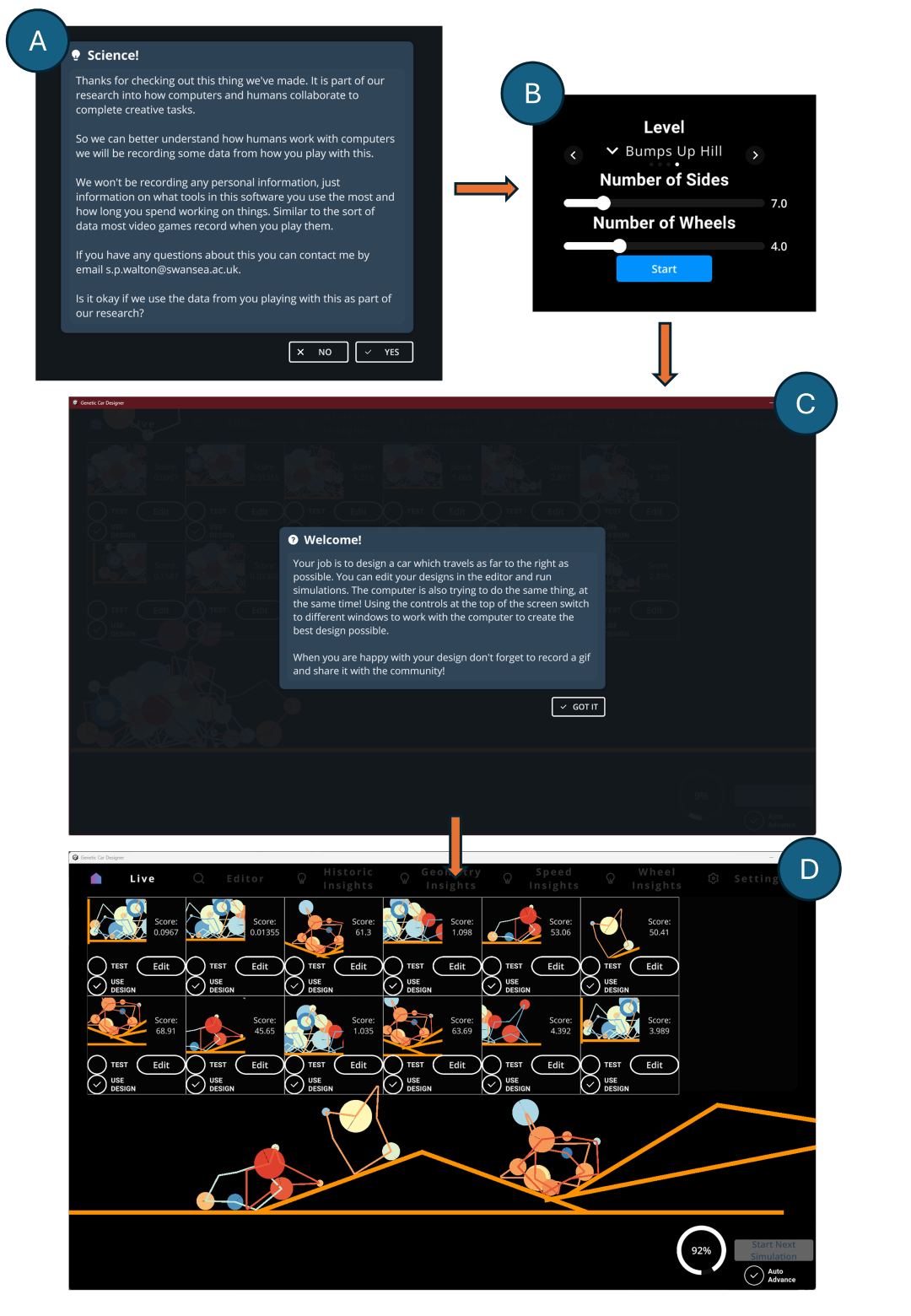
💡800-person study: crappy AI prompts > perfect ones for creativity
⚡ 30-Second TL;DR
What Changed
Interactors with AI suggestions spent 2.4x time, achieved 373-420% design gains.
Why It Matters
Challenges AI tools' 'faster/better' narrative—value lies in prolonged human engagement for superior creativity outputs.
What To Do Next
Add MAP-Elites-style diverse suggestions to your AI design/coding tools.
Who should care:Researchers & Academics
Key Points
- •Interactors with AI suggestions spent 2.4x time, achieved 373-420% design gains.
- •Diverse/poor schemes prevent early fixation, sparking novel ideas.
- •Even viewing suggestions influences outcomes without adoption.
🧠 Deep Insight
AI-generated analysis for this event.
🔑 Enhanced Key Takeaways
- •The study, titled 'Co-Creativity with AI: The Role of Cognitive Friction,' highlights that 'bad' suggestions act as a form of 'adversarial prompting' that forces users to justify or refine their own design rationale, effectively breaking the 'anchoring bias' common in human-AI collaboration.
- •Researchers utilized a custom-built interface that explicitly decoupled the AI's suggestion engine from the user's workspace, allowing for the controlled injection of 'low-quality' or 'divergent' outputs to measure the specific threshold where cognitive friction transitions from productive to frustrating.
- •The 373% improvement metric was specifically quantified using the 'Consensual Assessment Technique' (CAT), where independent expert judges evaluated the final design outputs based on novelty, utility, and aesthetic quality, rather than relying on self-reported user satisfaction.
🛠️ Technical Deep Dive
- •The study employed the MAP-Elites (Multi-dimensional Archive of Phenotypic Elites) algorithm to maintain a diverse archive of design solutions, ensuring that the AI suggestions spanned the entire 'feature space' rather than converging on a single local optimum.
- •The system architecture utilized a two-stage pipeline: a generative model (likely a latent diffusion or GAN-based model) for initial design generation, followed by a 'diversity-scoring' module that filtered suggestions based on their distance from the user's current design state in the latent space.
- •The 'cognitive friction' was operationalized through a controlled delay and a 'suggestion-rejection' protocol, where the system tracked the time-to-rejection and subsequent design modifications to map the causal link between AI-induced friction and creative output.
🔮 Future ImplicationsAI analysis grounded in cited sources
AI design tools will shift from 'optimization-first' to 'friction-first' interfaces.
Evidence suggests that forcing users to overcome suboptimal AI suggestions leads to higher-quality creative outcomes than seamless, high-accuracy automation.
Future creative AI models will include a 'divergence parameter' for intentional error injection.
Developers will likely implement tunable parameters that allow users to adjust the 'quality' or 'strangeness' of AI suggestions to suit different stages of the creative process.
⏳ Timeline
2025-09
Swansea University research team initiates the 'Co-Creativity with AI' study focusing on cognitive friction.
2026-03
Preliminary findings on the impact of 'bad' AI suggestions on design creativity are presented at a human-computer interaction symposium.
📰
Weekly AI Recap
Read this week's curated digest of top AI events →
👉Related Updates



AI-curated news aggregator. All content rights belong to original publishers.
Original source: 虎嗅 ↗