AWS S3 Files Mounts Buckets for AI Agents
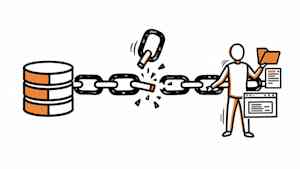
💡Mount S3 natively for AI agents—ends file-object split, boosts pipelines.
⚡ 30-Second TL;DR
What Changed
Mounts any S3 bucket into agent's local environment with one command
Why It Matters
S3 Files resolves the object-file incompatibility, enabling seamless AI agent workflows on vast enterprise data in S3. It reduces engineering overhead from workarounds, speeding up development and deployment of agentic AI systems.
What To Do Next
Mount an S3 bucket using the S3 Files command in your AWS agent setup today.
Key Points
- •Mounts any S3 bucket into agent's local environment with one command
- •Uses EFS to deliver full file system semantics like atomic moves and directories
- •Eliminates data duplication and sync issues in multi-agent pipelines
- •Accelerates AI tools like Kiro and Claude Code on enterprise S3 data
🧠 Deep Insight
AI-generated analysis for this event — not the original article.
🔑 Enhanced Key Takeaways
- •AWS S3 Files utilizes a new caching layer based on EFS-optimized throughput, allowing agents to perform random-access reads without downloading entire objects, significantly reducing latency for large datasets.
- •The service implements POSIX-compliant metadata mapping, enabling legacy AI frameworks that rely on local file system calls to interact with S3 buckets without requiring code refactoring for S3 APIs.
- •AWS has introduced granular IAM-based mount permissions, allowing administrators to restrict agent access to specific sub-directories within a bucket, addressing previous security concerns regarding broad bucket-level access.
📊 Competitor Analysis▸ Show
| Feature | AWS S3 Files | Google Cloud Storage FUSE | Azure Blob Storage NFS v3.0 |
|---|---|---|---|
| Architecture | EFS-backed native mount | GCS FUSE driver | NFS v3.0 protocol support |
| Performance | High (Caching/EFS) | Moderate (Latency-bound) | High (Protocol-bound) |
| Semantics | Full POSIX | Partial POSIX | Limited (NFS constraints) |
| Pricing | EFS storage + Data transfer | GCS egress + Compute | Blob storage + Throughput |
| AI Integration | Native (Kiro/Claude Code) | Standard (Generic) | Standard (Generic) |
🛠️ Technical Deep Dive
- Architecture: Leverages an EFS-based caching proxy that intercepts POSIX system calls (open, read, write, rename) and translates them into S3 API operations (GET, PUT, COPY, DELETE).
- Consistency Model: Provides strong read-after-write consistency for file operations within the mount, bridging the gap between S3's eventual consistency and local file system requirements.
- Throughput: Supports multi-threaded parallel I/O, allowing AI agents to saturate network bandwidth during large-scale data ingestion tasks.
- Atomic Operations: Implements atomic renames by utilizing S3's multi-part copy and delete operations, ensuring that file system state remains consistent even during agent crashes.
🔮 Future ImplicationsAI analysis grounded in cited sources
⏳ Timeline
Weekly AI Recap
Read this week's curated digest of top AI events →
👉Related Updates
AI-curated news aggregator. All content rights belong to original publishers.
Original source: VentureBeat ↗
This is a summary, not the original. Read the source, or get the weekly briefing.
The weekly digest
One email a week. Unsubscribe anytime.