AutoAgents.ai launches 'DaiDai' expert marketplace
💡Learn how a successful B2B agent startup achieved a 91% task success rate using their 'constraint engineering' flywheel.
⚡ 30-Second TL;DR
What Changed
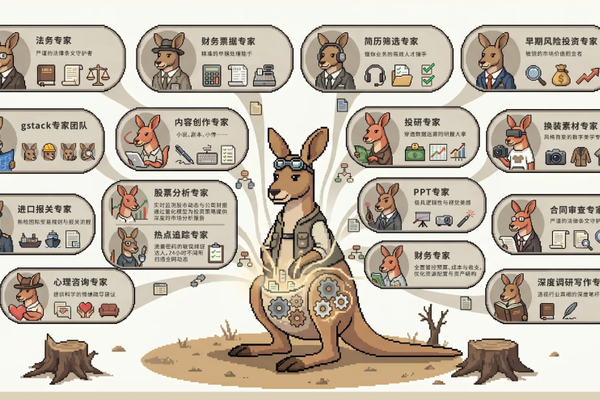
Launched 'DaiDai', an agent marketplace for on-demand digital experts.
Why It Matters
The 'constraint engineering' model demonstrates a shift from generic LLM applications to high-reliability, domain-specific agent delivery. This approach provides a blueprint for B2B AI companies to scale by turning human expertise into repeatable digital assets.
What To Do Next
Analyze your B2B product's task failure rates and implement a feedback loop that captures human-in-the-loop corrections to refine your agent's decision-making nodes.
Key Points
- •Launched 'DaiDai', an agent marketplace for on-demand digital experts.
- •Lingda platform focuses on enterprise-grade stability for energy and finance sectors.
- •Achieved 91% task success rate through a data-driven 'constraint engineering' loop.
- •Targeting 100 million RMB revenue in 2026.
🧠 Deep Insight
Web-grounded analysis with 12 cited sources.
🔑 Enhanced Key Takeaways
- •AutoAgents.ai was established in 2023 in Beijing, China, and has secured $1.4 million in seed funding from investors including Sinovation Ventures, Jimen Asset Management, Kylinhall Partners, and Qixi Capital.
- •The company's core framework dynamically generates and coordinates multiple specialized AI agents to form customized teams for various tasks, integrating an observer role for continuous self-improvement and refinement of plans and agent responses.
- •Lingda, AutoAgents.ai's enterprise low-code platform, features a no-code drag-and-drop interface designed for rapid deployment, creation, management, and scaling of AI agents, specifically catering to sectors such as energy, finance, manufacturing, and government services.
- •The 'constraint engineering' methodology employed by AutoAgents.ai focuses on designing environments, explicit constraints, and feedback loops to ensure the reliability and stability of AI agents, crucial for enterprise-grade applications.
- •The global AI agents market is projected to reach $10.91 billion in 2026, growing from $7.63 billion in 2025, with enterprise agentic AI alone expected to grow from $2.58 billion in 2024 to $24.50 billion by 2030.
🛠️ Technical Deep Dive
- The AutoAgents framework adaptively generates and coordinates multiple specialized agents to construct AI teams tailored for diverse tasks.
- It operates in two main stages: a 'Drafting Stage' where predefined agents (Planner, Agent Observer, Plan Observer) collaboratively determine the agent team and execution plan, and an 'Execution Stage' where generated agents collaborate, with an observer facilitating coordination and self-refinement.
- An integral observer role is incorporated to reflect on designated plans and agent responses, enabling iterative improvement and more coherent solutions.
- The system employs a multi-agent architecture to leverage the complementary strengths of individual agents for complex problem-solving.
- 'Constraint engineering' is a key technical approach, involving the design of environments, explicit constraints (e.g., rules files, architectural lint configurations), and feedback loops to ensure the reliability and predictability of AI agent behavior.
- The Lingda platform provides a no-code drag-and-drop interface, abstracting the complexity of AI agent development for enterprise users.
- The framework supports various knowledge-sharing mechanisms, including long-term memory for chronicling historical actions, short-term memory for individual action refinement, and dynamic memory for extracting specialized attention.
🔮 Future ImplicationsAI analysis grounded in cited sources
⏳ Timeline
📎 Sources (12)
Factual claims are grounded in the sources below. Forward-looking analysis is AI-generated interpretation.
Weekly AI Recap
Read this week's curated digest of top AI events →
👉Related Updates

AI-curated news aggregator. All content rights belong to original publishers.
Original source: 36氪 ↗