Arm VP: Physical AI Chips Skip Peak Perf Focus
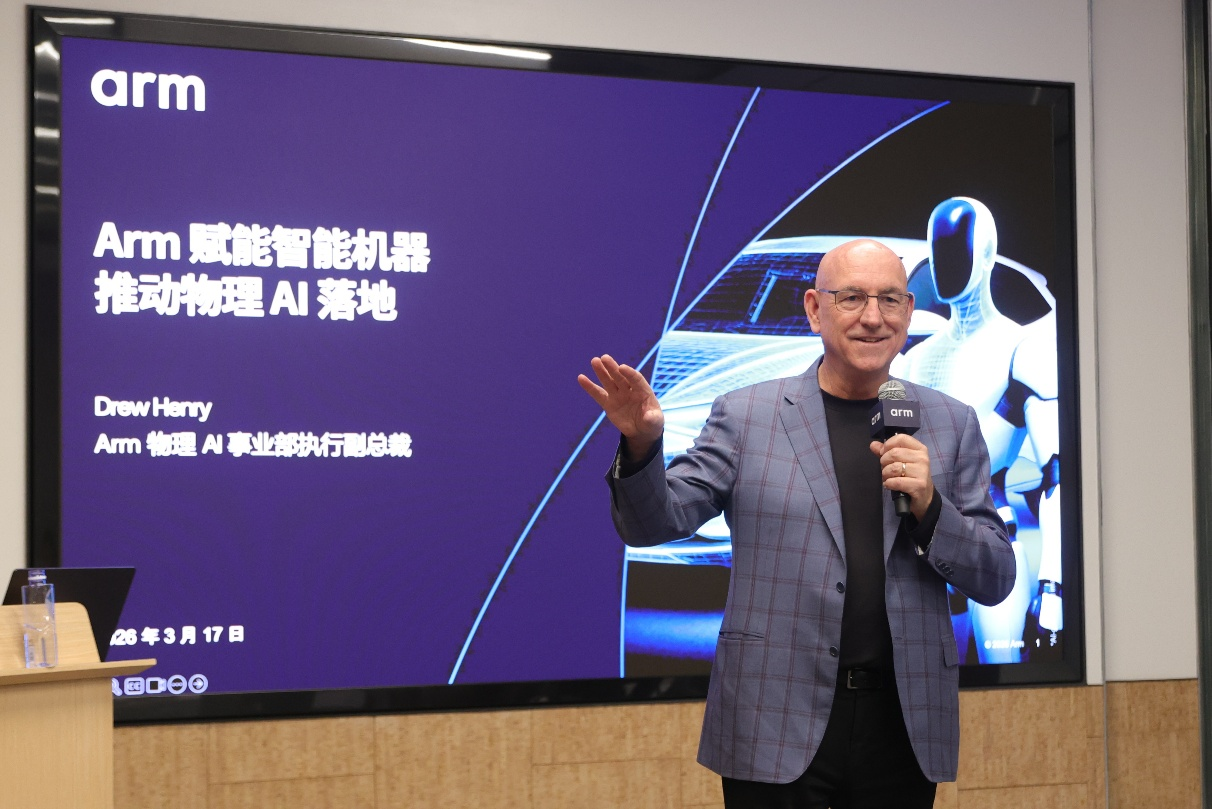
💡Arm unveils physical AI chip strategy shift—key for robotics builders.
⚡ 30-Second TL;DR
What Changed
Drew Henry, Arm EVP, on physical AI chip priorities
Why It Matters
Redirects AI hardware innovation toward robotics needs, influencing embodied AI development and Arm ecosystem strategies.
What To Do Next
Review Arm's physical AI docs to optimize chip selections for robotics projects.
Key Points
- •Drew Henry, Arm EVP, on physical AI chip priorities
- •Design not focused on ultimate performance or high bandwidth
- •Physical AI as Arm's most complex computing challenge
🧠 Deep Insight
Background and context from public sources — not the original article. 6 sources cited.
🔑 Enhanced Key Takeaways
- •Arm reorganized in January 2026 to create a dedicated Physical AI business unit led by Drew Henry, combining automotive and robotics efforts to address overlapping needs in power efficiency, safety, and reliability.[2]
- •Physical AI chips emphasize energy efficiency and real-time adaptability for dynamic environments like robotics and automotive, powering NVIDIA's Jetson Thor and Qualcomm's Dragonwing IQ10 processors showcased at CES 2026.[1][5]
- •Arm's architecture underpins NVIDIA's Vera Rubin platform with Arm Neoverse V2-based Grace CPU in Bluefield-4 DPU, enabling up to 6x compute performance for rack-scale inference in physical AI workloads.[1]
🛠️ Technical Deep Dive
- •Qualcomm Dragonwing IQ10 features Oryon 18-core CPU (5x performance over prior gen), Adreno GPU, and Hexagon NPU for low-latency on-device AI in industrial robots and humanoids.[5]
- •NVIDIA Jetson Thor uses Arm Neoverse for edge hardware supporting open robot foundation models, simulation tools, and physical AI stack for reasoning, planning, and adaptation.[1]
- •NVIDIA Bluefield-4 DPU, powered by Arm Neoverse V2 Grace CPU, provides 6x compute uplift for AI inference and storage optimization in cloud-to-edge physical AI systems.[1]
🔮 Future ImplicationsAI analysis grounded in cited sources
⏳ Timeline
📎 Sources (6)
Factual claims are grounded in the sources below. Forward-looking analysis is AI-generated interpretation.
- newsroom.arm.com — The Next Platform Shift Physical and Edge AI Powered by Arm
- anysilicon.com — Arm Launches Physical AI Unit to Expand Robotics and Automotive Push
- fortune.com — Arm CEO Physical AI Robots Automate Factory Work Brainstorm AI
- newsroom.arm.com — Arm 2026 Tech Predictions
- eetimes.com — Ces 2026 Signals the Year Physical AI Was Born
- edge-ai-vision.com — Ces 2026 Physical AI Moves From Concept to System Architecture
Weekly AI Recap
Read this week's curated digest of top AI events →
👉Related Updates



AI-curated news aggregator. All content rights belong to original publishers.
Original source: 钛媒体 ↗
This is a summary, not the original. Read the source, or get the weekly briefing.
The weekly digest
One email a week. Unsubscribe anytime.