Apple Warns Users Targeted by Mercenary Spyware
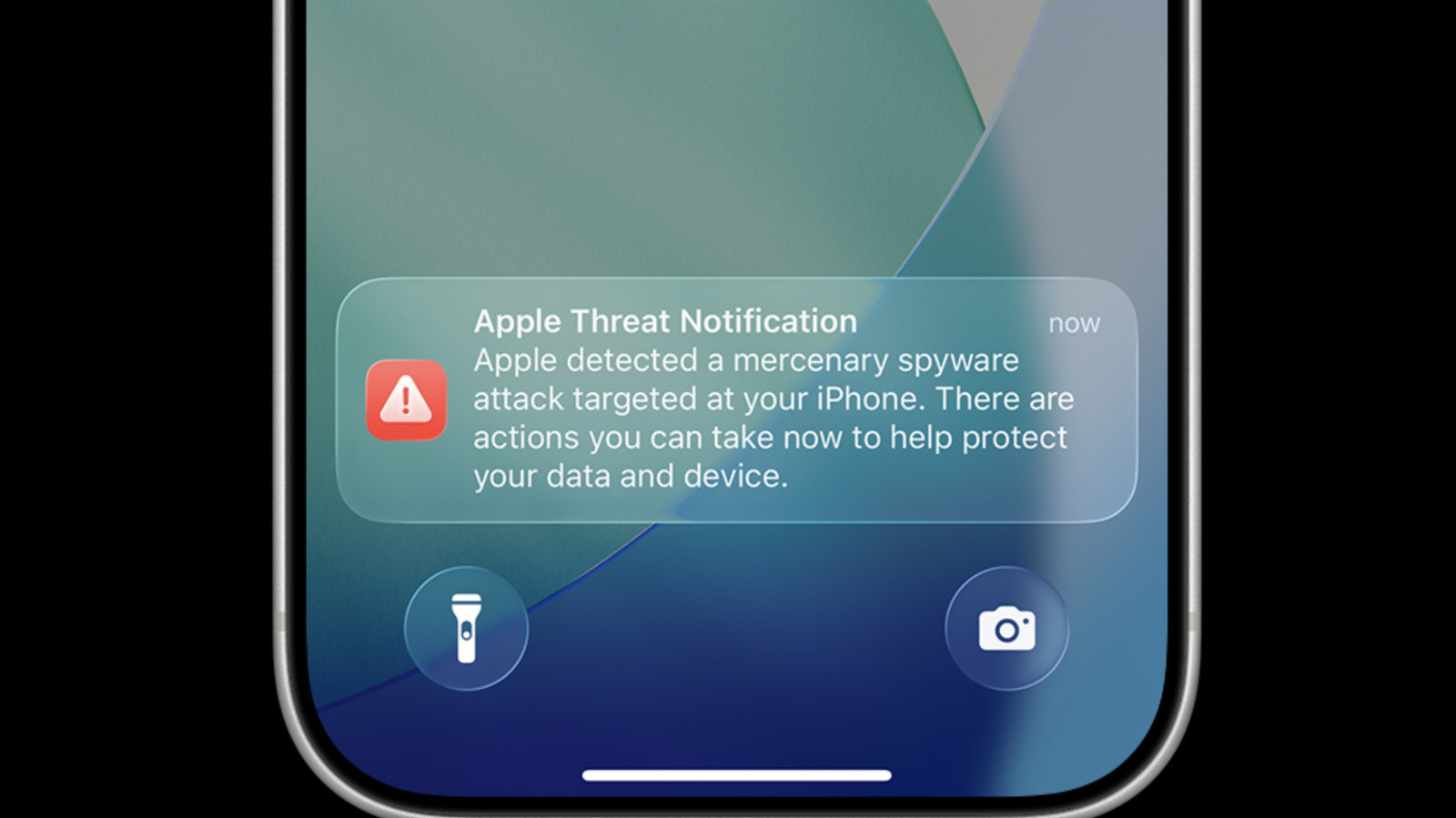
💡Apple’s warnings highlight a real espionage risk for teams holding valuable AI research and credentials.
⚡ 30-Second TL;DR
What Changed
Apple is sending direct notifications to users identified as spyware targets.
Why It Matters
AI practitioners handling sensitive research, customer data, or proprietary models may be attractive targets for sophisticated surveillance. A device compromise could expose credentials, source code, private prompts, and operational data.
What To Do Next
If you receive an Apple threat notification, update your device, review account sessions, and enable Lockdown Mode before handling sensitive AI credentials.
Key Points
- •Apple is sending direct notifications to users identified as spyware targets.
- •The attacks involve mercenary spyware rather than ordinary consumer malware.
- •Affected users should treat the warning as a high-priority device and account security incident.
🧠 Deep Insight
AI-generated analysis for this event.
🔑 Enhanced Key Takeaways
- •Apple utilizes a proprietary threat-intelligence system to detect these attacks, which often involve 'zero-click' exploits that require no user interaction to compromise a device.
- •The company has expanded these threat notifications to over 150 countries since the program's inception, targeting high-risk individuals such as journalists, activists, and government officials.
- •Apple has filed legal action against major mercenary spyware vendors, most notably NSO Group, to hold them accountable for the development and sale of tools used to target Apple users.
- •These notifications are specifically designed to avoid false positives by requiring high-confidence signals of state-sponsored or mercenary-grade surveillance activity.
- •Apple's 'Lockdown Mode,' introduced in recent iOS and macOS versions, serves as a direct technical countermeasure for users who receive these warnings or believe they are at high risk of such attacks.
🛠️ Technical Deep Dive
- Mercenary spyware often leverages zero-day vulnerabilities in WebKit or iMessage to achieve remote code execution (RCE) without user interaction.
- Apple's detection mechanism monitors for anomalous system behavior, such as unauthorized background processes or unexpected communication with known command-and-control (C2) infrastructure.
- Lockdown Mode hardens the device by restricting complex web technologies, disabling certain message attachments, and blocking incoming FaceTime calls from unknown callers to reduce the attack surface.
- Forensic analysis of these attacks often reveals the use of sophisticated obfuscation techniques to hide the spyware's presence within the device's volatile memory.
🔮 Future ImplicationsAI analysis grounded in cited sources
⏳ Timeline
Weekly AI Recap
Read this week's curated digest of top AI events →
👉Related Updates
AI-curated news aggregator. All content rights belong to original publishers.
Original source: Engadget ↗