Apple Teams Samsung Intel vs AI Chip Crunch
💡Apple's chip diversification signals AI supply strains hitting consumer tech.
⚡ 30-Second TL;DR
What Changed
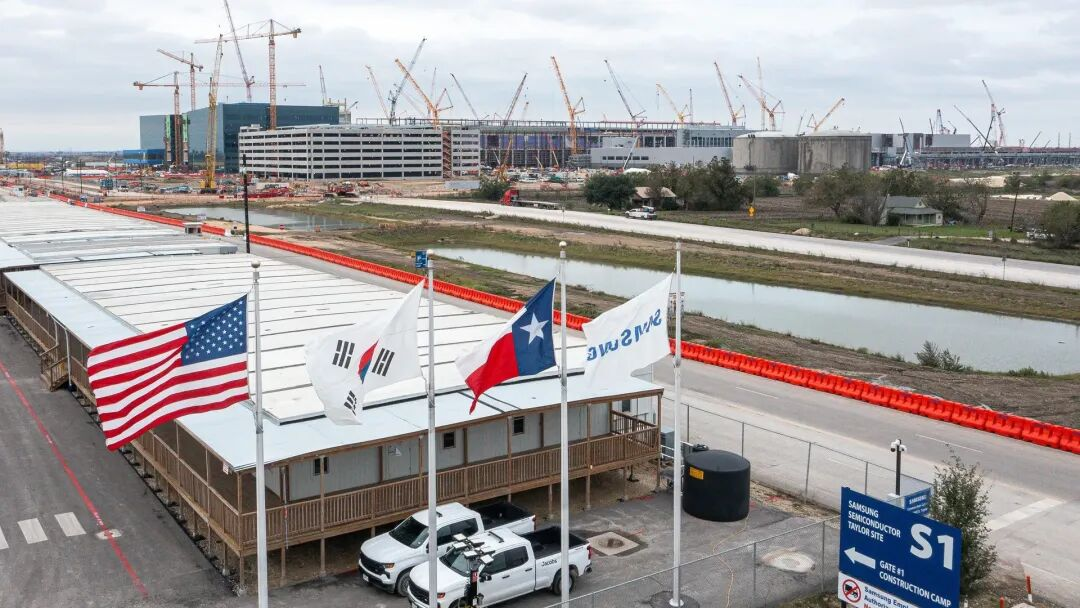
Apple high-level visits to Samsung Texas fab, Intel talks ongoing
Why It Matters
Secures Apple supply for sustained competitiveness; pressures domestic phone makers on alternatives. AI boom reshapes consumer electronics supply chains.
What To Do Next
Track TSMC 2nm capacity announcements for your AI inference chip planning.
Key Points
- •Apple high-level visits to Samsung Texas fab, Intel talks ongoing
- •TSMC AI clients like Nvidia/Broadcom take ~1/3 revenue, starving Apple
- •Diversification to enable iPhone price wars through 2028+
🧠 Deep Insight
AI-generated analysis for this event — not the original article.
🔑 Enhanced Key Takeaways
- •Apple's strategy involves leveraging Intel Foundry's '18A' process node, which utilizes RibbonFET gate-all-around (GAA) transistor architecture, to potentially bypass TSMC's current N2 node constraints.
- •Samsung's 2nm (SF2) process is being evaluated by Apple specifically for peripheral chips and lower-power components to free up TSMC's advanced packaging (CoWoS) capacity for high-performance A-series and M-series processors.
- •The shift is driven by a structural change in TSMC's customer mix, where AI-accelerator demand from hyperscalers has pushed Apple's priority status down, leading to increased wafer costs and supply volatility for the iPhone 18 and 19 series.
📊 Competitor Analysis▸ Show
| Feature | TSMC (N2) | Intel (18A) | Samsung (SF2) |
|---|---|---|---|
| Transistor Architecture | GAA (Nanosheet) | RibbonFET (GAA) | MBCFET (GAA) |
| Power Efficiency | Industry Benchmark | Competitive (High) | Competitive (Medium) |
| AI Capacity Priority | Very High (Nvidia/AMD) | Emerging | High (Internal/External) |
| Maturity Status | Early Production | Risk Production | Risk Production |
🛠️ Technical Deep Dive
- Intel 18A utilizes PowerVia backside power delivery, which decouples power and signal routing, significantly reducing IR drop and improving signal integrity for high-frequency AI workloads.
- Samsung's SF2 (2nm) process employs Multi-Bridge-Channel FET (MBCFET) technology, allowing for higher drive current and improved electrostatic control compared to traditional FinFET designs.
- Apple's integration strategy requires a unified design rule check (DRC) environment to ensure that chiplets manufactured across different foundries can be integrated into a single System-in-Package (SiP) using advanced packaging techniques like TSMC's InFO or Intel's EMIB.
🔮 Future ImplicationsAI analysis grounded in cited sources
⏳ Timeline
Weekly AI Recap
Read this week's curated digest of top AI events →
👉Related Updates

AI-curated news aggregator. All content rights belong to original publishers.
Original source: 虎嗅 ↗
This is a summary, not the original. Read the source, or get the weekly briefing.
Weekly AI briefing
One email a week. Unsubscribe anytime.