📱Engadget•Stalecollected in 22m
Android Security Boost vs Scam Calls
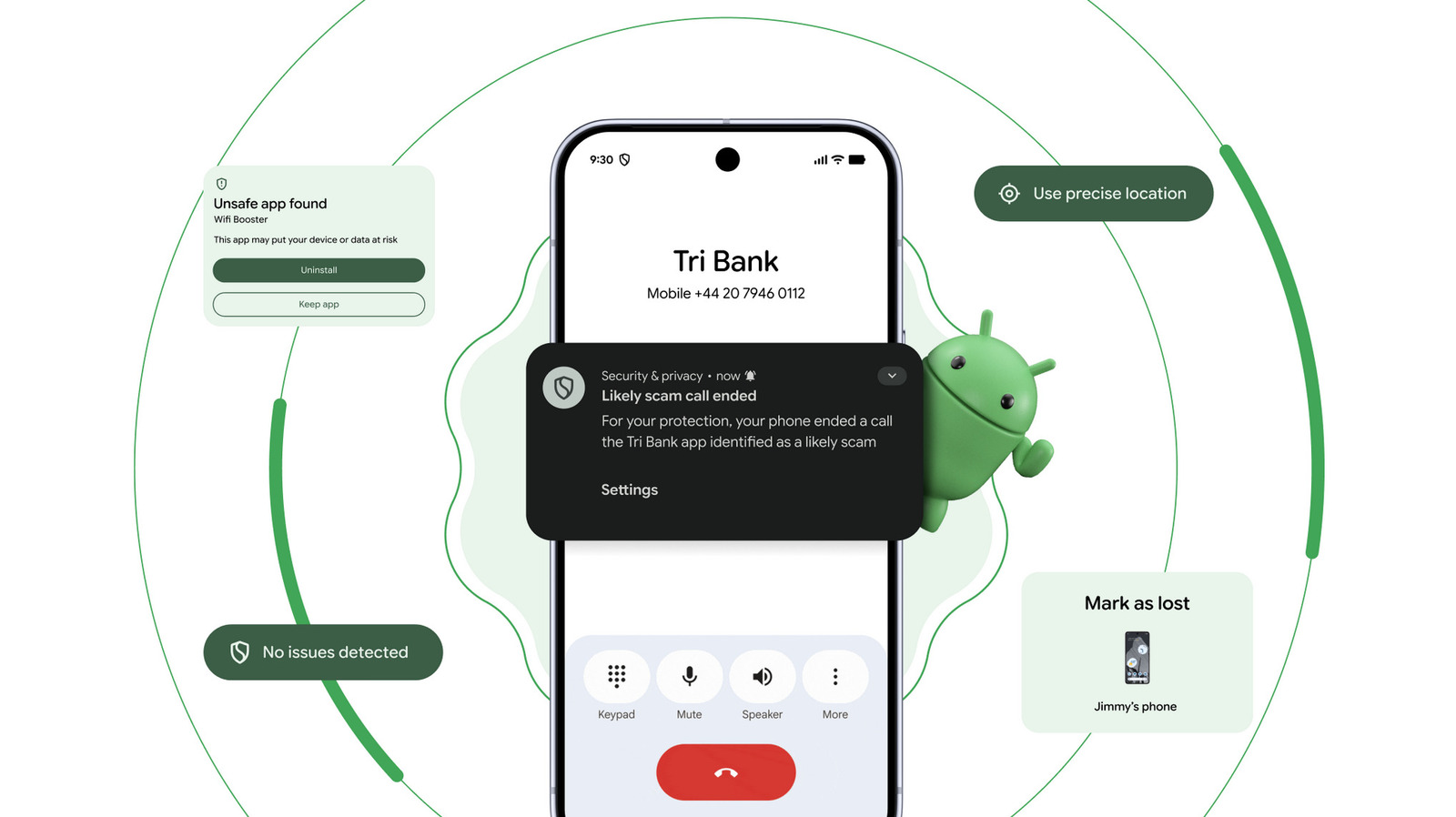
💡Android's threat detection upgrade aids AI security in mobile apps
⚡ 30-Second TL;DR
What Changed
Upcoming Android security enhancements
Why It Matters
These tools could reduce mobile fraud, benefiting AI developers building secure apps with real-time threat ML models.
What To Do Next
Test Live Threat Detection beta in Android Studio for security integrations.
Who should care:Developers & AI Engineers
Key Points
- •Upcoming Android security enhancements
- •Protection against banking scam calls
- •Major Live Threat Detection upgrade
🧠 Deep Insight
AI-generated analysis for this event.
🔑 Enhanced Key Takeaways
- •The new banking scam protection utilizes on-device AI to analyze call patterns in real-time, specifically identifying conversational indicators of financial fraud without sending audio data to Google servers.
- •Live Threat Detection now integrates with Google Play Protect to perform behavioral analysis of apps, flagging malicious software that attempts to hide its activity or bypass traditional signature-based detection.
- •These security features are being rolled out as part of a broader Android 'Security & Privacy' update, which also includes expanded support for passkeys and improved credential management across third-party apps.
📊 Competitor Analysis▸ Show
| Feature | Google Android (Live Threat Detection) | Apple iOS (Communication Safety/Fraud Detection) | Samsung Knox (Message Guard) |
|---|---|---|---|
| Primary Focus | Behavioral AI/On-device analysis | Privacy-focused filtering/Cloud-assisted | Hardware-backed sandboxing |
| Pricing | Included in OS | Included in OS | Included in OS |
| Detection Method | Real-time behavioral heuristics | Pattern matching/Cloud-based reputation | Zero-click exploit isolation |
🛠️ Technical Deep Dive
- •Banking scam detection employs a lightweight, on-device machine learning model trained on common social engineering scripts and fraudulent financial request patterns.
- •Live Threat Detection utilizes the Android 'Private Compute Core' to process behavioral signals, ensuring that the analysis of call metadata and app activity remains isolated from the main OS and network access.
- •The system monitors for 'suspicious app behavior' by tracking API calls related to accessibility services, screen recording, and SMS interception, which are common vectors for banking trojans.
- •The integration with Google Play Protect allows for near-instantaneous updates to the threat detection heuristics via Google Play Services, independent of full OS version updates.
🔮 Future ImplicationsAI analysis grounded in cited sources
On-device AI will become the primary standard for mobile security.
Privacy regulations and user demand for data sovereignty are forcing security vendors to move away from cloud-dependent threat analysis.
Banking apps will increasingly rely on OS-level security signals for transaction authorization.
As OS-level fraud detection improves, financial institutions will integrate these signals to reduce the friction of multi-factor authentication.
⏳ Timeline
2019-09
Google introduces Google Play Protect to scan apps for malicious behavior.
2021-05
Google launches Private Compute Core to enable on-device AI processing.
2023-10
Google expands real-time scanning capabilities for sideloaded apps.
2024-05
Google announces expanded AI-powered fraud protection for Android at I/O.
📰
Weekly AI Recap
Read this week's curated digest of top AI events →
👉Related Updates

AI-curated news aggregator. All content rights belong to original publishers.
Original source: Engadget ↗