Analyst Questions Tesla’s Autonomous Driving Scale
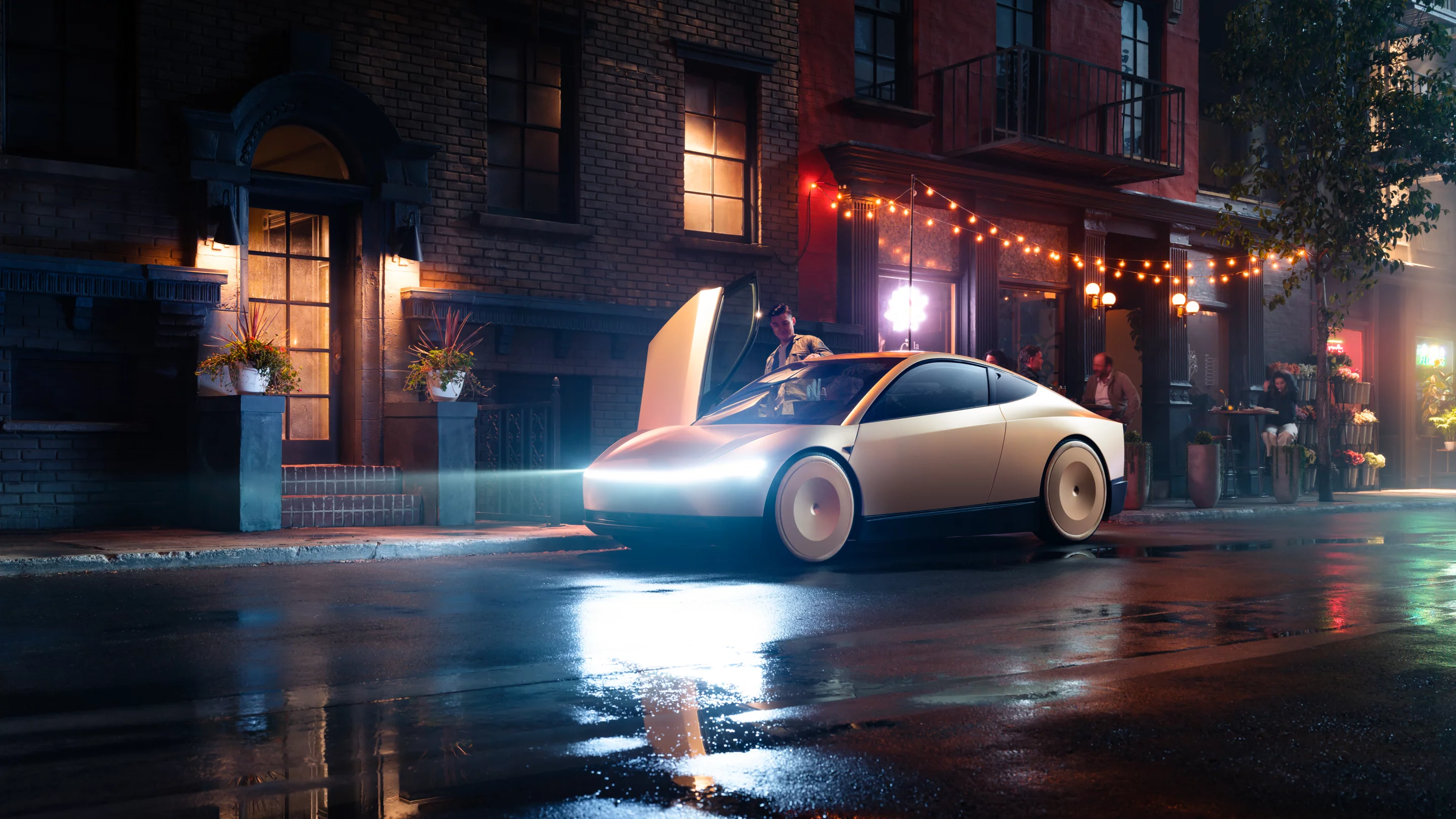
💡Tesla’s delayed FSD and Robotaxi rollout raises practical questions about vision-only autonomy and deployment risk.
⚡ 30-Second TL;DR
What Changed
Gary Black says Tesla may be reducing the scope of its autonomous-driving plans.
Why It Matters
If Tesla slows deployment, autonomous-vehicle developers may face longer timelines for commercial validation and regulatory acceptance. The debate also highlights the strategic risk of relying primarily on camera-based perception without broader sensor redundancy.
What To Do Next
Benchmark your autonomy stack against camera-only and sensor-fusion configurations in edge cases before committing to a production deployment plan.
Key Points
- •Gary Black says Tesla may be reducing the scope of its autonomous-driving plans.
- •The analyst links slower unsupervised FSD and Robotaxi deployment to deeper structural causes.
- •Tesla’s camera-only or pure-vision approach is facing renewed scrutiny.
- •The comments suggest growing investor uncertainty about Tesla’s ability to commercialize autonomous driving at scale.
🧠 Deep Insight
AI-generated analysis for this event.
🔑 Enhanced Key Takeaways
- •Tesla's transition to an end-to-end neural network architecture (v12) has shifted the system from C++ code-based heuristics to a model trained on billions of frames of video data.
- •Regulatory filings indicate that Tesla's 'Cybercab' or dedicated Robotaxi platform has faced repeated delays in production timelines, moving from initial 2024 targets to mid-2026 projections.
- •The 'pure vision' approach continues to face criticism from safety advocates and some industry experts regarding the lack of redundancy provided by LiDAR and radar sensors in adverse weather conditions.
- •Tesla's FSD (Supervised) adoption rates have plateaued among new vehicle buyers, with take-rates reportedly hovering below 20% in key North American markets despite price cuts and subscription options.
- •Internal data leaks and whistleblower reports have previously suggested that Tesla's 'shadow mode' data collection faces challenges in edge-case labeling, which is critical for achieving unsupervised autonomy.
📊 Competitor Analysis▸ Show
| Feature | Tesla (FSD) | Waymo | Cruise |
|---|---|---|---|
| Sensor Suite | Vision-Only | LiDAR + Radar + Cameras | LiDAR + Radar + Cameras |
| Operational Domain | Geofenced/General | Geofenced (Urban) | Geofenced (Urban) |
| Business Model | Consumer/Robotaxi | Robotaxi (Ride-hail) | Robotaxi (Ride-hail) |
| Safety Benchmark | Disengagement-based | Miles per intervention | Miles per intervention |
🛠️ Technical Deep Dive
- Tesla FSD v12 utilizes an end-to-end neural network where video input is processed directly into vehicle control commands (steering, braking, acceleration).
- The architecture relies on the Dojo supercomputer cluster for training massive vision-based datasets, aiming to replace human-written code with learned behaviors.
- The system employs a transformer-based model architecture similar to Large Language Models, adapted for spatial-temporal video processing to predict object trajectories and scene occupancy.
- Occupancy networks are used to create a 3D representation of the environment, allowing the vehicle to navigate around obstacles without explicit pre-defined maps.
🔮 Future ImplicationsAI analysis grounded in cited sources
⏳ Timeline
Weekly AI Recap
Read this week's curated digest of top AI events →
👉Related Updates


AI-curated news aggregator. All content rights belong to original publishers.
Original source: cnBeta (Full RSS) ↗