AMD accused of delaying patches and withholding bug bounties
💡Understand the risks of working with hardware vendors' bug bounty programs to protect your research efforts.
⚡ 30-Second TL;DR
What Changed
AMD allegedly took 124 days to address a reported security vulnerability.
Why It Matters
This controversy may damage AMD's reputation within the white-hat hacker community, potentially discouraging future responsible disclosures. It highlights the importance of clear, immutable security disclosure policies for hardware vendors.
What To Do Next
If you are a security researcher, always document bug bounty terms in writing before submitting critical vulnerabilities to hardware vendors.
Key Points
- •AMD allegedly took 124 days to address a reported security vulnerability.
- •The company reportedly modified its bug bounty program terms retroactively.
- •A $10,000 reward was withheld from the researcher following the policy change.
- •The incident has drawn criticism from the cybersecurity community regarding transparency.
🧠 Deep Insight
Background and context from public sources — not the original article. 8 sources cited.
🔑 Enhanced Key Takeaways
- •The security researcher involved in the dispute is identified as Paul, also known as MrBruh.
- •The vulnerability (CVE-2026-40677) was a Remote Code Execution (RCE) flaw in AMD's auto-updater software, exploitable via a Man-in-the-Middle (MITM) attack due to insecure HTTP downloads and lack of proper certificate/signature validation.
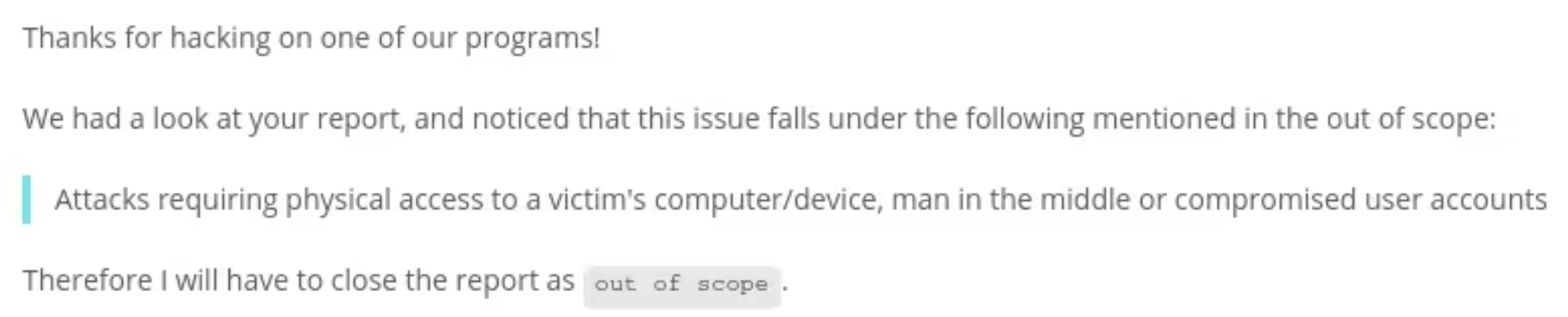
- •AMD initially dismissed the reported bug as "out of scope" for its bug bounty program, despite it later receiving a CVSS 4.0 score of 7.7, indicating a significant severity.
- •AMD reportedly updated its bug bounty policy after the researcher's public disclosure gained traction, retroactively adding a clause that prohibits researchers from disclosing vulnerability information without AMD's written consent, even for out-of-scope reports.
- •The incident has drawn widespread criticism from the cybersecurity community, with experts warning that such corporate actions could undermine the integrity of coordinated vulnerability disclosure and deter future responsible reporting.
🛠️ Technical Deep Dive
- The vulnerability (CVE-2026-40677) was a Remote Code Execution (RCE) flaw found in AMD's auto-updater software.
- The core issue was that while the updater pulled its update list over HTTPS, the actual executable download links used plain HTTP.
- The updater reportedly lacked proper certificate validation or real signature checks before executing downloaded files, making it susceptible to Man-in-the-Middle (MITM) attacks.
- An attacker could exploit this by replacing legitimate update files with malicious executables, which would then run with elevated privileges due to the updater's permissions.
- Affected mitigated versions include AMD Ryzen Master 2.14.3, AMD µProf 5.3, and AMD Management Console 14.0.0.
- Although AMD reportedly reengineered the download code, the new version still uses the CRC32 hash for file validity checks, which is not considered cryptographically secure.
🔮 Future ImplicationsAI analysis grounded in cited sources
⏳ Timeline
📎 Sources (8)
Factual claims are grounded in the sources below. Forward-looking analysis is AI-generated interpretation.
Weekly AI Recap
Read this week's curated digest of top AI events →
👉Related Updates
AI-curated news aggregator. All content rights belong to original publishers.
Original source: cnBeta (Full RSS) ↗
This is a summary, not the original. Read the source, or get the weekly briefing.
The weekly digest
One email a week. Unsubscribe anytime.