☁️AWS Machine Learning Blog•Stalecollected in 23m
Amazon Quick Launches Dataset Q&A
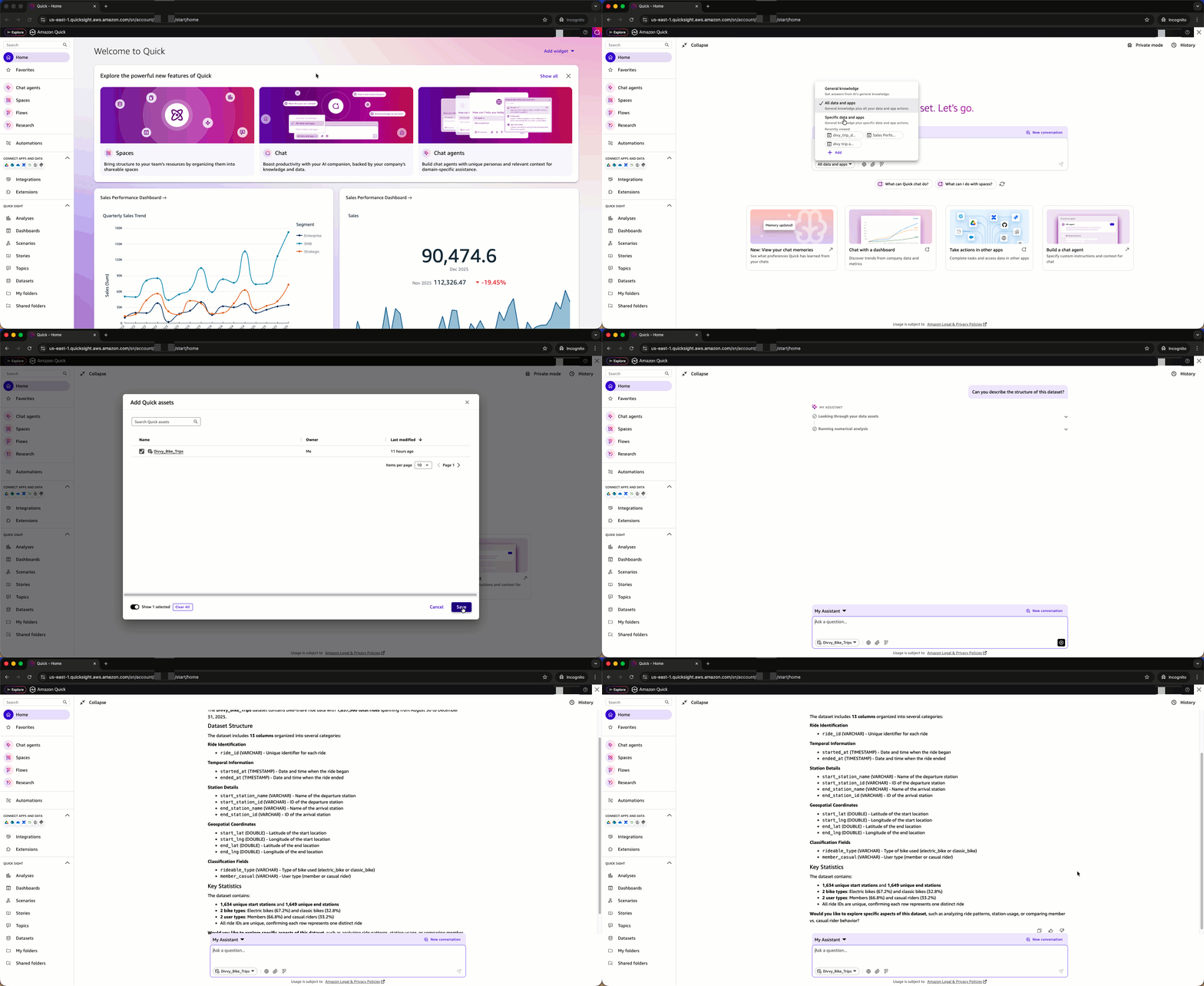
💡Query structured data naturally across datasets in Amazon Quick—auto-discover and chat
⚡ 30-Second TL;DR
What Changed
Natural language querying for structured datasets
Why It Matters
Empowers non-technical users to analyze data via chat, boosting productivity in AI-driven insights. Reduces reliance on data engineers for quick queries.
What To Do Next
Enable Dataset Q&A in Amazon Quick and test multi-dataset queries on your assets.
Who should care:Developers & AI Engineers
Key Points
- •Natural language querying for structured datasets
- •Auto-discovery across all data assets
- •Multi-dataset querying in single conversation
- •Hands-on examples for real-world use cases
🧠 Deep Insight
AI-generated analysis for this event.
🔑 Enhanced Key Takeaways
- •Dataset Q&A leverages Amazon Q's generative AI engine, specifically fine-tuned on AWS data governance frameworks to ensure row-level security and existing IAM permissions are respected during natural language interpretation.
- •The feature utilizes a semantic layer that automatically maps natural language intent to SQL-like operations, reducing the need for manual data preparation or complex dashboard creation for ad-hoc analysis.
- •Integration with Amazon QuickSight's existing SPICE (Super-fast, Parallel, In-memory Calculation Engine) allows for low-latency responses even when querying large, multi-dataset joins in real-time.
📊 Competitor Analysis▸ Show
| Feature | Amazon QuickSight (Dataset Q&A) | Microsoft Power BI (Copilot) | Tableau (Pulse/Einstein) |
|---|---|---|---|
| Natural Language Querying | Deep integration with AWS IAM/Governance | Integrated with Fabric/Azure OpenAI | Integrated with Salesforce Data Cloud |
| Multi-Dataset Context | Native cross-dataset conversation | Requires semantic model setup | Requires data source blending |
| Pricing Model | Pay-per-session/User-based | Per-user (Pro/Premium) | Per-user (Creator/Explorer) |
🛠️ Technical Deep Dive
- •Architecture: Built on the Amazon Q generative AI stack, utilizing a RAG (Retrieval-Augmented Generation) pipeline that indexes metadata from the AWS Glue Data Catalog.
- •Semantic Mapping: Employs a proprietary LLM-based translation layer that converts natural language prompts into structured query plans, optimized for the underlying data source (e.g., Redshift, Athena).
- •Security: Enforces existing QuickSight row-level security (RLS) and column-level security (CLS) policies, ensuring users only receive answers based on data they are authorized to access.
- •Auto-Discovery: Uses automated schema profiling to identify relationships between disparate datasets, enabling the engine to perform joins dynamically without pre-defined modeling.
🔮 Future ImplicationsAI analysis grounded in cited sources
Data analyst roles will shift from report building to semantic model curation.
As natural language querying becomes the primary interface for end-users, the value of data teams will move toward ensuring the accuracy and governance of the underlying semantic metadata.
QuickSight will see increased adoption in non-technical business units.
The removal of SQL and dashboard-building barriers lowers the technical threshold for self-service analytics, expanding the addressable user base within enterprises.
⏳ Timeline
2016-11
Amazon QuickSight launched as a cloud-native business intelligence service.
2023-11
Amazon Q introduced as a generative AI-powered assistant for AWS.
2024-04
Integration of Amazon Q into QuickSight for generative BI capabilities announced.
2026-05
Launch of Dataset Q&A for advanced multi-dataset natural language querying.
📰
Weekly AI Recap
Read this week's curated digest of top AI events →
👉Related Updates
AI-curated news aggregator. All content rights belong to original publishers.
Original source: AWS Machine Learning Blog ↗