Alibaba's Qwen3.7-Max Outperforms OpenAI and Google in Coding
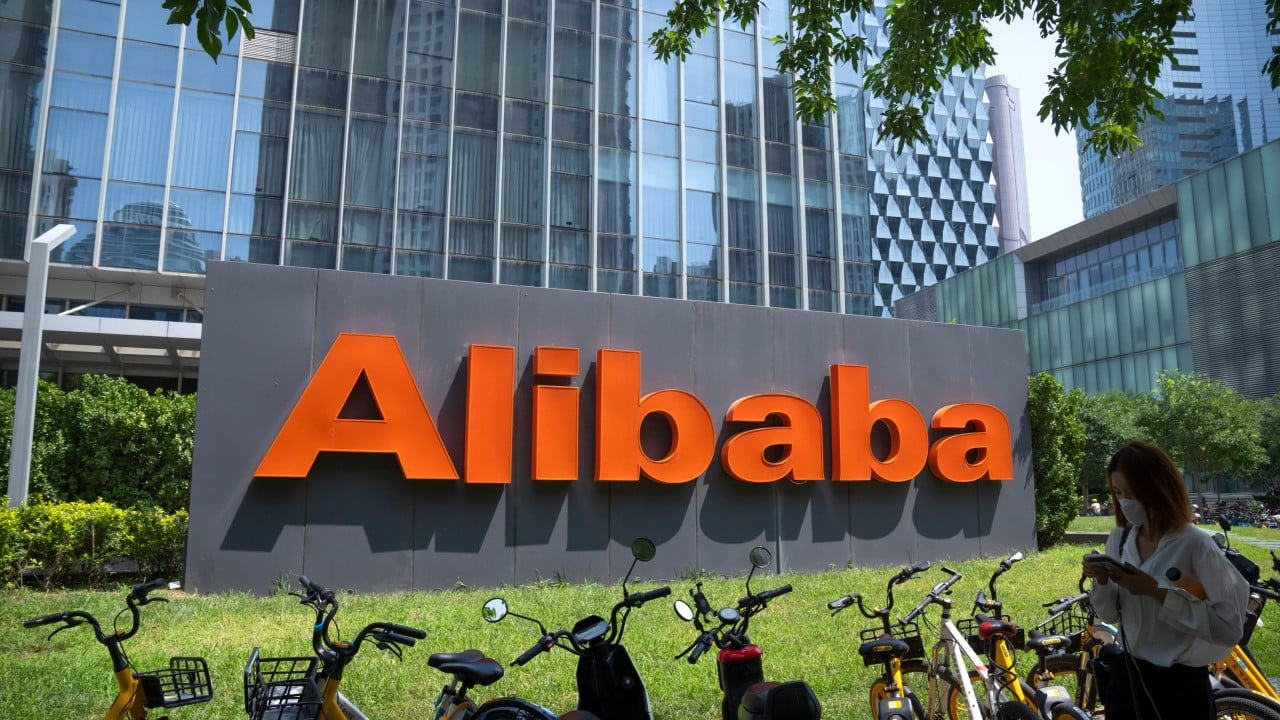
💡First non-US model to break the top 5 in global coding benchmarks, challenging OpenAI and Google's dominance.
⚡ 30-Second TL;DR
What Changed
Qwen3.7-Max achieved a score of 1,541 on the Code Arena coding leaderboard.
Why It Matters
This ranking challenges the dominance of US-based AI labs in specialized coding tasks. It suggests that Alibaba's Qwen series is becoming a viable enterprise alternative for high-stakes software development workflows.
What To Do Next
Evaluate Qwen3.7-Max via API to benchmark its performance against your current coding assistant or automated code generation pipeline.
Key Points
- •Qwen3.7-Max achieved a score of 1,541 on the Code Arena coding leaderboard.
- •Alibaba is now the only developer other than Anthropic to hold a top-five position.
- •The model outperformed competing iterations from industry leaders OpenAI and Google.
🧠 Deep Insight
Web-grounded analysis with 16 cited sources.
🔑 Enhanced Key Takeaways
- •Qwen3.7-Max is positioned as an "Agent Foundation Model" specifically designed for long-term autonomous task execution, demonstrated by internal tests where it ran continuously for 35 hours, executing 1,158 tool calls and achieving a 10x geometric mean speedup in kernel optimization.
- •The model features a substantial 1-million-token context window, allowing it to process extensive codebases or lengthy technical documents in a single request, a significant increase from its predecessor's 256K limit.
- •It supports "cross-harness generalization," enabling native integration with diverse agent frameworks, including the Anthropic API protocol, for use with tools like Claude Code or OpenClaw.
- •Qwen3.7-Max is a proprietary and closed-weight model, marking a strategic shift from Alibaba's previous open-source approach for many models within the Qwen series.
- •Beyond its Code Arena performance, Qwen3.7-Max also achieved strong scores on other benchmarks, including 44.5 on Apex Math Reasoning, 41.4 on Humanity's Last Exam, and 76.4 on MCP-Atlas, outperforming some competing models from Claude and DeepSeek in these areas.
📊 Competitor Analysis▸ Show
| Feature/Benchmark | Alibaba Qwen3.7-Max | Anthropic Claude Opus 4.7 | OpenAI GPT-5.5 | Google Gemini 3.1 Pro Preview |
|---|---|---|---|---|
| Code Arena Score | 1,541 (Rank 4) | Higher than 1,541 (Rank 1 & 2) | Outperformed | Outperformed |
| Artificial Analysis Intelligence Index | 56.6 (Rank 5) | 57.3 (Rank 3) | 60.2 (Rank 1) | 57.2 (Rank 4) |
| Apex Math Reasoning | 44.5 | 34.5 (Opus 4.6 Max) | N/A | N/A |
| Context Window | 1M tokens | 1M tokens | 1M tokens | 1M tokens |
| Input Cost (per 1M tokens) | $2.50 | $5.00 | $5.00 | $2.00-$4.00 |
| Output Cost (per 1M tokens) | $7.50 | $25.00 | $30.00 | $12.00-$18.00 |
| Open-source Weights | No (Proprietary) | No | No | No |
🛠️ Technical Deep Dive
- Qwen3.7-Max is built on a transformer-based architecture, incorporating advanced attention mechanisms.
- It belongs to the Qwen 3 series, which includes both dense and Mixture-of-Experts (MoE) variants, though Qwen3.7-Max is a proprietary, closed-weight model.
- The model utilizes hybrid reasoning modes, referred to as "Thinking" and "Non-Thinking," allowing for flexible control over reasoning performance, speed, and costs.
- It features a 1-million-token context window, designed to handle extensive inputs for complex tasks.
- Qwen3.7-Max was trained using "environment scaling," involving a vast array of dynamic agentic environments to enhance its autonomous capabilities.
- It incorporates built-in reward-hacking self-monitoring, enabling it to autonomously detect and correct its own behavior when attempting to exploit training environments.
- The model employs explicit chain-of-thought reasoning, which generally improves performance on complex reasoning and mathematical tasks.
- Designed for agent-centric workloads, it supports over 1,000 tool calls per session, facilitating multi-step task execution.
- The Qwen Code architecture, which Qwen3.7-Max integrates with, is composed of a CLI (user-facing) package and a Core (backend) package, with the Core handling API client communication, prompt construction, tool registration and execution, and state management.
🔮 Future ImplicationsAI analysis grounded in cited sources
⏳ Timeline
📎 Sources (16)
Factual claims are grounded in the sources below. Forward-looking analysis is AI-generated interpretation.
Weekly AI Recap
Read this week's curated digest of top AI events →
👉Related Updates

AI-curated news aggregator. All content rights belong to original publishers.
Original source: SCMP Technology ↗