Alibaba Powers Guangdong’s AI and Chip Ambitions
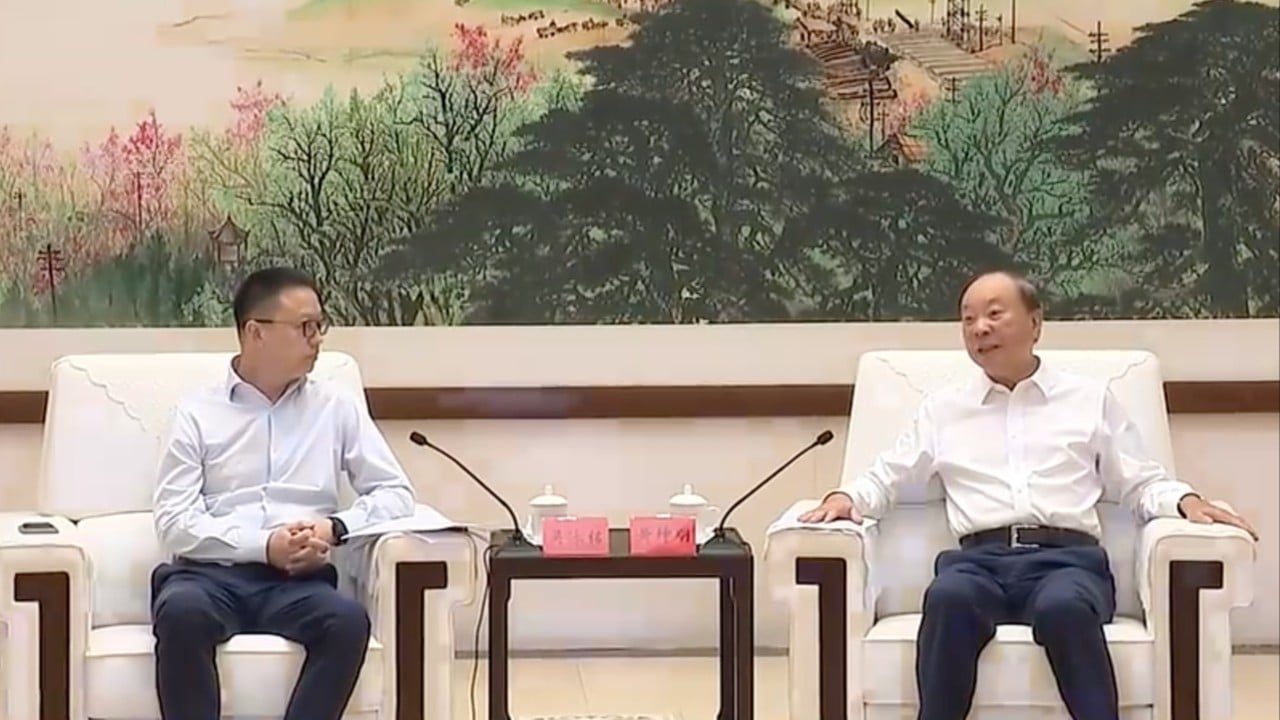
💡Alibaba’s deeper Guangdong partnership could reshape regional access to AI compute, models, and chips.
⚡ 30-Second TL;DR
What Changed
Guangdong and Alibaba signed a strategic cooperation framework agreement in Guangzhou.
Why It Matters
The agreement could strengthen Guangdong’s AI infrastructure and create additional demand for local semiconductor capacity. For AI companies, Alibaba’s expanded regional investment may provide more access to computing resources and digital-service partnerships, although specific products and timelines remain undisclosed.
What To Do Next
Ask Alibaba for details on its upcoming computing-power and AI-model services, then evaluate them in a small pilot against your current infrastructure.
Key Points
- •Guangdong and Alibaba signed a strategic cooperation framework agreement in Guangzhou.
- •Alibaba plans to invest more in computing power and AI models.
- •The partnership covers semiconductor development and smart public services.
🧠 Deep Insight
AI-generated analysis for this event.
🔑 Enhanced Key Takeaways
- •The partnership aligns with Guangdong's 'Digital Government 2.0' initiative, which aims to integrate Alibaba's Qwen (Tongyi Qianwen) large language models into provincial administrative workflows.
- •Alibaba Cloud is establishing a dedicated 'AI Industry Innovation Center' in Guangzhou to provide local semiconductor startups with subsidized access to PAI (Platform for AI) and high-performance computing clusters.
- •The collaboration includes a specific focus on 'Chiplet' architecture research, leveraging Alibaba's T-Head (Pingtouge) semiconductor division to address domestic supply chain constraints in the Greater Bay Area.
- •Guangdong provincial authorities have committed to prioritizing Alibaba's cloud-native infrastructure for the 'City Brain' project, aiming to optimize traffic management and energy distribution across the Pearl River Delta.
- •This agreement marks a shift in Alibaba's strategy from general cloud services to specialized 'AI-as-a-Service' (AIaaS) deployments tailored for regional industrial manufacturing hubs.
📊 Competitor Analysis▸ Show
| Feature | Alibaba Cloud (Guangdong) | Huawei Cloud (Guangdong) | Tencent Cloud (Guangdong) |
|---|---|---|---|
| Core AI Model | Qwen (Tongyi Qianwen) | Pangu Models | Hunyuan |
| Chip Strategy | T-Head (RISC-V/Chiplets) | HiSilicon (Ascend/Kirin) | Custom AI Accelerators |
| Regional Focus | Industrial/Public Services | Telecom/Infrastructure | Social/Consumer Services |
| Market Position | Strong in AI/Cloud Integration | Leader in Hardware/5G | Leader in Digital Ecosystems |
🛠️ Technical Deep Dive
- Alibaba is deploying its proprietary PAI-EAS (Elastic Algorithm Service) to support high-concurrency AI inference for public service applications.
- The semiconductor initiative focuses on RISC-V architecture integration, utilizing T-Head's XuanTie series processors to reduce reliance on x86 and ARM architectures.
- Computing infrastructure upgrades involve the deployment of Alibaba's latest generation of Apsara-based distributed storage systems to handle petabyte-scale data processing for smart city initiatives.
- Implementation utilizes a hybrid cloud architecture, allowing Guangdong government agencies to maintain sensitive data on-premises while accessing Alibaba's public cloud AI training capabilities.
🔮 Future ImplicationsAI analysis grounded in cited sources
⏳ Timeline
Weekly AI Recap
Read this week's curated digest of top AI events →
👉Related Updates


AI-curated news aggregator. All content rights belong to original publishers.
Original source: SCMP Technology ↗