Alibaba Narrows Its Empire Around AI
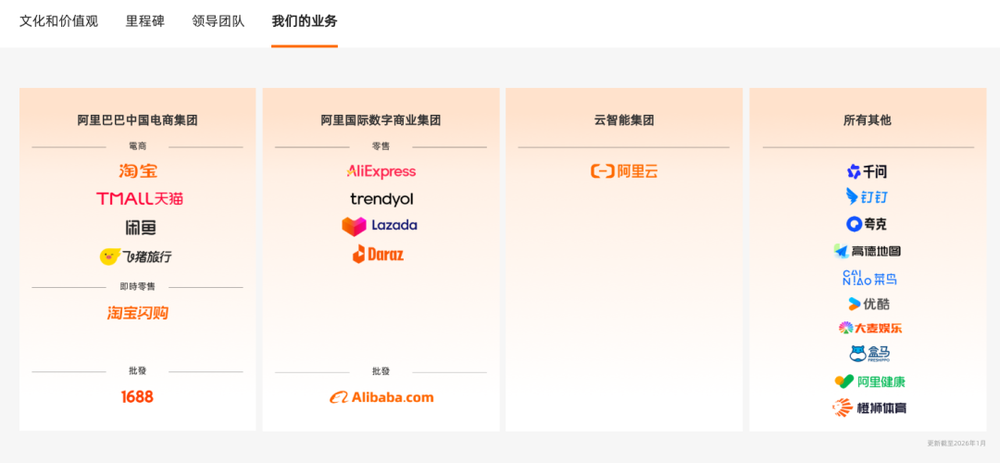
💡Alibaba is selling profitable businesses to fund an AI-cloud bet that may reshape its entire platform.
⚡ 30-Second TL;DR
What Changed
Alibaba agreed to sell its stake in Lingxi Interactive to Centurium Capital at a reported valuation above US$1.5 billion.
Why It Matters
Alibaba’s portfolio simplification could make AI and cloud its primary growth narrative, but it also concentrates execution risk in a capital-intensive market. AI startups and enterprise buyers may benefit from stronger cloud investment, while profitability and infrastructure-spending discipline remain key concerns.
What To Do Next
Evaluate Alibaba Cloud and Qwen APIs for a pilot workload, while modeling inference costs and vendor-concentration risk before committing production traffic.
Key Points
- •Alibaba agreed to sell its stake in Lingxi Interactive to Centurium Capital at a reported valuation above US$1.5 billion.
- •The company has divested or is divesting non-core assets including Intime Retail, Sun Art Retail, and its gaming business.
- •Alibaba committed at least RMB 380 billion to cloud and AI infrastructure over three years, with future investment expected to exceed that amount.
- •Alibaba Cloud revenue reached RMB 41.626 billion in the March 2026 quarter, up 38%, while AI-related product revenue grew triple digits for the 11th consecutive quarter.
🧠 Deep Insight
AI-generated analysis for this event.
🔑 Enhanced Key Takeaways
- •Alibaba's divestment strategy is part of a broader '1+6+N' organizational restructuring initiated in 2023, aimed at unlocking shareholder value by allowing business units to operate independently.
- •The sale of Lingxi Interactive marks a significant pivot away from the 'Entertainment' pillar, which previously included Alibaba Pictures and Youku, to focus capital on high-compute infrastructure.
- •Alibaba's AI strategy heavily leverages the 'Tongyi Qianwen' (Qwen) model family, which has been integrated across its cloud ecosystem to drive enterprise adoption.
- •The RMB 380 billion investment is specifically earmarked for high-end GPU procurement, data center expansion, and the development of proprietary AI chips to mitigate risks from US export controls.
- •Market analysts note that Alibaba's cloud growth is increasingly driven by 'Model-as-a-Service' (MaaS) offerings, which allow enterprise clients to fine-tune Qwen models on Alibaba's infrastructure.
📊 Competitor Analysis▸ Show
| Feature | Alibaba Cloud (Qwen) | Tencent Cloud (Hunyuan) | Baidu Cloud (Ernie) |
|---|---|---|---|
| Primary Focus | Enterprise/Global AI | Social/Gaming/Media | Search/Autonomous Driving |
| Model Architecture | Mixture-of-Experts (MoE) | Dense/MoE Hybrid | Knowledge-Enhanced LLM |
| Pricing Strategy | Aggressive price cuts on API | Integrated ecosystem bundles | Tiered enterprise solutions |
| Key Benchmark | High performance in coding/math | Strong multimodal capabilities | Deep Chinese language context |
🛠️ Technical Deep Dive
- Qwen-Max and Qwen-Plus models utilize a Mixture-of-Experts (MoE) architecture to optimize inference latency and reduce compute costs.
- Alibaba has implemented a proprietary high-performance networking stack (Solar-RDMA) to reduce communication overhead in large-scale GPU clusters.
- The cloud infrastructure supports heterogeneous computing, allowing seamless integration of NVIDIA H20/A800 GPUs alongside Alibaba's self-developed Hanguang 800 NPU.
- Implementation of 'Model-as-a-Service' (MaaS) allows for fine-tuning via LoRA (Low-Rank Adaptation) directly within the PAI (Platform for AI) environment.
🔮 Future ImplicationsAI analysis grounded in cited sources
⏳ Timeline
Weekly AI Recap
Read this week's curated digest of top AI events →
👉Related Updates

AI-curated news aggregator. All content rights belong to original publishers.
Original source: 虎嗅 ↗