🇭🇰SCMP Technology•Stalecollected in 29m
Alibaba Launches Qwen AI for Taobao Chat Shopping
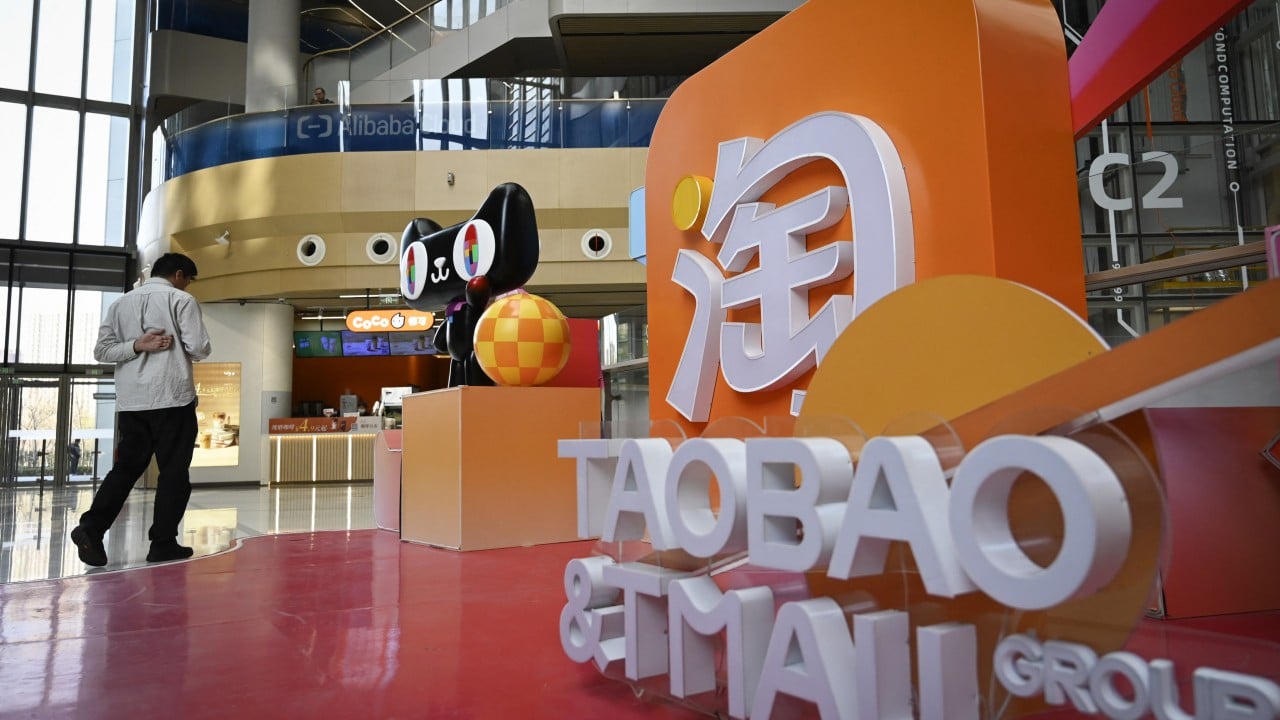
💡Alibaba's Qwen enables chat-to-buy on Taobao—key for AI in e-commerce apps
⚡ 30-Second TL;DR
What Changed
Qwen AI integrated into Taobao and Tmall for conversational shopping
Why It Matters
This integration advances conversational commerce in China, potentially boosting Alibaba's competitiveness against rivals like Pinduoduo by enhancing user engagement through AI-driven shopping experiences.
What To Do Next
Test Qwen's chat API on Alibaba Cloud to prototype e-commerce AI agents.
Who should care:Enterprise & Security Teams
Key Points
- •Qwen AI integrated into Taobao and Tmall for conversational shopping
- •Supports text/voice chat to search, compare, buy from 4B items
- •Taobao's new Qwen-powered assistant trained on platform data
🧠 Deep Insight
AI-generated analysis for this event.
🔑 Enhanced Key Takeaways
- •The Qwen integration leverages Alibaba's proprietary 'Qwen-Max' multimodal large language model, which has been specifically fine-tuned on Taobao's vast historical transaction data and user behavioral patterns to improve recommendation accuracy.
- •This initiative is part of Alibaba's broader 'AI-first' strategy to combat declining user engagement by shifting from a traditional search-based interface to a proactive, agentic shopping experience that reduces the cognitive load of browsing.
- •The system incorporates real-time inventory synchronization and dynamic pricing analysis, allowing the AI to offer personalized discount coupons and bundle suggestions during the chat session based on the user's loyalty status.
📊 Competitor Analysis▸ Show
| Feature | Alibaba Qwen (Taobao) | JD.com (Yanxi AI) | Pinduoduo (AI Assistant) |
|---|---|---|---|
| Core Focus | Conversational discovery | Supply chain optimization | Social/Group buying AI |
| Model Base | Qwen-Max (Proprietary) | Yanxi LLM | Third-party/Hybrid |
| Integration | Deep Taobao/Tmall ecosystem | JD Logistics/Retail | Pinduoduo App |
🛠️ Technical Deep Dive
- •Architecture: Utilizes a Mixture-of-Experts (MoE) framework to balance computational efficiency with high-reasoning capabilities for complex shopping queries.
- •Data Pipeline: Employs Retrieval-Augmented Generation (RAG) to connect the LLM to live product databases, ensuring that price, stock, and shipping information are accurate at the moment of query.
- •Multimodal Capabilities: Supports native processing of user-uploaded images (e.g., 'find me a dress like this') alongside text and voice inputs.
- •Latency Optimization: Implements speculative decoding to reduce token generation latency, aiming for sub-500ms response times to maintain a fluid conversational experience.
🔮 Future ImplicationsAI analysis grounded in cited sources
Alibaba will see a measurable increase in Average Order Value (AOV) within 12 months.
Conversational AI agents are statistically more effective at cross-selling and up-selling compared to static search results.
The 'chat-to-buy' model will force a redesign of traditional e-commerce UI/UX across the Chinese market.
As users become accustomed to agentic interfaces, traditional grid-based product listings will likely be relegated to secondary discovery tools.
⏳ Timeline
2023-08
Alibaba releases Qwen-7B, its first open-source large language model.
2024-02
Alibaba introduces Qwen1.5, significantly expanding the model's reasoning and multilingual capabilities.
2024-09
Alibaba launches Qwen-Max, the flagship model designed for complex enterprise-grade tasks.
2025-05
Initial pilot testing of Qwen-powered shopping agents begins on select Tmall luxury brand accounts.
📰
Weekly AI Recap
Read this week's curated digest of top AI events →
👉Related Updates
AI-curated news aggregator. All content rights belong to original publishers.
Original source: SCMP Technology ↗