Alibaba Cloud Launches Full-Stack Agent Studio
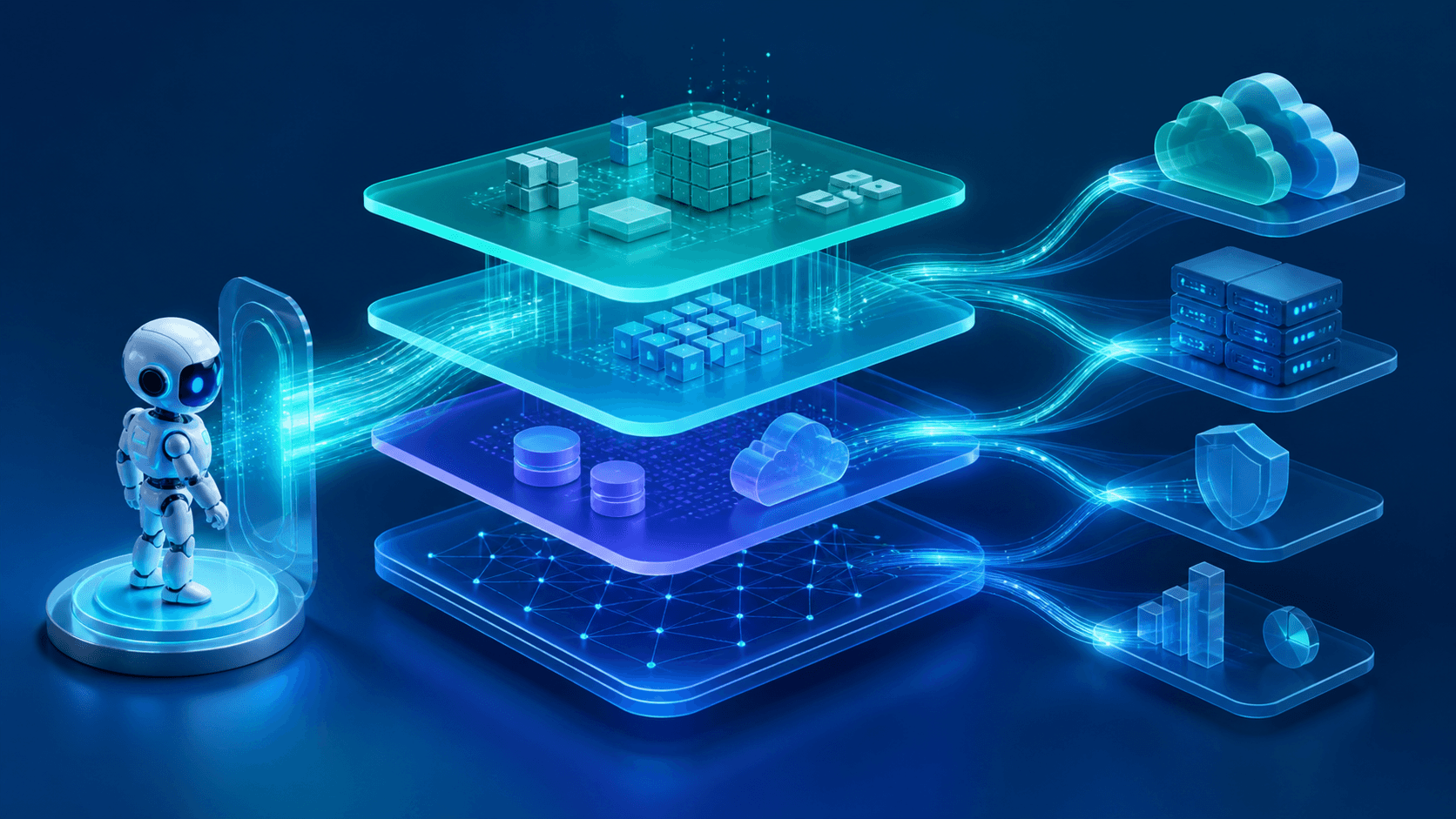
💡See how Alibaba Cloud is turning agent infrastructure into an enterprise-ready full stack.
⚡ 30-Second TL;DR
What Changed
Agent Studio consolidates enterprise agent infrastructure into a full-stack platform.
Why It Matters
The launch signals that cloud providers are competing to control the runtime and infrastructure layer for enterprise agents, not just model access. Teams may be able to reduce integration work by adopting a more unified agent stack.
What To Do Next
Prototype one internal workflow on Bailian and evaluate Agent Studio’s managed runtime, MCP authentication, search, and memory integrations.
Key Points
- •Agent Studio consolidates enterprise agent infrastructure into a full-stack platform.
- •The platform includes a managed runtime for deploying and operating agents.
- •Unified API keys simplify access across MCP services.
- •Agentic search and memory are built in for more capable enterprise workflows.
🧠 Deep Insight
AI-generated analysis for this event.
🔑 Enhanced Key Takeaways
- •Agent Studio integrates directly with Alibaba Cloud's Qwen-Max and Qwen-Long model series to provide specialized reasoning capabilities for enterprise tasks.
- •The platform utilizes a low-code/no-code interface designed to reduce the barrier for non-technical staff to build and deploy autonomous agents.
- •It incorporates a proprietary 'Agent-to-Agent' communication protocol that allows multiple specialized agents to collaborate on complex, multi-step workflows.
- •The platform includes built-in security guardrails and compliance monitoring tools specifically tailored for Chinese regulatory requirements regarding data privacy and AI content generation.
- •Agent Studio supports seamless integration with existing enterprise software ecosystems, including DingTalk and various ERP systems, to facilitate immediate operational deployment.
📊 Competitor Analysis▸ Show
| Feature | Alibaba Cloud Agent Studio | AWS Bedrock Agents | Microsoft Azure AI Agent Service |
|---|---|---|---|
| Primary Focus | Enterprise Agent Orchestration | Managed Generative AI Apps | Enterprise Agentic Workflows |
| Model Support | Qwen Series (Native) | Claude, Llama, Titan | GPT-4o, Phi, Llama |
| Integration | Deep DingTalk/Alibaba Ecosystem | AWS Services (Lambda, S3) | Microsoft 365/Dynamics 365 |
| Pricing Model | Usage-based (Token/Runtime) | Usage-based | Usage-based/Consumption |
| Key Differentiator | MCP Unified API/Agentic Search | Broad Model Choice | Office/Enterprise Integration |
🛠️ Technical Deep Dive
- Architecture: Built on a microservices-based runtime that decouples agent logic from the underlying LLM inference layer.
- MCP Implementation: Adopts the Model Context Protocol (MCP) to standardize data exchange between agents and external enterprise databases.
- Memory Management: Implements a tiered memory architecture consisting of short-term context windows and long-term vector database storage for persistent agent state.
- Agentic Search: Utilizes a RAG (Retrieval-Augmented Generation) pipeline optimized for enterprise document parsing and real-time web indexing.
- Runtime Environment: Provides containerized execution environments that support custom Python script injection for complex agent decision-making logic.
🔮 Future ImplicationsAI analysis grounded in cited sources
⏳ Timeline
Weekly AI Recap
Read this week's curated digest of top AI events →
👉Related Updates
AI-curated news aggregator. All content rights belong to original publishers.
Original source: Pandaily ↗