Alibaba Cloud AI Growth to Hit 40%
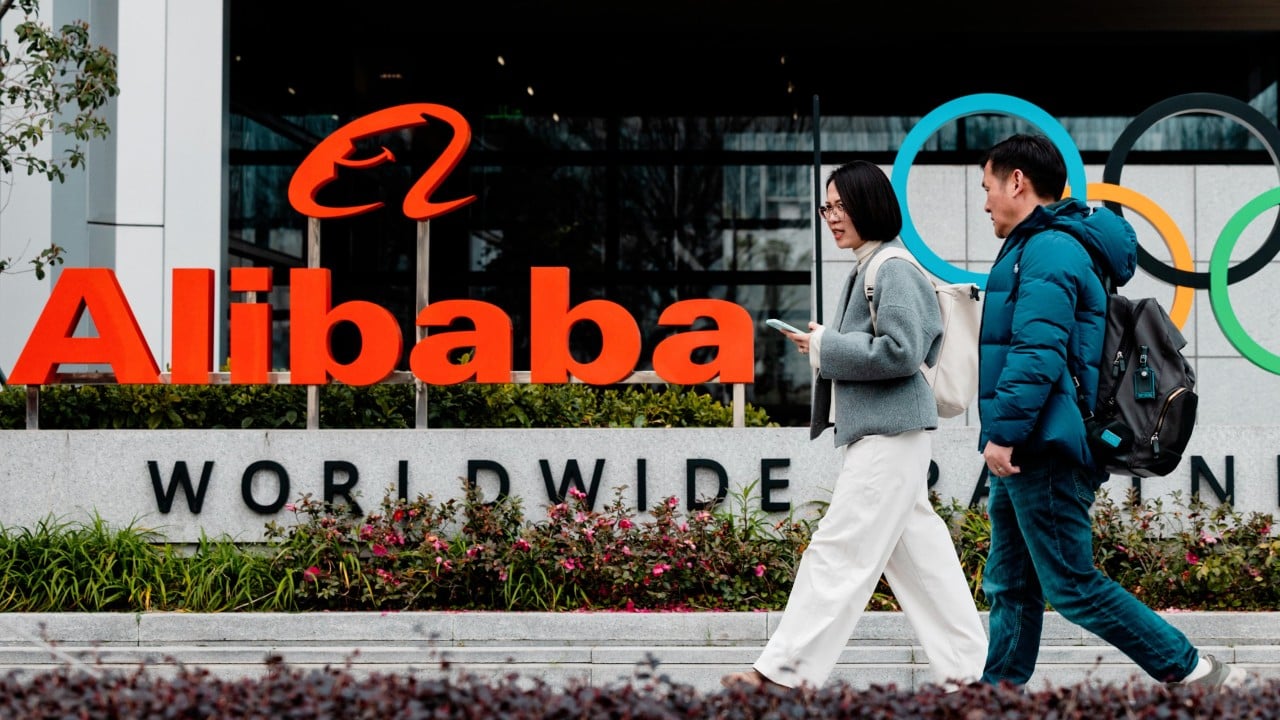
Alibaba Cloud forecasts 40% AI-driven growth—check pricing shifts for your cloud strategy.
30-Second TL;DR
What Changed
Cloud revenue growth projected at 40% for March quarter
Why It Matters
Alibaba Cloud's accelerating growth signals rising demand for AI infrastructure, potentially offering more competitive services but with rising costs from higher charges. AI practitioners may benefit from enhanced offerings amid this momentum.
What To Do Next
Review Alibaba Cloud's AI service pricing updates for cost-optimized inference deployments.
Key Points
- •Cloud revenue growth projected at 40% for March quarter
- •Up from 36% in December quarter
- •Driven by AI monetization and AI business reshuffles
- •Supported by robust surge in token usage
Deep Insight
AI-generated analysis for this event — not the original article.
Enhanced Key Takeaways
- •Alibaba Cloud's growth is heavily bolstered by the 'Tongyi Qianwen' (Qwen) model series, which has seen rapid adoption among enterprise clients for private deployment and API-based integration.
- •The company has shifted its strategy from aggressive price-cutting on core cloud infrastructure to a value-added model, focusing on high-margin AI inference services and specialized GPU cloud instances.
- •Strategic partnerships with domestic Chinese software vendors and industry-specific AI solution providers have created a 'flywheel effect,' increasing stickiness for Alibaba's AI platform ecosystem.
Competitor Analysis
- Alibaba Cloud (Qwen)
- Enterprise integration/Global reach
- Tencent Cloud (Hunyuan)
- Social/Gaming ecosystem
- Baidu Cloud (Ernie)
- Search/Knowledge graph integration
- Alibaba Cloud (Qwen)
- Tiered API/Token-based
- Tencent Cloud (Hunyuan)
- Token-based/Private cloud
- Baidu Cloud (Ernie)
- Token-based/Industry solutions
- Alibaba Cloud (Qwen)
- Open-weights/General purpose
- Tencent Cloud (Hunyuan)
- Multimodal/Content creation
- Baidu Cloud (Ernie)
- Enterprise/Baidu ecosystem
| Feature | Alibaba Cloud (Qwen) | Tencent Cloud (Hunyuan) | Baidu Cloud (Ernie) |
|---|---|---|---|
| Primary Strength | Enterprise integration/Global reach | Social/Gaming ecosystem | Search/Knowledge graph integration |
| Pricing Model | Tiered API/Token-based | Token-based/Private cloud | Token-based/Industry solutions |
| Model Focus | Open-weights/General purpose | Multimodal/Content creation | Enterprise/Baidu ecosystem |
Technical Deep Dive
- Qwen-2.5/3 architecture utilizes a Mixture-of-Experts (MoE) framework to optimize inference latency and reduce computational overhead for high-concurrency enterprise tasks.
- Implementation of 'Model-as-a-Service' (MaaS) on the PAI (Platform for AI) allows for fine-tuning via LoRA (Low-Rank Adaptation) and QLoRA, significantly lowering the barrier for enterprise-specific model deployment.
- Integration of high-bandwidth interconnects (RDMA) within Alibaba's proprietary 'Feitian' distributed operating system enables massive-scale training clusters for large language models.
Future ImplicationsAI analysis grounded in cited sources
Timeline
- 2023-04Launch of Tongyi Qianwen (Qwen) large language model.
- 2023-10Alibaba Cloud announces the open-sourcing of Qwen-7B and 14B models.
- 2024-02Significant price cuts on core cloud products to stimulate market share.
- 2025-06Alibaba Cloud reports record-high AI-related revenue growth in the June quarter.
Weekly AI Recap
Read this week's curated digest of top AI events →
Related Updates




AI-curated news aggregator. All content rights belong to original publishers.
Original source: SCMP Technology ↗
This is a summary, not the original. Read the source, or get the weekly briefing.
The weekly digest
One email a week. Unsubscribe anytime.