AI Video Models Fail Counting 1-10 Test
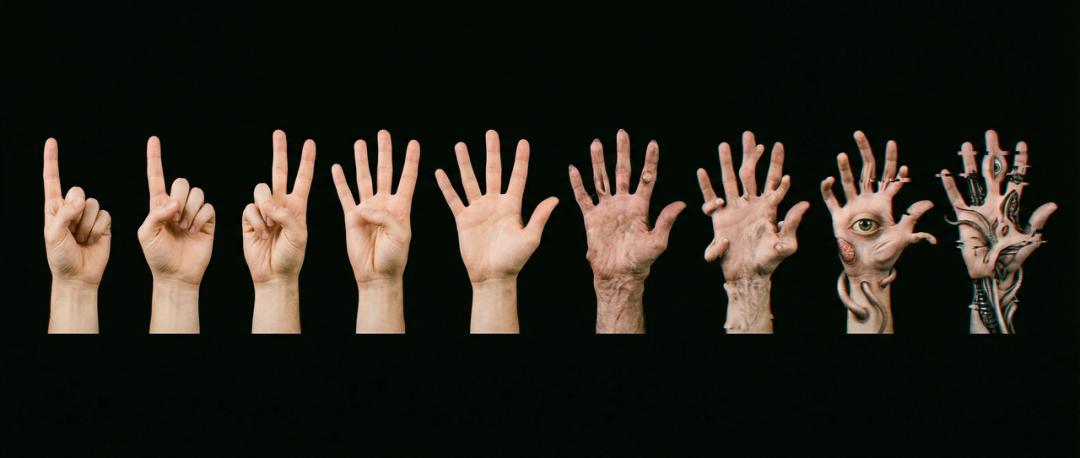
💡Core limits of video AI exposed—essential for devs eyeing reliable generation.
⚡ 30-Second TL;DR
What Changed
All major video models fail 'count 1-10 with fingers' benchmark
Why It Matters
Reveals visual realism gap vs. true comprehension, pushing shift to world models. Delays AI replacing human creators in logic-heavy tasks.
What To Do Next
Benchmark your video model on fofr's '1-10 fingers' test from X.
Key Points
- •All major video models fail 'count 1-10 with fingers' benchmark
- •Root cause: pixel prediction lacks 3D priors, physics, and frame memory
- •Hands remain weak due to complex anatomy and sparse training data
- •World models like World Labs' Marble pursue structural world understanding
🧠 Deep Insight
Background and context from public sources — not the original article. 7 sources cited.
🔑 Enhanced Key Takeaways
- •Recent benchmarking studies (VBench-2.0) quantify that video models struggle most with accurately depicting human actions at approximately 50% accuracy, directly validating the counting-with-fingers failure as a systemic limitation across the industry rather than an isolated bug[4].
- •Seedance 1.0 and 1.5 Pro have emerged as market leaders specifically because they excel at 'multi-agent interactions, complex action sequences, and dynamic camera movements while accurately following detailed prompts'—suggesting that hand gesture sequencing remains a differentiation point even among top performers[2][6].
- •The market has bifurcated into two competing approaches: Google Veo 3 and OpenAI Sora 2 are pursuing 'General World Models' that aim to truly simulate physics and temporal consistency, while Runway focuses on creator-speed optimization, indicating that solving the counting test requires fundamental architectural shifts toward physics-aware generation rather than incremental improvements[4].
📊 Competitor Analysis▸ Show
| Model | Strength | Known Limitation | Benchmark Status |
|---|---|---|---|
| Seedance 1.5 Pro | Complex action sequences, prompt adherence | Not explicitly tested on counting task | Ranked #1 on leading video AI benchmark[6] |
| Sora 2 | Action & dynamic scenes | Hand/finger precision not detailed | Top-tier contender, capital-intensive development[4] |
| Google Veo 3 | Cinematic realism, character consistency | Struggles with human action accuracy (~50%)[4] | High-fidelity output leader[1] |
| Kling 2.6 | Realistic human faces, lip-sync, dialogue | Hand rendering weakness implied | Fast generation times[1] |
| Runway Gen-3 | Creator/editing speed | Not positioned for physics-heavy tasks | Best for creator workflow speed[4] |
🛠️ Technical Deep Dive
- Root Cause Analysis: Pixel-prediction architectures lack 3D priors and persistent frame memory, forcing models to predict hand positions frame-by-frame without understanding skeletal constraints or finger anatomy[article summary]
- Hand Anatomy Challenge: Complex hand anatomy with 27 degrees of freedom and sparse training data (hands appear in <5% of video frames) creates a data scarcity problem that statistical prediction cannot overcome[article summary]
- World Model Approach: Emerging solutions like World Labs' Marble pursue structural world understanding by building explicit 3D representations and physics simulators, moving beyond pixel-space prediction[article summary]
- Temporal Consistency Gap: Current models lack frame memory mechanisms to enforce consistency across sequences, causing finger positions and gestures to drift or contradict across frames[article summary]
- Benchmark Quantification: VBench-2.0 reveals that human action accuracy across all leading models hovers around 50%, indicating this is a fundamental architectural limitation rather than a tuning issue[4]
🔮 Future ImplicationsAI analysis grounded in cited sources
⏳ Timeline
📎 Sources (7)
Factual claims are grounded in the sources below. Forward-looking analysis is AI-generated interpretation.
Weekly AI Recap
Read this week's curated digest of top AI events →
👉Related Updates

AI-curated news aggregator. All content rights belong to original publishers.
Original source: 36氪 ↗
This is a summary, not the original. Read the source, or get the weekly briefing.
Weekly AI briefing
One email a week. Unsubscribe anytime.